
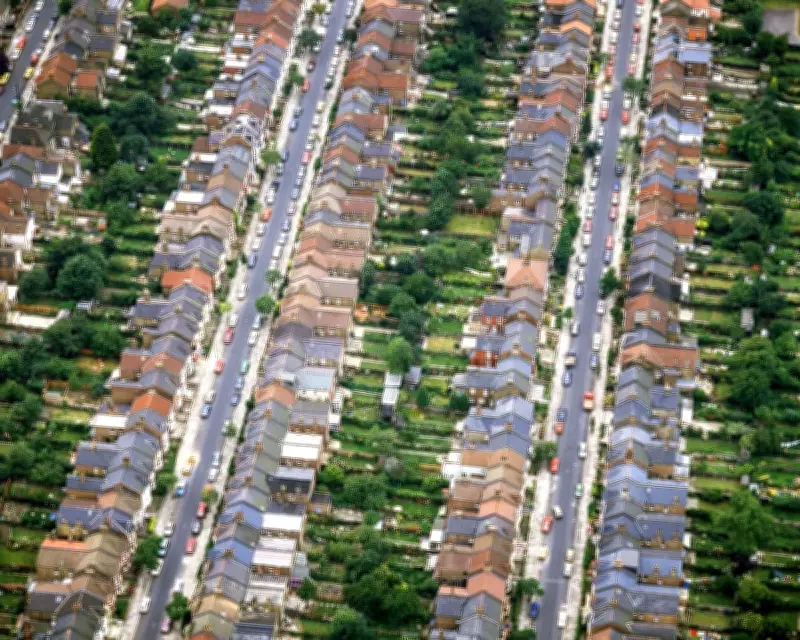
Millions of homes in London, Essex, and Kent are at risk of sinking as the climate crisis worsens, according to an analysis by the British Geological Survey (BGS). The study identifies areas most vulnerable to hotter, drier weather, which causes the ground to shrink and drag down property foundations.
Vulnerable Areas Identified
The most susceptible regions include London, Essex, Kent, and a stretch of land from Oxford to the Wash on England's east coast. Scientists warn that mitigation measures will be necessary as climate change intensifies.
Anna Harrison, a BGS scientist, stated: "By combining geotechnical information about volume change potential with data on projected rainfall and temperature scenarios for the coming century, we have identified the areas of Great Britain most likely to become susceptible to shrink-swell subsidence. Most are in the London area, which will also experience bigger changes in rainfall and temperature. It's a double whammy."
Impact on Properties
London's high building density exacerbates the risk. Harrison added: "These properties might have foundations that currently withstand moisture changes, but in future, there will be more movement. It's likely to get worse." Subsidence can significantly reduce property value, and lenders often refuse mortgages until issues are resolved. Signs include diagonal cracks around windows and doors and sloping floors. Remediation may involve engineering to stabilize land, underpinning, replacing utility pipes, or removing trees and vegetation.
Current and Future Projections
In 2025, the UK experienced its warmest spring on record and the driest in over 50 years, leading to £153 million in subsidence-related insurance claims in the first six months. Climate projections indicate hotter, drier conditions will become more frequent, increasing the number of susceptible properties.
The dataset forecasts that by 2070, about 500,000 properties could be affected under a low emissions scenario aligned with the Paris climate agreement. This rises to over 1.8 million properties under a medium scenario, which aligns with current global emissions trajectories.
Localized Risks
Highly populated parts of London, including Camden, Islington, and Barnet, are most susceptible, along with Kent in southeast England. Under the medium emissions scenario, over 26% of properties in the capital could be affected by 2070.
Harrison concluded: "Dry weather and high temperatures are major factors in shrink-swell subsidence. Looking ahead, increases in hotter, drier summers and warmer, wetter winters are projected to continue."




