
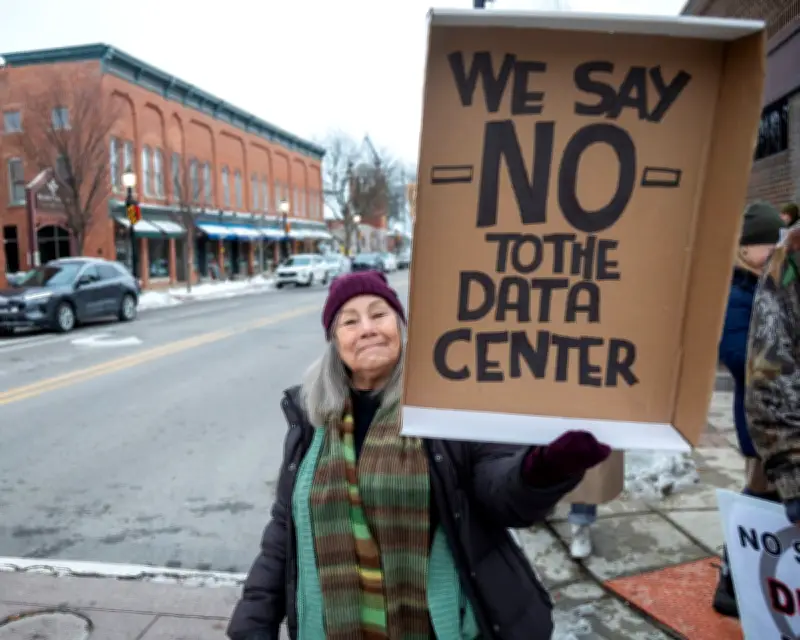
Rural Michigan residents are rallying against the proposed $7 billion Stargate data center, which is planned for farmland in southeast Michigan. Protesters claim that the project is being fast-tracked by DTE Energy, the large electric utility, and could lead to increased residential electricity rates and endanger the local water supply. The demonstration took place on 1 December 2025.
Data Centers Drive Clean Energy Growth but Pose Climate Risks
Data centers are driving unprecedented growth in the US clean energy industry, paradoxically boosting a sector that was struggling before the artificial intelligence boom. However, they also create immense environmental challenges. Utilities across the US are building new fossil-fuel plants or keeping ageing gas and coal plants online to meet the staggering demands of data centers, derailing planned transitions to renewable energy in states like Michigan.
The gas industry, including fracking firms and pipeline companies, is powering much of the data center boom. Some gas companies are building new plants solely to serve data centers, benefiting from the Trump administration's support. However, supply chain snags, regulatory delays, and energy generation shortages are delaying data center connections to the electric grid by up to 12 years. This forces big tech to invest heavily in producing their own power through quick and cheap alternatives like battery storage, solar, wind, and fuel cells.
Clean Energy Industry Sees Mixed Impacts
Douglas Jester, a clean energy consultant with 5 Lakes Energy, noted that the increase in electricity sales is driving a rise in renewables, calling it a paradox. The clean energy industry boomed in 2020 but faltered with inflation and flat energy demand. The second Trump administration further hindered progress by canceling government programs supporting wind, solar, and electric vehicles. Despite this, clean energy stocks have spiked alongside data center demand. The iShares Global Clean Energy ETF fell 80% between late 2021 and early 2025 but has risen about 52% in the past year.
Lucas Davis, a UC Berkeley energy economist, attributed the industry's growth to increasing electricity demand globally and falling costs for solar panels and batteries. However, not all clean energy segments benefit equally. Data centers spur battery and solar development for onsite power but have little direct impact on home rooftop solar. Nextpower, a utility-scale solar infrastructure producer, reported 20% year-over-year growth and recently acquired Prevalon, a data center battery producer. Google developed the world's largest grid-scale battery for a Minnesota data center and purchased an energy company to expand renewable development, including an off-grid center in Texas combining wind, solar, batteries, and gas.
Tech Companies Desperate for Electricity
Jester noted that in Wisconsin, energy regulators are building wind and solar facilities for Microsoft and Oracle data centers, though some include natural gas. In Michigan, DTE Energy is building a 330 MW battery system instead of a new gas plant to support a 1.4 GW Oracle data center, with Oracle paying for the batteries. Davis emphasized that the huge increase in demand is driven by tech companies' desperation for electricity, not a desire to save the planet. Bloom Energy, which produces cleaner but not renewable energy, has seen intense interest from data center owners due to its ability to deploy solid oxide fuel-cell systems in as little as 90 days. The company plans to provide power to Oracle and double manufacturing capacity by 2026, with its stock up 1,338% over the last year.
The green growth spurt comes with caveats. Energy demand forecasts are staggering but hard to predict, and the industry may be susceptible to an AI bubble. However, a portfolio manager at BlackRock stated that sustainable energy equities are well prepared to withstand a downturn and could benefit from falling US interest rates.




