Historic Sewage Spill Transforms Potomac River into Toxic Hazard
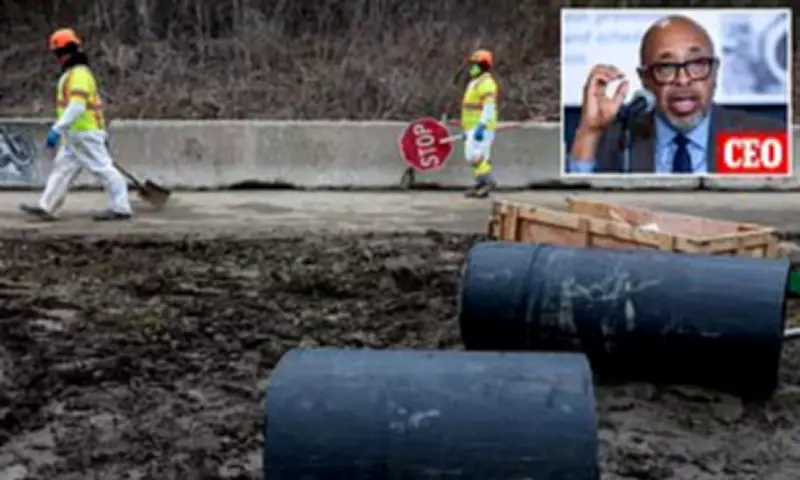
The largest sewage spill ever recorded in United States history has inundated the Potomac River, creating monumental challenges for the equity-focused DC Water utility company. This unprecedented environmental catastrophe originated from the catastrophic collapse of a six-foot-wide sewer line known as the Potomac Interceptor in Montgomery County, Maryland, which initially failed back in January.
Massive Contamination and Public Health Emergency
The sewer line collapse unleashed a staggering deluge of nearly 300 million gallons of untreated wastewater into the vital waterway over just ten days, severely contaminating the river that flows directly through the heart of Washington, DC. DC Water's subsequent testing revealed alarmingly high levels of E coli bacteria, measuring hundreds of times above Environmental Protection Agency safety limits, effectively transforming the Potomac into what President Trump has labeled a 'massive ecological disaster.'
Emergency authorities have issued urgent warnings for residents to avoid all contact with the toxic waters. Montgomery County Fire & Rescue in Maryland has escalated its response protocol, instructing first responders to treat any Potomac spill emergencies as hazardous materials incidents requiring specialized handling and protective equipment.

Leadership Under Scrutiny: Equity Initiatives Versus Infrastructure
The disaster has placed intense scrutiny on DC Water's leadership, particularly CEO David Gadis, who has spearheaded ambitious diversity, equity, and inclusion initiatives since assuming leadership in 2022. Gadis previously served for two decades as Executive Vice President of Veolia North America, a company that recently paid a substantial $53 million civil settlement for its involvement in the Flint water crisis contamination.
Upon taking the helm at DC Water, Gadis noted that the company's executive ranks had been 'predominantly white male' despite approximately 70 percent of the overall utility workforce consisting of people of color. He subsequently implemented policies aiming to make executive leadership 'look like' both the workforce and the community it serves, resulting in more diverse executive teams and comprehensive equity-focused programs.
Critics now question whether the utility should have prioritized critical infrastructure repairs over these equity initiatives, arguing that local residents are suffering the consequences of neglected maintenance while bearing the brunt of this massive sewage contamination event.
Political Battle Erupts Over Response and Responsibility
The environmental disaster has ignited a fierce political confrontation between President Trump and Maryland Democratic Governor Wes Moore. Trump has publicly blamed Democrats for the spill, asserting that the federal government must intervene because Maryland's response has been dangerously slow and inadequate.
'I cannot allow incompetent Local 'Leadership' to turn the River in the Heart of Washington into a Disaster Zone,' Trump declared on his Truth Social platform. 'The Federal Government has no choice, but to step in. FEMA, which is currently being defunded by the Democrats, will play a key role in coordinating the response.'
Governor Moore's spokesperson, Ammar Moussa, countered sharply: 'For the last four weeks, the Trump Administration has failed to act, shirking its responsibility and putting people's health at risk. The Potomac isn't a talking point, and the people of the region deserve serious leadership that meets the moment.'
The dispute has played out entirely through public statements and social media exchanges, with Trump insisting that Maryland, Virginia, and Washington, DC must take immediate responsibility for the cleanup. 'If they can't do the job, they have to call me and ask, politely, to get it fixed... I am awaiting your call,' the president demanded in a follow-up Truth Social post.
Long Road to Recovery Ahead
Repair crews are working urgently to restore the damaged pipeline, with temporary measures including diverting sewage into the historic C&O Canal while permanent repairs proceed. Although partial restoration aims for completion by mid-March, utility officials estimate that comprehensive repairs could require nine to ten months of intensive work.

This environmental emergency continues to unfold as both public health concerns and political tensions escalate, leaving communities along the Potomac River facing prolonged exposure risks while leadership debates responsibility and response strategies for America's largest recorded sewage disaster.