
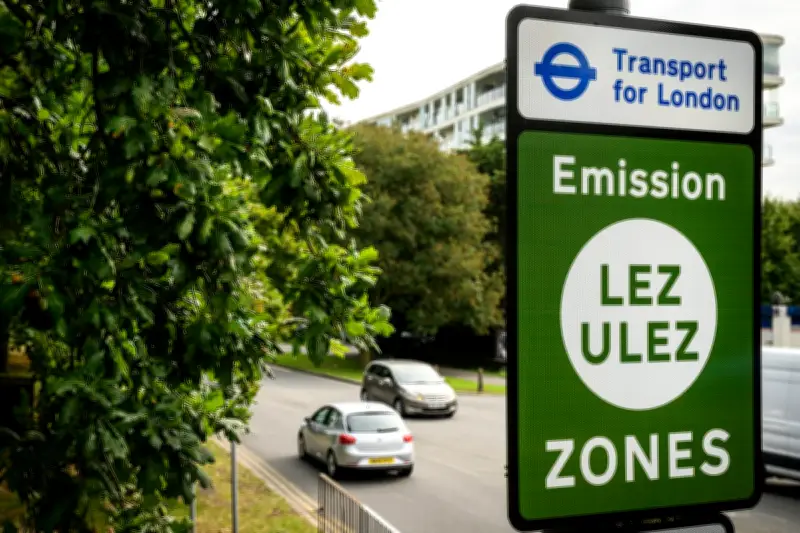
Campaigners have urged London Mayor Sir Sadiq Khan to introduce a Dutch-style zero emission zone for commercial vehicles to tackle the rising number of diesel vans in the capital. Despite efforts to electrify transport, diesel van registrations by businesses in London exceeded 100,000 for the first time at the end of 2025, with numbers expected to climb further. In contrast, only 5,582 battery-electric vans were registered by companies last year, equating to 18 diesel vans for every electric one.
ULEZ scheme fails to curb diesel van use
Data reveals that just two percent of diesel vans scrapped under City Hall’s Ultra-Low Emission Zone (ULEZ) scheme were replaced with electric alternatives. A coalition of environmental and health campaigners has now called on Khan to consider the Dutch model, where cities set a date after which all newly purchased vans must be electric to enter a designated zero emission zone.
In a letter to the Mayor, the groups highlighted that vans are now the biggest transport source of NOx emissions in central and inner London, contributing to nitrogen dioxide (NO2), a toxic gas linked to asthma, lung disease, heart disease, strokes, and premature deaths. They argued that other European cities are showing leadership, with the Netherlands introducing 18 zero-emission zones for freight in 2025 and plans to expand to 29 municipalities by 2030. In the first half of 2025, 78.4 percent of newly registered vans in the Netherlands were battery-electric, far above the EU average of 8.5 percent, while electric truck registrations rose by 187.6 percent year-on-year.
London lags behind on electric vehicle transition
London is falling behind in the cultural shift, with some cash-strapped councils rowing back on climate pledges. Hillingdon Council spent £500,000 on ULEZ fees due to its ageing fleet of 295 vehicles, of which only three are electric and six hybrid. Instead of buying electric, the council purchased 32 new ULEZ-compliant diesel vehicles. Kensington and Chelsea Council also bought new diesel waste vehicles due to lower upfront costs.
The campaigners’ letter suggests setting different dates for businesses that need more time to transition. Zak Bond, Campaign Manager at Clean Cities, said: “Action to get diesel vans off our streets has not just stalled; it is going in reverse. Crossing the 100,000 mark for company-owned diesel vans should be a wake-up call for London. The alternatives exist, but we need the Mayor to step in with leadership to electrify London’s van fleets at the pace the climate and air quality crises demand. The Dutch have shown that zero-emission zones for freight can accelerate the shift to cleaner vehicles. It’s time for some Dutch courage in London.”
Jemima Hartshorn, Founder of Mums for Lungs, added: “Every day, more dirty diesel vans drive past our schools, nurseries, and homes, polluting the air our kids breathe, worsening asthma, and setting them up for a lifetime of ill-health. Parents are fed up with promises of clean air when we can smell diesel fumes and see our kids coughing. The Mayor must act with the urgency this public health issue demands. We urge him to deliver a zero emission zone for freight in London to ensure vans are cleaned up, London’s kids can breathe easier, and London’s future can be diesel-free.”
Political support for reform
On Thursday, Labour members of the London Assembly supported reforming policy around diesel vans. Leonie Cooper, Labour’s environment spokesperson, said: “The Mayor has made real progress in cleaning up London’s air by rolling out more electric and hybrid buses, which has already brought real health benefits. But air pollution is still a serious problem, and the high number of diesel vans on our roads shows there is still much more to do. We should look at all options, including a clear plan to phase out diesel vehicles in cities and move faster towards zero-emission freight, as well as stronger standards for the vehicles that remain.”
A spokesperson for the Mayor of London responded: “We know ULEZ has been a huge success in cleaning up London’s air. More than 53,000 older, more polluting vehicles were removed from London’s roads before the ULEZ expansion was implemented. This shows the scheme working exactly as intended. Building on the world-leading ULEZ and our work to electrify the bus and taxi fleets, we are working with cities that have introduced zero emission freight zones to understand their impact, while TfL has published guidance to support local schemes. We are also partnering with C40 Cities to trial shared EV charging for high-mileage fleets including vans, to support their shift to fully electric. Alongside this, we are working with partners across the public and private sectors to understand London’s future logistics needs and identify opportunities for innovation through the London Logistics Plan as we continue to build a greener, fairer London for everyone.”




