Jurassic Oceans Exhibition Warns of Ecosystem Collapse, Offers Hope
Jurassic Oceans: A Warning and Hope for Our Seas

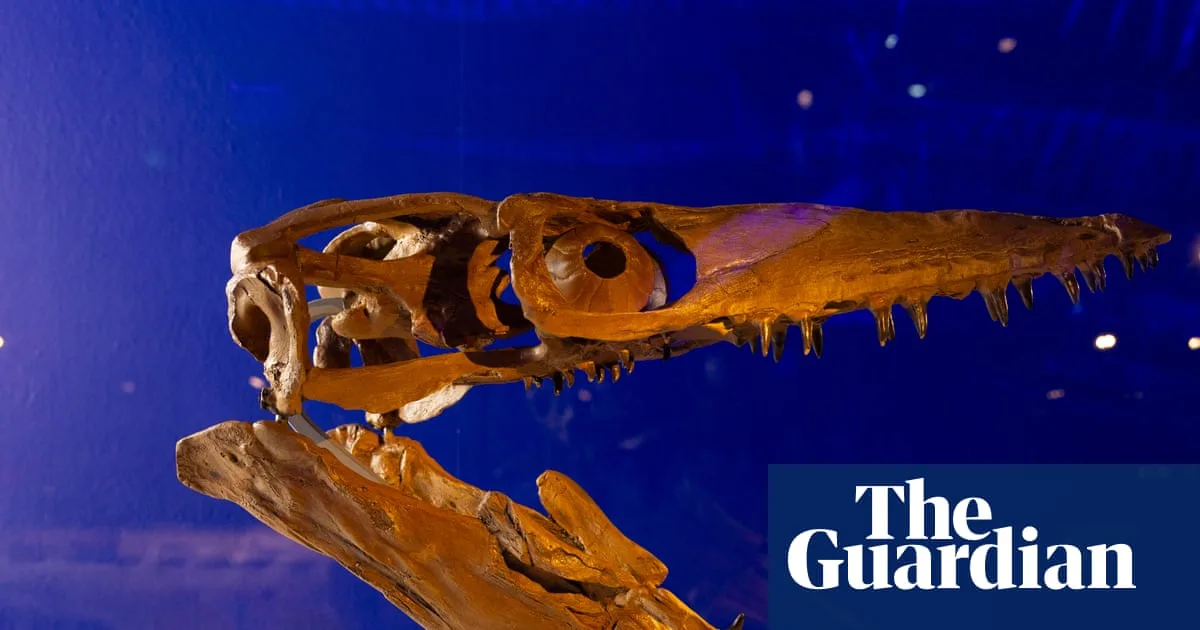
The first thing that strikes visitors is the sheer scale. A 23-foot plesiosaur sweeps across the gallery, its vast paddle-like limbs frozen mid-stroke. The skull of an ichthyosaur, with cavernous eye sockets and needle-sharp teeth, stares back from 200 million years ago. The two-metre tail fin of the giant fish Leedsichthys dwarfs most onlookers. The brave can even touch a tooth of the mighty mosasaur, the fiercest hunter to ever rule the waves. But delve deeper into Jurassic Oceans, the Natural History Museum's exhibition showcasing the fearsome creatures that lurked below the surface—go beyond the teeth, the terror and the sheer spectacle—and you discover a quieter, more unsettling truth. Oceans can change, and over Earth's history, they have done so catastrophically. The fossils are not just relics of a lost world; they are warnings from a warmer one.

A Warning from Deep Time

During the Jurassic period, volcanoes released high levels of CO2 into the atmosphere. The oceans became warmer and more acidic as they absorbed this gas. Warm water holds less oxygen, and acidic water makes life hard for creatures at the bottom of the food chain, like plankton. Over time, entire ecosystems collapsed, triggering mass extinctions. The message from deep time is brutally simple: no creature, great or small, survives such conditions.

We depend on oceans far more than most people realise. They produce half the oxygen we breathe, provide food for billions of people, regulate the climate and absorb around a quarter of human-generated CO2. An ecosystem failure like the Jurassic one would have profound consequences for all life on Earth.

Wide Pickt banner — collaborative shopping lists app for Telegram, phone mockup with grocery list

Human Impact Accelerates

Over the last 200 years, through the Industrial Revolution, humans have pumped more than 2,000 gigatons of CO2 into the atmosphere. The oceans are warming at a pace that makes the Jurassic look leisurely. Because of acidification, the shells of some zooplankton today are 76 per cent thinner than those collected 150 years ago during the Challenger expedition. We are destabilising the systems that support marine life at a record speed—simply too fast for life to adapt.

But There Is Hope

Unlike the inhabitants of the Jurassic world, we have the agency, ingenuity and resources to fix the problem. We can build a world in which both people and planet can thrive. The Natural History Museum, including its 350 scientists, is already playing its part. To solve a problem, you have to understand it. Researching the museum's unique collection of 80 million objects spanning billions of years reveals in microscopic detail how climatic changes affect life on Earth over time. Work on seaweed forests is revealing their extraordinary ability to store carbon, protect coastlines and provide sustainable food sources. Plankton specialists are documenting how microscopic marine life plays a critical role in carbon drawdown and climate stability.

Meanwhile, deep-sea biodiversity researchers are uncovering species new to science, mapping vulnerable seafloor habitats and producing some of the strongest long-term datasets yet on how deep-sea mining could impact biodiversity. Their work is already informing international policy and environmental monitoring standards.

The Oceans COP and the Path Forward

Next January, the world gathers for the first 'Oceans COP'. This could be the moment when the world finally treats the planetary emergency with the seriousness it demands. The science is clear. The tools exist. What we need now is action: action to stabilise levels of CO2, to support the landmark 30 by 30 agreement to protect the top 30 per cent of the world's land and ocean, and to address plastic and 'forever' chemical pollution. Action which you can help inspire.

The Jurassic shows us that even the mightiest species can vanish when their environment shifts too far, too fast. But unlike them, we can choose a different ending. A final and hopeful piece of research: in post-visit surveys, most people say the museum's exhibitions inspire them to want to protect the planet. So come and explore Jurassic Oceans. Have a wonderful day out, learn about these monsters who ruled the seas when the dinosaurs ruled the earth. And maybe you too will be inspired to care a little more for our beautiful planet.

Jurassic Oceans: Monsters of the Deep is at the Natural History Museum until 3 January 2027.

Pickt after-article banner — collaborative shopping lists app with family illustration




