
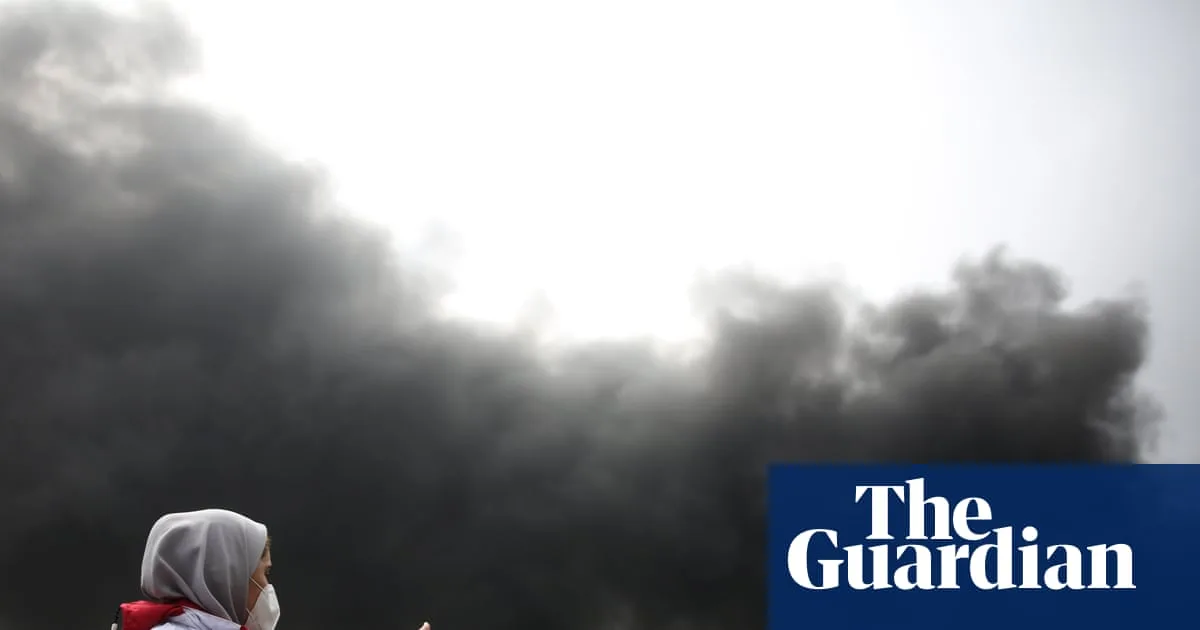
The conflict between US-Israeli forces and Iran has triggered severe environmental damage, with black rain falling over Tehran and marine pollution spreading across the Gulf. Since early March, thousands of bombs and missiles have struck oil refineries, military bases, and nuclear facilities, leaving a toxic legacy that could blight the region for decades.
Remote sensing specialist Wim Zwijnenburg of the Dutch peace group Pax has documented over 500 incidents of environmental harm inside Iran and 100 more outside. Attacks on fuel depots released soot, oil particles, and sulphur compounds that mixed with a low-pressure system, causing black acid rain. Authorities warned residents to stay indoors as scientists highlighted the release of hazardous substances.
Military sites pose additional risks, according to the UK-based Conflict and Environment Observatory. Likely contaminants include fuels, heavy metals, and PFAS, with fires releasing dioxins and furans. However, the Iranian government has not shared environmental data, and local observers are scarce due to restrictions on activism.
The Gulf region, home to one-fifth of global oil and gas supplies, remains on an ecological knife-edge. Iran has threatened retaliation if its infrastructure is targeted further, and recent strikes on the South Pars gas field have heightened concerns. Environmental monitors continue to track the fallout as the war persists.




