
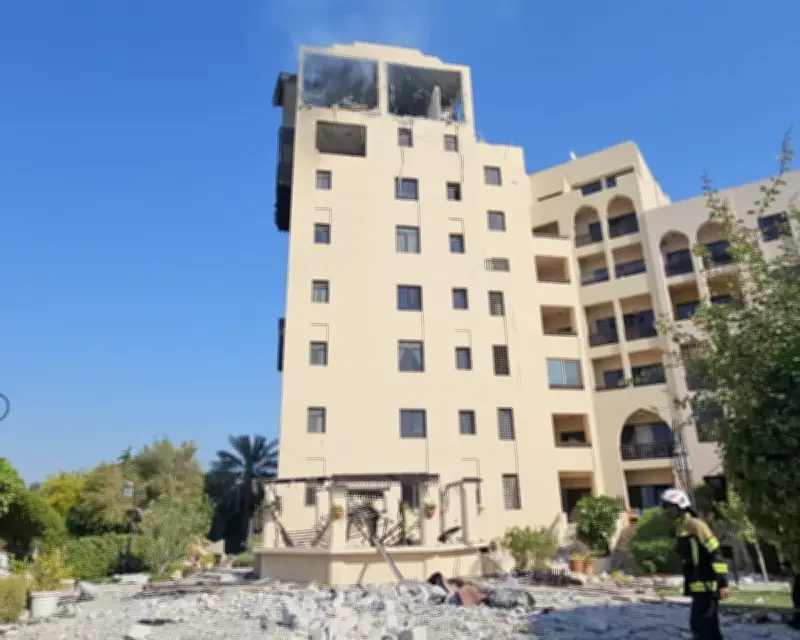
A residential building in Muharraq, Bahrain, near the international airport, was hit by an Iranian drone on Sunday, according to the Bahraini interior ministry. The attack comes just 10 days after Iran and the United States signed a memorandum of understanding aimed at ending the conflict in the Gulf, but analysts say the deal's deliberately opaque wording has collapsed under conflicting interpretations.
Memorandum's Vague Language Blamed for Renewed Fighting
The 14-point memorandum was intentionally broad on two critical issues: the Lebanon ceasefire and the reopening of the Strait of Hormuz. The hope was that trust would build over time, allowing a modus vivendi to emerge. Instead, each side now accuses the other of violating the terms, and supporters of the deal inside Tehran are on the defensive. Statements rejecting the agreement to reopen the Strait of Hormuz are proliferating, even among non-hardliners.
Lebanon Ceasefire Conflicts Undermine Pact
In Lebanon, two ceasefire agreements are pulling in opposite directions. The first, mentioned in the memorandum and developed at the Lucerne talks attended by US Vice-President JD Vance, gave Iran and its proxy Hezbollah a new role in a deconfliction mechanism, seemingly squeezing out Israel. The second, fuller ceasefire signed by Israel and the Lebanese government in Washington on Friday and overseen by US Secretary of State Marco Rubio, reverses that by excluding Iran and Hezbollah. It allows Israel to remain in southern Lebanon until Hezbollah is completely disarmed—a condition the Shia force cannot accept. The agreement, signed by Lebanese Prime Minister Nawaf Salam, also includes a clause ceasing all hostile actions in legal fora, effectively immunizing Israel from prosecution for alleged war crimes in Lebanon. Israeli Prime Minister Benjamin Netanyahu responded triumphantly: "We will stay in the area until Hezbollah's weapons and those of the remaining terrorist groups are dismantled." Yet the deal's terms are widely seen as unacceptable to Hezbollah or Iran.
Strait of Hormuz Provisions Fail to Prevent Attack
The memorandum's language on the Strait of Hormuz has proved equally ineffective. It states that Iran will "make arrangements using its best efforts for the safe passage of commercial vessels" through the strait with no charge for 60 days, but leaves "arrangements" and "best efforts" undefined. It makes no reference to clearing the strait, implying Iran is the dominant actor. For the future, the memorandum says Iran will hold a dialogue to define the strait's administration and maritime services "in discussion with other Persian Gulf littoral states in line with the applicable international law and the sovereign rights of coastal states of the Strait of Hormuz." Iran interpreted this to mean it alone can determine shipping routes, but last week it worked with the UN's International Maritime Organization (IMO) and Oman on an evacuation plan for hundreds of ships. IMO Secretary General Arsenio Domínguez believed he had Iran's agreement to launch a plan offering northern and southern routes. However, on Thursday morning, the Islamic Revolutionary Guards Corps Navy declared ships could only use the northern route to exit the strait, and that afternoon, the Ever Lovely, a Singapore-flagged Evergreen container ship built in 2015, was struck while transiting a southern route close to Oman. Domínguez halted the scheme, saying the IMO would not put seafarers at risk. Despite the attack, ships continue to venture through the strait.
Oman's Role and Potential Legal Solutions
Behind the incident may be Iran's fear that the southern route along Oman's coast would allow the US to end Iran's chokehold. Oman and Iran are discussing a long-term solution for managing the strait, which Iran might yet accept. Oman will frame proposals under the UN Convention on the Law of the Sea (Unclos), ruling out tolls. Article 41 of Unclos allows strait states to designate sea lanes and traffic separation schemes. Article 43 would let Oman, in consultation with the IMO, ask stakeholders with a shared interest in navigational aids to contribute to a funded "cooperative mechanism." In theory, Oman could levy charges for specific navigational safety services if they confer a direct benefit on a ship, but no general levy is permitted. For now, however, as bombing recommences, creative legal ideas have been set aside as military action returns to center stage.




