Indigenous Women Witness Ecuador's Oil Devastation in Amazon Warning Tour
Approximately thirty Indigenous women representing seven distinct Amazon nationalities have undertaken a profound journey to Ecuador's northern oil-producing region. Their mission was to witness firsthand the environmental consequences of over five decades of oil and gas extraction, serving as a stark warning against proposed expansion projects in the Amazon rainforest.
A Shocking Scene of Contamination
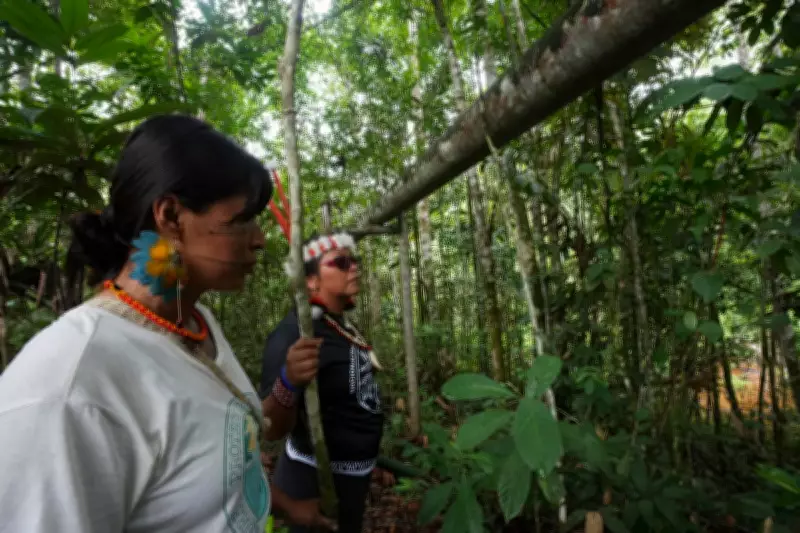
Standing beside a stream darkened by oil in Ecuador's northern Amazon province of Sucumbios, an Indigenous woman surveyed the scene with disbelief. An oily sheen drifted across the water's surface, while broken pipelines cut through the surrounding forest. Nearby, gas flares burned continuously above the treetops, illuminating the scale of industrial activity.
Julia Catalina Chumbi, a 76-year-old leader from the Shuar ethnic group in the southern Amazon province of Pastaza, had traveled hundreds of miles to see this damage for herself. "Everything is contaminated, even the air," she remarked quietly. She expressed particular shock upon learning that communities near these oil fields can no longer safely drink from local rivers due to contamination, forcing residents to purchase water. "Seeing this makes me want to cry," Chumbi said, noting that rivers in her own territory remain drinkable for now.

The Purpose of the 'Toxitour'
Chumbi was among the participants in what activists term a "toxitour"—a journey designed to connect women from areas facing proposed oil projects with communities that have lived alongside the industry for generations. The tour included visits to active oil fields, pipeline routes, and gas flaring sites. Organizers emphasized that because many oil blocks overlap directly with Indigenous territories, these communities are often the first to experience contamination of their rivers, forests, and traditional food sources.
The women gathered initially in the city of Nueva Loja—historically known as Lago Agrio, named by Texaco workers in the 1960s—which served as the epicenter of Ecuador's early Amazon oil boom. Here, they participated in workshops to share experiences and discuss the growing threat of oil expansion in their respective territories.
Confronting the Reality at Libertador Oil Field
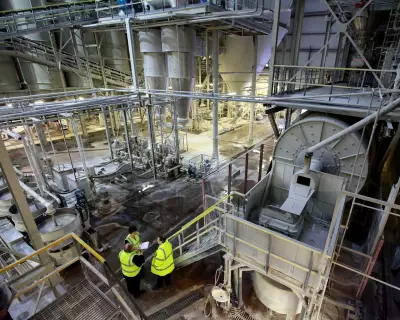
Traveling by bus past seemingly endless oil pipelines snaking along the roadside, the group reached the Libertador oil field, operated by Ecuador's state-owned Petroecuador. Upon arrival, they created banners bearing messages such as "Amazon free from oil and mining" before quietly entering the production area.
What they witnessed was stark: polluted streams flowing near pipelines and well sites, visibly contaminated vegetation, and a notable absence of wildlife. Salome Aranda, a 43-year-old from the Kichwa community of Morete Cocha in Pastaza, stood before a roaring gas flare wearing traditional face paint. "In our area we are not allowed to enter," she explained, noting that seeing the contamination up close confirmed her existing concerns. "The animals are disappearing and the crops no longer grow the same."
Workshops and Strategic Planning
Following the tour, the women returned to Nueva Loja for extensive workshops and group discussions. They reflected on their observations and shared experiences from their own territories, ultimately beginning to outline strategies to strengthen resistance against potential new oil concessions.
Natalia Yepes, a legal adviser for Amazon Watch in Ecuador, explained the tour's significance: "Women in the north have already lived through more than 50 years of oil exploitation. The idea is that those experiences and lessons can be shared with women from the center and south who are now facing these new threats."
A Looming Expansion and Legal Battles
The tour occurs against the backdrop of Ecuador's government unveiling a comprehensive "hydrocarbon road map" last year. This plan proposes a major expansion of the country's oil and gas sector, valued at approximately $47 billion, with new licensing rounds for exploration blocks in the Amazon—particularly in Pastaza and Napo provinces where Indigenous communities reside.

While officials claim the plan will modernize the industry and attract foreign investment, environmental groups and Indigenous leaders warn it could open vast rainforest areas to drilling, pipelines, and gas flaring. They emphasize that many communities have not provided the free, prior, and informed consent required under Ecuador's constitution and international human rights agreements. Ecuador's Ministry of Energy and Mines did not respond to requests for comment regarding these concerns.
Strengthened Resolve and Historical Resistance
For many participants, the tour reinforced ongoing battles. Dayuma Nango, 39-year-old vice president of the Association of Waorani Women of Ecuador, stated that witnessing the contamination strengthened her determination to keep oil companies out of Waorani territory. "Our forest is our mother," said Nango, who has received death threats for her advocacy. "That's why we protect it."
The Waorani have previously achieved significant legal victories, including a 2019 court ruling that blocked oil drilling in Block 22 in Pastaza after judges found improper community consultation. In 2023, Ecuadorian voters approved a referendum to halt oil drilling in Block 43 inside Yasuní National Park, which overlaps with Waorani ancestral territory.
Toa Alvarado, a 30-year-old Kichwa leader from Pastaza, recalled her late father's activism—once standing in a road with a spear to stop gold miners. "He told me our generation may be the last with the chance to protect our territories from contamination," she said, adding that the tour strengthened her own protective resolve.
International Women's Day Demonstrations
The following day, many tour participants gathered in the Amazon city of Puyo for International Women's Day demonstrations. Ruth Peñafiel, 59, from a Kichwa community in Ecuador's northern Amazon, declared: "Today is about reporting to the world about the violation of rights that us Indigenous women have to endure—specifically the rights of nature. We want to live in a healthy environment and in harmony with the forest."
For Julia Catalina Chumbi, the visit to Sucumbios crystallized the message she will bring home: "What we are going to do is fight," she stated, referring to potential oil drilling in Shuar territory. "Even if it costs us our lives."
The debate over fossil fuel expansion in the Amazon is expected to feature prominently at an upcoming international conference in Santa Marta, Colombia, bringing together governments, Indigenous leaders, and civil society groups to discuss transitioning away from oil, gas, and coal.