
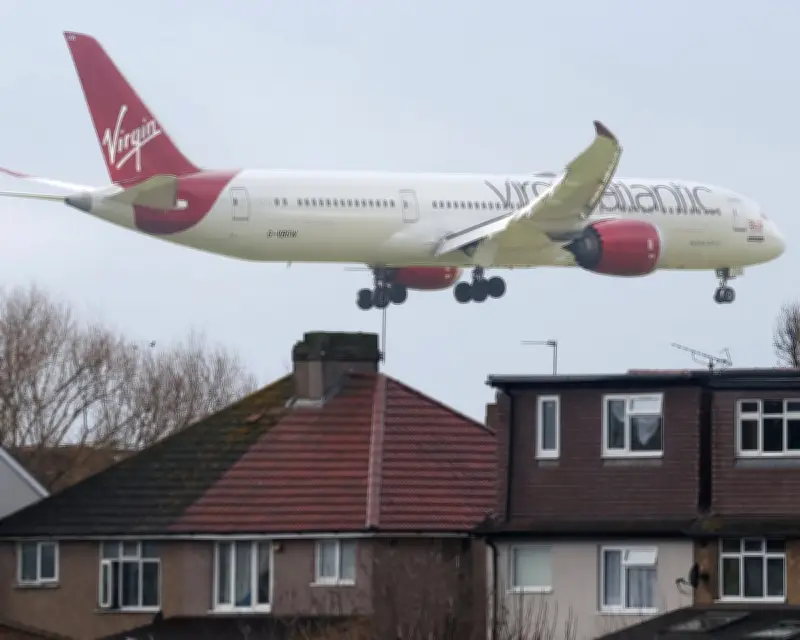
An official report has warned that the construction of a third runway at Heathrow is likely to have significant adverse effects on the health and wellbeing of up to 3 million people living nearby. The analysis, conducted for the Department for Transport (DfT) by consultants Aecom, found that expanding London's hub airport could have "major adverse" impacts on the health of the most local population.
Key Findings of the Report
The report highlighted that the construction and operation of the third runway would worsen noise and air quality, and could also harm access to housing, education, healthcare, open spaces, and transport. Additionally, the expansion would impact water quality, weaken community identity and cohesion, worsen landscapes and townscapes, and affect climate change mitigation and adaptation.
While the analysis acknowledged that the third runway would probably be beneficial for jobs, income, education, skills, and training, it concluded: "Adverse effects are considered likely with regard to the other determinants which cover environmental and social considerations, and many of these have potential to be significant."
Government Response and Mitigation Efforts
A DfT spokesperson stated: "The health impact assessment describes what would happen if a third runway was built without any mitigations being put in place – mitigations we are actively working to implement. We know communities around Heathrow have legitimate concerns about expansion, which is why we are consulting on the policy underpinning a third runway – including preventing the worsening of noise emissions and reduction of air quality, and generating jobs for local people."
The disclosure came as the government announced the accelerated publication for consultation of a draft national policy statement backing the third runway. Transport Secretary Heidi Alexander said: "Today's consultation is a positive step towards realising the benefits of a third runway, by giving businesses, communities and the public the chance to help shape this key project at one of the world's most successful hub airports."
Political and Economic Context
Chancellor Rachel Reeves has been a strong advocate for the third runway, stating: "Growth is this government's top priority, and we are backing the builders to get Britain moving. An expanded Heathrow would support over 60,000 good local jobs and deliver up to £42bn in benefits to the UK – strengthening vital links and improving connectivity across the country."
Speaking at a conference in London, Reeves added: "Somebody had to bite the bullet ... in the last 18 months, we've made more progress on Heathrow than the last government made in 14 years. And I am determined that by the time of the next election, there are spades in the ground."
Project Details and Opposition
Heathrow is seeking to build a 3,500-metre runway, which would require moving the M25 motorway and compulsory purchase of about 800 homes. The scheme, estimated to cost £33bn, would allow the airport to operate up to 756,000 flights with up to 150 million passengers each year.
Heathrow's chief executive, Thomas Woldbye, said the consultation represented "something Britain has often found difficult in recent years: progress." He added: "Our plan is privately funded by some of the largest investors in the world, widely supported by businesses, trade unions and communities across the country and it's ready to go after years of scrutiny."
However, Paul McGuinness, chair of the No 3rd Runway Coalition, described the expansion plans as "lurching towards farce" and predicted a "decade of destruction" around the airport. Celeste Hick, policy manager at the Aviation Environment Federation, criticised the government for rushing policy through "with very little meaningful consultation with the very people" who would pay the price.




