
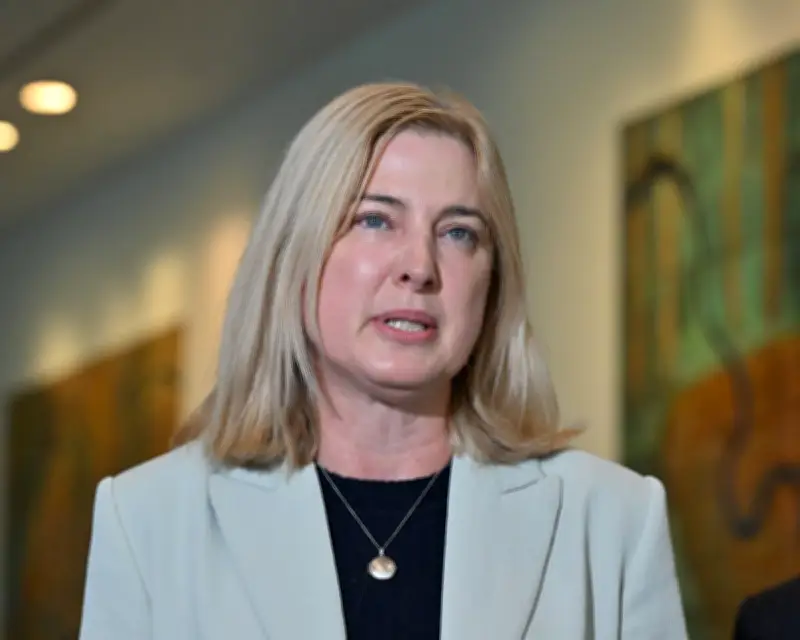
A sick migratory bird tested positive for avian influenza and has since died, Australia’s federal agriculture minister Julie Collins confirmed. The brown skua, a subantarctic species, was found at Cape Le Grand National Park in southern Western Australia on Sunday and later died, the WA government said on Friday. A second bird, a giant petrel, is sick and undergoing testing.
This is mainland Australia’s first suspected case of the deadly H5N1 strain. Experts have long feared the virus could devastate native bird species and potentially threaten marine mammals. Australia is the only continent to have so far escaped this strain, which has killed hundreds of millions of birds globally. Governments have been preparing for its arrival since the virus began spreading from Europe in 2021.
Testing and Government Response
Initial testing at a WA laboratory returned a “suspected positive result for avian influenza,” Collins said. Samples have been sent to the CSIRO’s Australian Centre for Disease Preparedness for confirmation, with results expected Saturday. Collins met state and territory agencies and industry experts on Friday, with further briefings planned.
“There is no evidence of any mass mortality at this time. Nor is there any evidence of infection in poultry,” she said. “If it is confirmed to be the H5 bird flu, this will be sobering but not unexpected, given the spread globally.” Collins reminded people not to touch sick or dead birds or other animals, and to report sightings to the emergency animal disease hotline (1800 675 888) or birdflu.gov.au.
WA Authorities Monitoring Situation
WA Agriculture Minister Jackie Jarvis said the brown skua was found unwell on Cape Le Grand beach on 14 June and subsequently died. “Appropriate action, including isolating the bird, was taken and samples collected for testing.” The second bird, a sick giant petrel, was also found in the same area. “This has also been tested, and we are awaiting results.” Jarvis noted that H5 bird flu has spread rapidly worldwide, causing severe disease and high death rates in poultry, wild birds, and affected mammals. “If this is a confirmed H5 bird incursion, there will be a rapid and coordinated national response.”
Concerns from Conservation Groups
The news comes days after scientists confirmed that thousands of southern elephant seal pups on Heard Island and hundreds of adult king penguins in the subantarctic had died from the disease in 2025 and 2026. Dr Carol Booth, policy director at the Invasive Species Council, said while test results are needed to confirm the H5N1 strain, “the detection is deeply concerning, given the devastating impacts the virus is having on wildlife around the world.” She added, “We desperately hope this is not the realisation of our worst dreams. The recently reported mass deaths of elephant seals on Heard Island were a harbinger of the potential catastrophe for Australian wildlife if the virus has made it to mainland Australia.”
Booth praised governments for preparing over the past two years but warned that a mainland detection would be “a critical test of Australia’s preparedness and response systems.” She urged against complacency, even if this case is a false alarm.
Birdlife Australia CEO Kate Millar called the development “highly concerning.” She said the organisation has worked with governments to increase monitoring and train people in reporting and response. Birdlife has also modelled possible entry points for H5N1, including from subantarctic islands or via migrating birds from Asia. Millar called on the government to ensure BirdLife’s expertise is part of discussions. She expressed concern about the impact on Heard Island, where mass mortality of elephant seal pups and hundreds of dead king penguins have been observed. “We’ve seen mortality in significant numbers, and when it impacts threatened species, the outcomes become particularly catastrophic.”




