
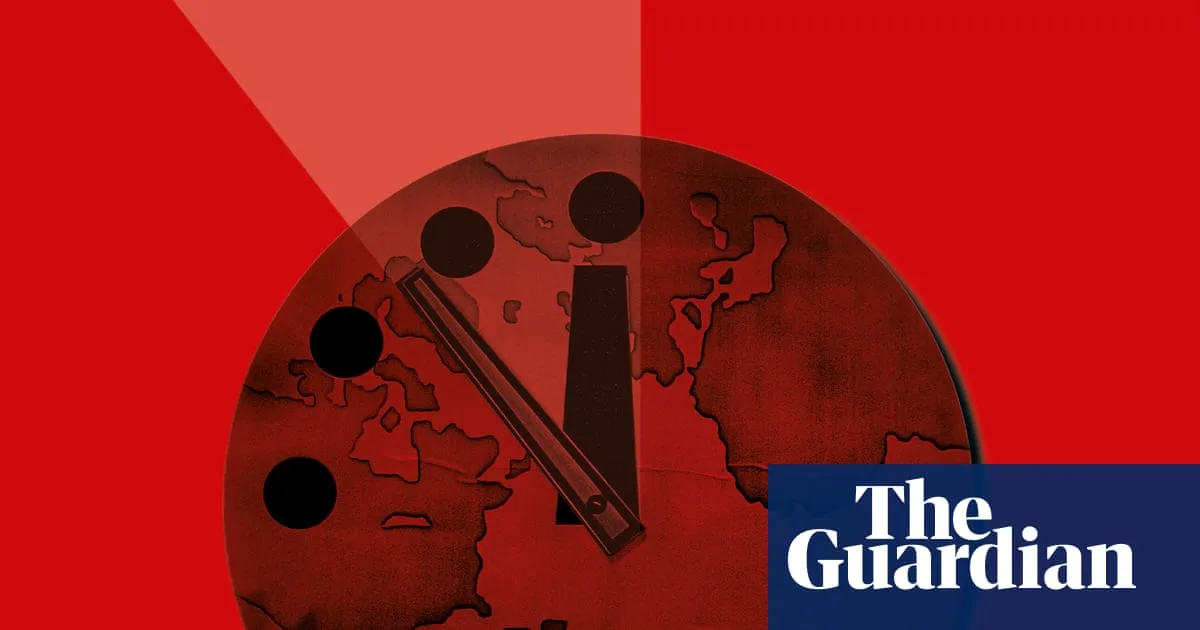
The Doomsday Clock, a symbolic measure of humanity's proximity to self-annihilation, now stands at 85 seconds to midnight – the closest it has ever been. The Bulletin of the Atomic Scientists, which sets the clock, cites escalating threats from nuclear war, climate breakdown, artificial intelligence, and biological risks. 'What we have seen is a slow almost sleepwalk into increasing dangers over the last decade,' said Alexandra Bell, CEO of the Bulletin.
Bell highlighted a 'complete failure in leadership' in the US and other nations, which are doing little to address global catastrophic threats that feed into one another. She warned that because nuclear bombs have not been used since 1945, the public has developed a false sense of security, ignoring the role of luck. 'The more weapons that exist, for longer, the more likely it is something will go wrong,' she added.
The clock was established in 1947 by Manhattan Project scientists who felt guilt over their role in creating nuclear weapons. It distils complex existential threats into a simple metaphor, aiming to spur leaders and citizens into action. The time is set annually by a board of scientists, academics, and diplomats who reach a consensus on the level of danger.
While the clock cannot buy humanity more time, it serves as a wake-up call. Bell believes that diplomatic disarmament and peace-making efforts have helped, but warns that the odds are not in our favour. The Bulletin continues to warn that science is advancing faster than our ability to control it, making the need for urgent action ever more critical.




