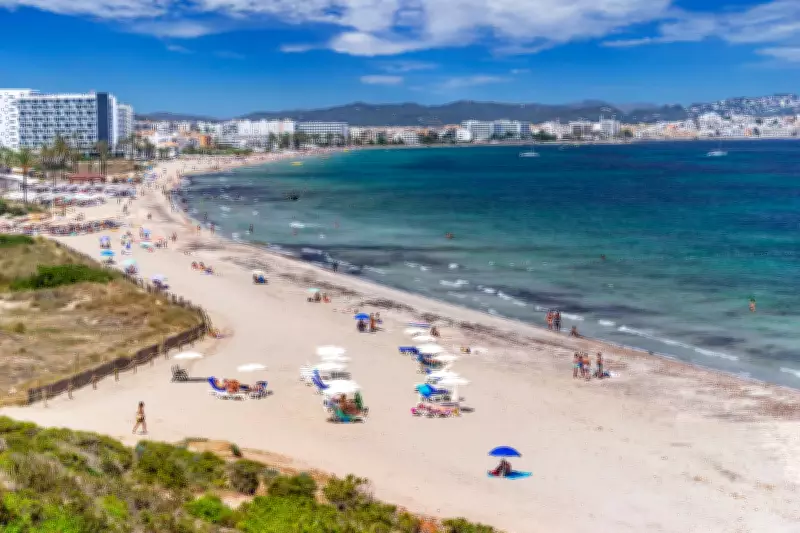
Formentera, a popular holiday destination for British tourists, has implemented a ban on nearly 700 sun loungers, signalling a potential end to traditional 'sunbed wars'. Authorities on the Balearic island have removed 681 sun loungers and 339 parasols from its beaches until 2029. The decision follows a resolution from the Spanish Government's Directorate-General for Coasts regarding temporary installations between 2026 and 2029.
Impact on Key Beaches
The reduction impacts several key beaches, including Cavall d'en Borràs, Ses Illetes, Llevant, Es Pujols, and Es Copinar. While the resolution authorises 1,169 sun loungers and 589 parasols, it specifically excludes 681 sun loungers and 339 parasols previously proposed by the Formentera Council. Permission for other items, such as storage trunks on the beaches, was also rejected.
Environmental Protection Measures
The restrictions are a result of the strict application of criteria outlined in a regional order governing temporary beach installations across the Balearics, brought in due to a commitment to environmental protection. The island’s council has communicated to local businesses that it supports the need to safeguard the coastline and ensure environmental sustainability. However, it also stressed that this sustainability must be compatible with the island’s economic and social realities.

The Spanish government maintains a protective stance on the Balearic Islands' environment. This was highlighted in 2024 when officials investigated singer Katy Perry for allegedly filming a music video in ecologically sensitive sand dunes. Her video for “Lifetimes” depicted the singer enjoying beaches and partying in clubs on Ibiza and Formentera.
Broader Context of Beach Restrictions
In April, Greece announced it was increasing the number of beaches on which sun loungers are banned to 250. Loud music and watersports are also banned on the “untouched beaches” in a bid to protect the environment. Mobile or trailer-mounted refreshment stands will, however, be able to operate, selling drinks and snacks to beachgoers. Alongside this, events of more than 10 people, along with large-scale amplifying sound equipment, will be banned, as will cars driving on the sand. The protected beaches span across much of Greece and its island groups, including in Symi, Naxos, Sifnos, Tilos, Rhodes, Corfu, Lefkada, Kissamos in Crete and more.
In 2025, Majorca removed nearly 1,700 of its sun loungers from beaches in its capital to make more room for locals following protests against overtourism.