
Fire crews are making “significant progress” in tackling a wildfire in the Cairngorms that broke out two weeks ago, a senior officer has said. So far more than 500 firefighters have been deployed to fight the blaze, which has devastated an estimated 25 square kilometres of land since it started near the Ryvoan Bothy, near Aviemore.
A number of homes in the remote region were evacuated as plumes of smoke billowed into the sky, and vast swathes of trees, heather and grasslands have been left charred and blackened. On Wednesday, there were nine fire appliances on the scene, working alongside a range of partners including Forestry and Land Scotland, the Cairngorms National Park Authority and the RSPB.
Fire breaks in place
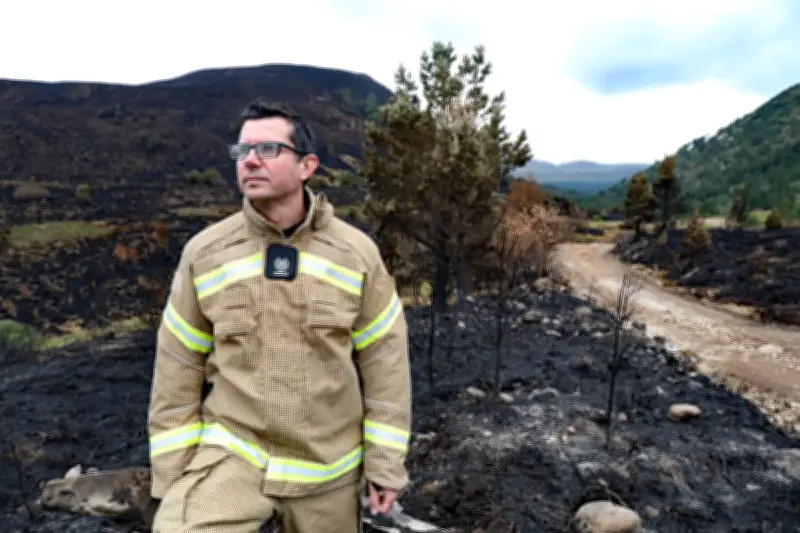
Firefighters have been putting in fire breaks in an effort to control the spread of the fire, with one being put in at a walking track leading towards the Green Loch. Speaking on the track on Wednesday, Scottish Fire and Rescue Service (SFRS) deputy assistant chief officer Michael Humphreys told the Press Association that fire crews are making progress in tackling the blaze. However, he warned the risk of flare-ups remains high.
“It’s been an absolutely devastating fire for wildlife and for the local community who have come out in force to really support us, which we really do appreciate,” he said. “To control this fire, what we’ve had to put in place is a significant number of fire breaks. As we’ve come up this particular area and down this track – this track wasn’t here before – and what this has done is it’s taken away the fuel from this particular area, so as the fires come down to this area, to the firebreak, it’s actually gone out at that particular point.”
Fire still burning underground
But that is not the end of the story, he said, as the fire remains burning underground. “The fire is actually still underneath in that peat, and that can cause flare-ups, which is why we have to regularly patrol the area, damp down the area, and also keep an eye out for those flare-ups.” He added: “You can see that these fire breaks have started to work and we’re starting to make significant progress in certain areas. There is still a lot of activity in other areas as well, but we’ll continue to monitor that, continue to damp down, continue to work with our partners to control these fires.”
Asked whether a helicopter would have helped if one had been available from the start of the fire, the officer stressed the area is “challenging” to get to. “The fire has moved rapidly and extremely quickly, and we are in an area where there’s no resources around,” he said. “If you think about how a wildfire can move, maybe even 10mph or quicker, there’s very little that can get here that quickly to put that particular fire out. So, it goes back to that prevention messaging with the public, with our landowners managing the land, thinking about fire breaks, and using the resources that we’ve got… to control that fire.”
Community support
Wildfire tactical adviser Thomas Mortimer also described one instance where the fire had “jumped” across the fire break – but said crews were on hand quickly with the help of a helicopter to put it out. Mr Mortimer continued: “We’ve had large scale wildfires in Scotland in the past. This has certainly been a significant and challenging incident for us. However, it’s been really pleasing to see how hard everybody has worked to bring it to the stage we are at now and also the support of the local community in enabling us and our partners to do that. From what I’ve witnessed, I’ve seen firefighters who are still really motivated to see the incident through and bring it to a safe conclusion, and I think morale has certainly been boosted and encouraged by the support of the local community.”




