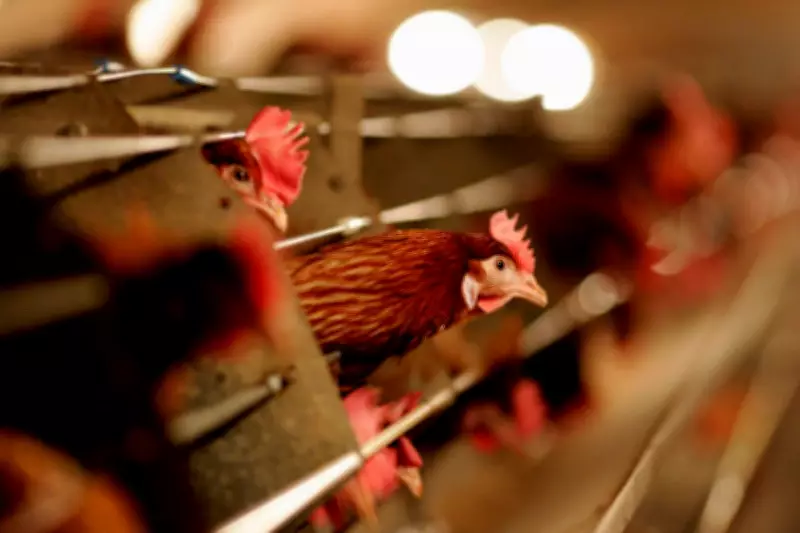
UK Factory Farm Hotspots Identified as Major Sources of Dangerous Ammonia Pollution
New research has uncovered alarming evidence that areas of the United Kingdom with the highest concentration of large-scale intensive livestock operations are experiencing severe ammonia air pollution. A comprehensive report released by Compassion in World Farming and Sustain reveals that industrial chicken and pig farming is creating significant environmental and public health risks across multiple regions.
Pollution Hotspots Mapped Across Agricultural Heartlands
The detailed mapping data shows that Norfolk, Lincolnshire and Herefordshire represent the worst affected areas for ammonia pollution resulting from manure spreading on agricultural fields. These regions coincidentally host the highest density of large-scale intensive farming operations in the country. The ammonia emissions from these facilities react with other atmospheric pollutants to form fine particulate matter, recognized as one of the most dangerous forms of air pollution that can travel significant distances from its original source.
Residents Report Severe Health Impacts and Disruption
Householders living in proximity to these industrial farming operations have reported distressing health symptoms including stinging eyes, breathing difficulties, and persistent respiratory problems. Artist Kate Milsom, 57, described being forced to relocate twice from her home in the Wye Valley due to devastating ammonia pollution from nearby chicken farms. "I couldn't have the doors and windows open any more, even on a beautiful day," she explained. "The smell of ammonia is so invasive. You'd think you'd get used to it – but not this smell."

Michele Franks, an asthmatic resident living near two chicken farms in Lincolnshire, reported similar experiences: "The smell is horrendous, especially if the wind is blowing towards my house. I notice whenever the chicken sheds are cleaned out, it affects my breathing and my chest tightens." She described having to keep windows constantly closed, being unable to hang washing outside, and avoiding her garden during pollution episodes that can last up to five days.
Scientific Evidence Links Ammonia to Serious Health Conditions
The report, titled The Ammonia Pollution Problem, cites multiple scientific studies connecting exposure to particulate matter formed from ammonia with numerous serious health conditions including:
- Heart disease and strokes
- Lung cancer and respiratory diseases
- Type 2 diabetes and dementia
- Asthma and chronic lung conditions
Researchers estimate that such pollution contributed to approximately 15,470 deaths in 2010 alone, highlighting the significant public health implications of unchecked agricultural emissions.
Medical Professionals Voice Urgent Concerns
Television doctor and general practitioner Amir Khan emphasized the clinical reality of these pollution impacts: "As a GP, I see first-hand the toll that air pollution takes on people's health – and ammonia from intensive farming is a major, yet often overlooked, part of that problem. The fine particulate matter formed from ammonia exposure drives heart disease, stroke, asthma and chronic lung conditions, and it is our most vulnerable patients who pay the price." He identified reducing farm emissions as an urgent public health priority requiring immediate attention.
Environmental Consequences Extend Beyond Human Health
The report details how excess nitrogen from ammonia emissions degrades multiple ecosystems including forests, grasslands, wetlands and freshwater habitats. This pollution fuels harmful algal blooms, increases disease risks in farm animals, and contributes significantly to climate change. Agriculture currently accounts for 89 percent of total UK ammonia emissions, with intensive farming systems releasing far more ammonia than natural environments can effectively absorb or process.

Planning Reforms and Industry Expansion Raise Concerns
Despite these documented impacts, ministers are reportedly rewriting planning regulations to facilitate easier construction of intensive livestock farms despite local opposition, following lobbying efforts by poultry industry representatives. Factory farming has already expanded substantially over the past decade, with new applications threatening to add hundreds of thousands more birds to already burdened regions.
Residents in Lincolnshire are currently opposing plans for 12 additional poultry sheds that would house more than half a million birds, describing the proposal as "a health disaster waiting to happen" that would place homes between multiple industrial units.
Government Response and Alternative Priorities
A government spokesperson stated: "We are committed to improving air quality to deliver benefits for public health, the environment and the economy whilst also upholding the highest farm animal-welfare standards. We are working closely across government to deliver planning reforms that both improve outcomes for nature and enable farmers to build the infrastructure they need."
However, Ruth Westcott of Sustain challenged this approach: "We have a shocking deficit of home-grown vegetables, fruit, nuts, beans and pulses. This must be the priority for government, not handing more power to industrial food production."
Air quality testing in urban areas including Leicester, Birmingham and London revealed that 79 percent of monitored locations exceeded World Health Organization guidelines for particulate matter, indicating that pollution from agricultural sources can reach and affect population centers far from the original emission sites.