
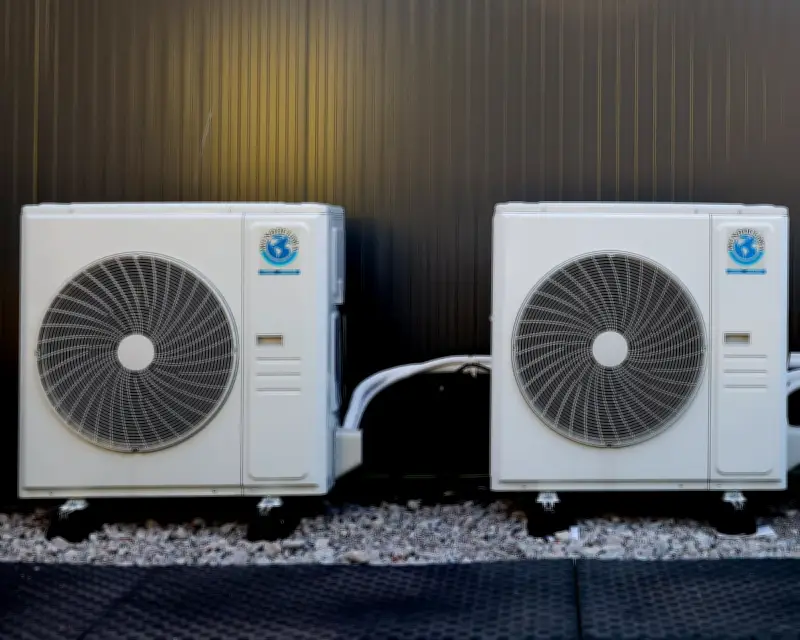
Europe's worst heatwave on record has ignited a culture war over air conditioning, with far-right parties accusing mainstream politicians of sacrificing lives for climate ideology. As temperatures soared to 41.7C in eastern Brandenburg, Germany, on Sunday, the debate intensified, distracting from efforts to protect vulnerable groups, according to health experts.
Record Heat and Low AC Adoption
Mario, a 65-year-old retired handyman in Neuzelle on the German-Polish border, is among the 6% of German homes with fixed air conditioning. He bought a unit two years ago after a fierce heatwave. 'The summers are slowly getting warmer, and as you get older, the heat gets harder to endure,' he said. Across Europe, only about 15% of households in hot regions have air conditioning, compared to 90% in the US.
More than 200,000 people died from heat in Europe in the last four years, according to the World Health Organization (WHO). The record-breaking June heat is expected to cause thousands of deaths. Hans Kluge, head of the WHO Europe office, said, 'Much of Europe's investment has rightly gone into longer-term solutions like shade, insulation and cooling centres, rather than mechanical cooling. Both have a role.'
Far-Right Criticism Intensifies
Marc Bernhard, construction spokesperson for the far-right Alternative für Deutschland (AfD), said his party would stop people being 'sacrificed on the altar' of climate ideology. This marks a shift from a year ago, when AfD health spokesperson Martin Sichert dismissed 'heat panic'. In France, Marine Le Pen's National Rally has made air conditioning a core focus while opposing green policies.
The debate has been inflamed by US commentators, including Elon Musk, who boosted a chatbot-generated text on X claiming 'Europeans should just install air conditioning. The American approach to summer was correct all along.' The post has been viewed nearly 20 million times.
Expert Concerns and Solutions
Experts caution against widespread adoption of air conditioning due to its downsides, including worsening the urban heat island effect and increasing blackout risks. However, its climate impact in Europe is small, as the continent gets less than 30% of its electricity from fossil fuels. Kluge emphasized, 'The priority now is ensuring AC reaches people for whom it's a medical necessity, while continuing to build out the infrastructure – trees, green roofs, cooler buildings – that protects everyone.'
Dr Chloe Brimicombe, a climate scientist at Oxford University, said, 'We are currently focusing a lot of our energy and water resources during heatwaves on cooling data centres. Lives are more valuable to us than AI – or at least they should be, right?'
Mixed Public Response
In Germany, some residents remain unbothered. Gabriele Werner, who works in a tourist office in Neuzelle, said, 'We'd consider getting air conditioning if the summers keep getting hotter, but when it's just a few days we can bear it.' Reinhard Lange, a retired electrician near the weather station that broke the heat record, dismissed climate change: 'Back when I was a child, it was also warm. It just wasn't played up.'
Studies suggest adaptation efforts have reduced death tolls by 75% for heat considered extreme two decades ago, but heatwaves have grown even hotter. The European Union has invested in long-term solutions, but calls for faster change are mounting as temperatures rise.




