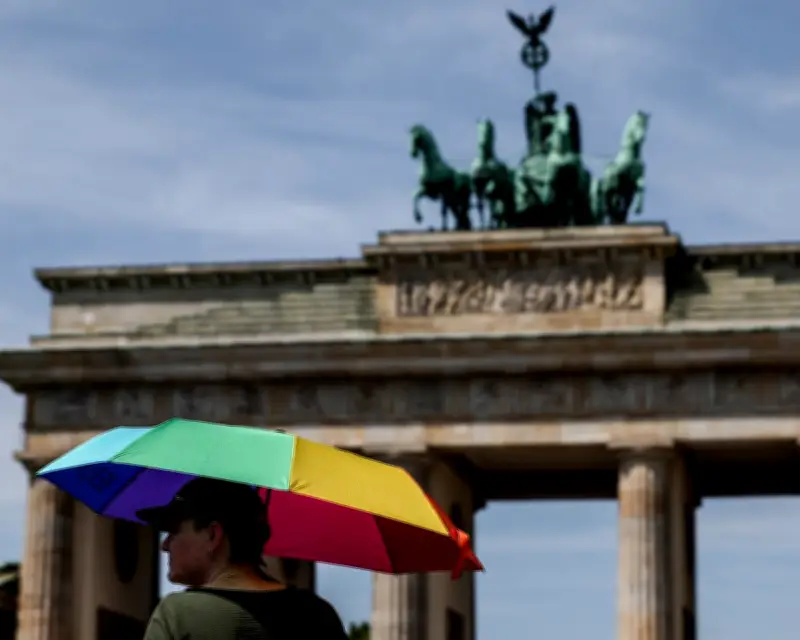
A severe heatwave sweeping across Europe has brought record-breaking temperatures to Germany, Italy, and other nations, with Denmark registering its highest temperature ever recorded on Saturday. The Danish Meteorological Institute reported 36.6°C (97.9°F) north of Odense, marking the warmest day since measurements began in 1874. Slovakia also confirmed its warmest night on record on Friday, with temperatures not dropping below 26.3°C (79.3°F).
Heatwave Spreads Eastwards After Western Europe Records
The heatwave, which has been linked to dozens of deaths in western Europe, moved eastwards over the weekend. Britain, France, Switzerland, and Germany have all experienced record heat in June. Scientists attribute the extreme temperatures to human-made climate change, stating that the heatwave would have been virtually impossible without it. Night-time temperatures this week are now 100 times more likely than they would have been two decades ago.
Karsten Brandt, a meteorologist at the weather forecasting site Donnerwetter, noted: "The heatwave is going to peak at the weekend at well over 40 degrees in some parts of Germany." On Friday, a preliminary German record of 41.3°C (106.3°F) was reached near Saarbrücken, close to the French border, according to a spokesperson for Germany's national meteorological service.
Germany Issues Extreme Heat Warnings and Water Conservation Urged
Germany's meteorological service issued extreme heat warnings for nearly all of the country on Saturday, with temperatures expected to reach 36°C (96.8°F) nationwide and local highs of up to 42°C (107.6°F). Authorities urged the public to save water. André Berghegger, CEO of the German Association of Towns and Municipalities, appealed for voluntary cooperation: "We should rely on voluntary cooperation as long as possible; local authorities should only issue bans if that doesn't work," he told the Neue Osnabrücker Zeitung newspaper.
In France, dozens of people, both young and old, have died during the heatwave. Temperatures above 40°C (104°F) have disrupted rail travel and power generation, prompted alcohol bans and school suspensions, and postponed outdoor events. The French prime minister's office warned that although the heatwave was moving on, pressure on the healthcare system would persist and hospitalisations would remain high for several days. Reports of wildfires in France have increased compared with the same period last year, officials said.
Italy Issues Red Alerts for 18 Cities
Italy's health ministry issued a red alert for the heatwave in 18 cities, including Milan, Rome, Turin, Venice, Genoa, Florence, and Bologna, for Saturday and Sunday, with temperatures expected to climb as high as 39°C (102.2°F) in some areas. The start of the Milan Pride march was delayed to avoid the worst of the heat. The Ironman European Championship long-distance triathlon, scheduled for Sunday in Frankfurt, shortened the cycling and running courses due to the heat, organisers said.
Infrastructure Strain and Travel Disruptions
Public service providers struggled with the prospect of damage to infrastructure, including buckling roads and swelling train tracks, leading to efforts to reduce traffic. Germany's national rail operator, Deutsche Bahn, offered customers the option of cancelling long-distance travel bookings into early next week without charge. The company stated that its infrastructure was under particular strain due to sun exposure, as well as additional risks to signals, tracks, and overhead wires from thunderstorms and wildfires. Near Hamburg, the main traffic lane on a section of the A7 autobahn, one of Germany's busiest motorways, was closed after heat caused the asphalt to split, authorities said.
Forecast: Relief Expected with Thunderstorms
The most extreme heat is forecast to begin fading at the weekend, with heavy thunderstorms expected on Sunday. Across Europe, cultural landmarks have closed, farming has suffered, and some hospitals have struggled to cope. The heatwave has pushed temperatures up to 18°C (32.4°F) above their seasonal average, according to the Reuters Climate Monitor, driven by a phenomenon known as an Omega block, which traps a bulging ball of hot air over regions for extended periods with cooler air on its fringes. Demand for electric fans has surged, and Asian air-conditioning manufacturers have reported a European sales boom. Most of the housing stock in northern Europe is built to retain heat rather than withstand it, exacerbating the impact.