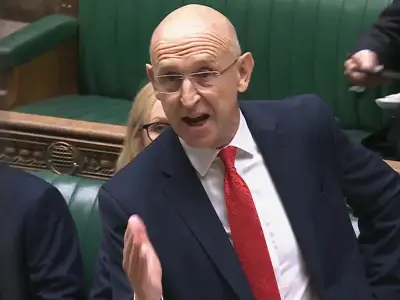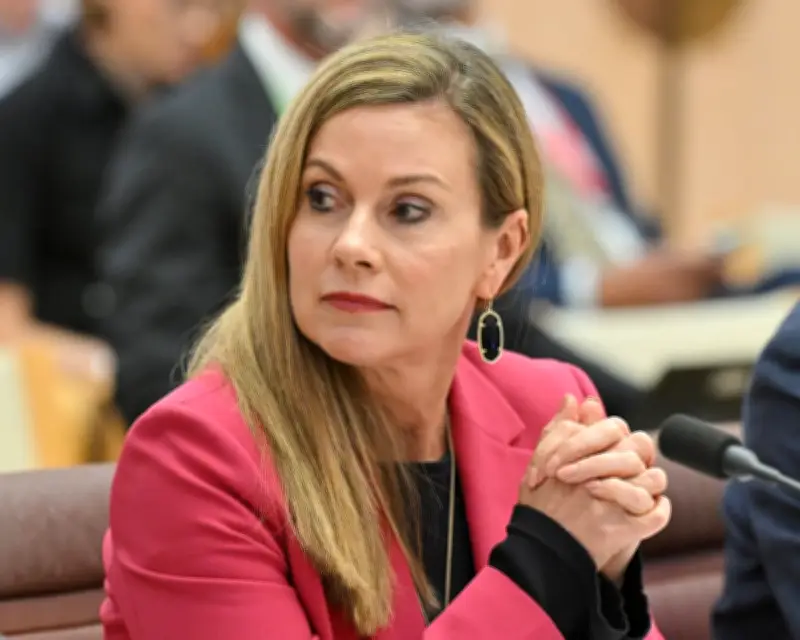
Australia's eSafety commissioner, Julie Inman Grant, on Thursday told the antisemitism royal commission that mainstream social media platforms are fighting to distribute and monetise 'gore' and 'fringe' content. She singled out X, owned by Elon Musk, for pushing back against efforts to restrict or remove violent footage, including from the Bondi terror attack.
eSafety Fights for Content Restrictions
Inman Grant detailed how her office 'fought hard' to get footage of the Bondi attack 'refused classification', making it illegal to distribute in Australia. She said X argued that the footage was 'not any worse than you would see in a gore movie'. Inman Grant responded: 'I can't think of anything more horrific for the family members and the Australian Jewish community.'
She also mentioned other cases where X resisted, including the Charlie Kirk assassination video, the stabbing of Iryna Zarutska on a Charlotte train, and the church stabbing of Bishop Mar Mari Emmanuel in Wakeley, New South Wales.
Platforms Spend More on Challenging Regulation Than Safety
The commissioner noted that social media platforms are spending more to challenge regulation while spending less on trust and safety teams. She said they feel protected by the anti-regulation Trump administration. Of the eight cases the regulator is now fighting with X, six have been instigated by X, she added.
Antisemitism and Hate Speech Not Explicitly Covered
Inman Grant said antisemitism and hate speech are not explicitly covered in the eSafety commissioner's mandate, which focuses on cyberbullying, adult cyber-abuse, image-based abuse, and illegal and restricted online content. Just 2% of complaints about adult cyber-abuse meet the high threshold for action due to freedom of speech protections.
She called for the cumulative harm of online abuse to be considered, saying: 'I just imagine that so many in the Jewish community are experiencing antisemitism, racism on a daily basis. And all of that has a cumulative impact on one's mental health and wellbeing.'
Contrast with Cyberbullying Powers
Inman Grant contrasted the adult scheme with cyberbullying cases, citing a South Australian case where a 14-year-old girl received death and rape threats after rejecting a date. The eSafety commissioner contacted the school and parents, issuing an end user notice that required proof of deletion and a pledge not to reoffend. Non-compliance can lead to further enforcement.
She said the adult scheme is 'not fit for purpose' and suggested an online hate code that would put responsibility back on platforms. 'We know they could roll that out tomorrow,' she said, but platforms are 'playing a game of whack-a-mole' and 'monetising the pain and suffering of other people.'
Police Testify on Coordination with eSafety
Police from various jurisdictions described their interactions with eSafety at the hearing. Western Australian police deputy commissioner Kylie Whiteley said delays finalising a memorandum of understanding with eSafety caused public confusion about whether to complain to eSafety, Scamwatch, or platforms. Australian federal police assistant commissioner Stephen Nutt said the relationship was 'very good' and they were working on better coordination protocols. New South Wales police assistant commissioner Leanne McCusker recommended contacting both eSafety and the National Situation Room for live incidents.
Jewish Council Executive Director Testifies
The Jewish Council of Australia executive director, Sarah Schwartz, described how progressive Jewish people are targeted by a 'constellation' of neo-Nazis and pro-Israel advocates. She said Victoria police took out a personal safety intervention order to protect her after she referred abuse, but she only learned of it when contacted by a journalist from The Australian. The newspaper then ran a story suggesting it was an attempt to suppress free speech, republishing some offensive imagery. Schwartz said she withdrew the order because it made her less safe.