
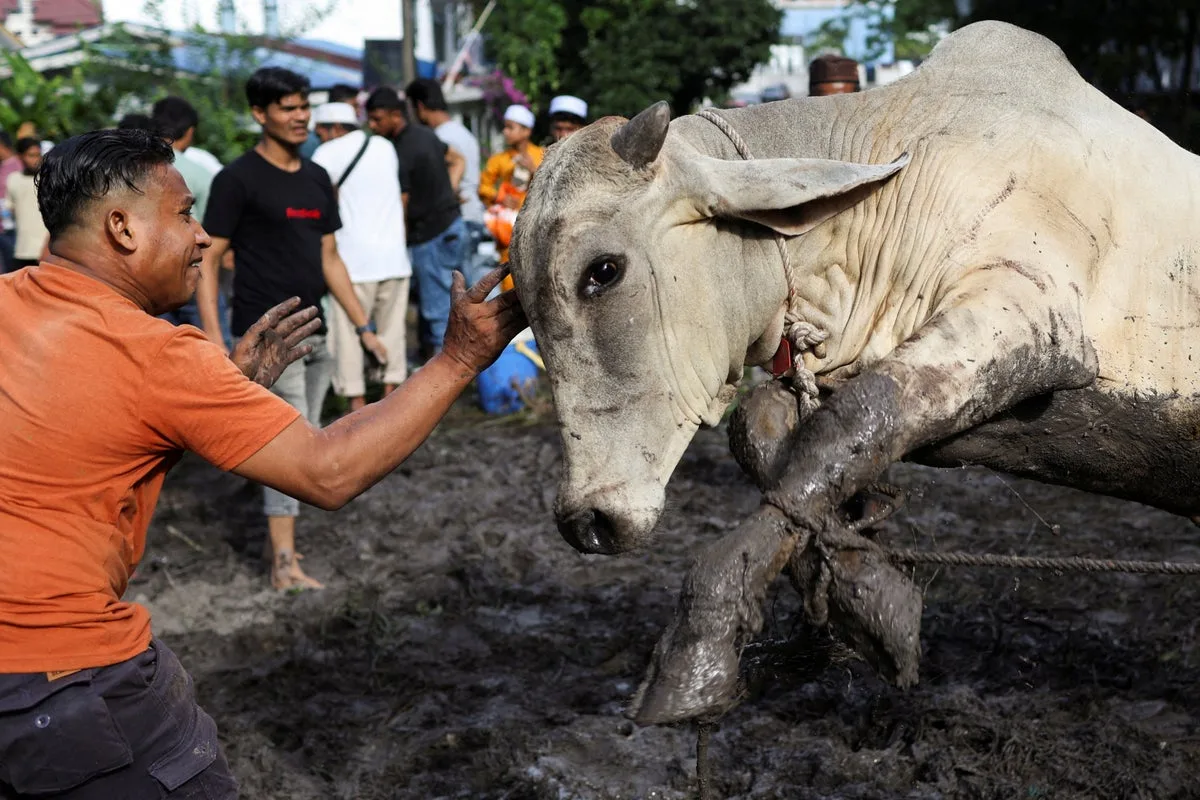
A 45-year-old man has died after being gored by a buffalo during an Eid al-Adha sacrificial ritual in the Malaysian state of Johor, police have confirmed. The incident occurred at around 10am on Wednesday in Kampung Tenang, a village in Ulu Tiram, a suburb of Johor Bahru.
The victim was rushed to Hospital Sultanah Aminah but died that evening. A post-mortem revealed the cause of death as vascular injuries to his left leg. In a separate incident the same afternoon, another 45-year-old man suffered a fractured rib after being attacked by a buffalo in a nearby area. He is receiving treatment at Hospital Sultan Ismail.
Seri Alam police chief Mohd Sohaimi Ishak said the buffalo had suddenly turned aggressive in both cases. Videos circulating on social media showed one of the animals breaking free from ropes held by several men before charging at a man, sending him to the ground.
The victim's niece, who wished to be known only as Mira, told the New Strait Times that the family had gathered for a korban ceremony involving seven siblings, including the victim. Some were eating and others washing dishes when the attack happened. "The deceased and several others were trying to tie the buffalo. The buffalo suddenly became agitated and turned around before goring his thigh until his trousers were torn up to the upper part," she said.
Both incidents have been classified as sudden deaths with no criminal elements. Information has been forwarded to the Johor Veterinary Services Department. Police advised the public against spreading unverified information about the incidents.




