
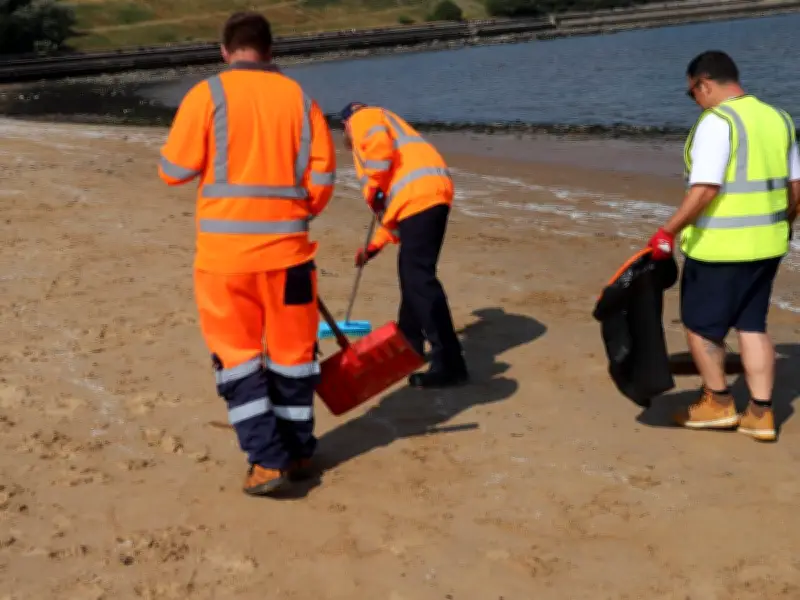
North Tyneside Council has confirmed that the operation to clear plastic pellets from the coast following a collision at the Port of Tyne is a "round-the-clock" effort.
North Tyneside and South Tyneside councils, alongside other agencies, are working together to remove the plastic pellets, known as nurdles, which were released into the sea after a collision at the Port of Tyne on Sunday, 19 July. North Tyneside Council workers were out until 8pm last night, the local authority stated via Facebook.
Clean-up challenges and public advice
Much of the coastline can only be accessed when the tide is out, and teams are making the most of the tides to carry out the clean-up safely and effectively. While the pellets are not toxic, they can pose a hazard to wildlife and other animals if ingested.
The public is being asked not to handle the pellets and to keep dogs on leads in the affected areas. Temporary signage is being installed, with information shared through the council’s social media.
Official comments and background
Louise Gray, director of public health for North Tyneside, said: “We understand that residents may be concerned by reports of plastic pellets washing up on our beaches. The public health risks on shore are very low, and the plastic pellets are not toxic but can pose a risk to wildlife and other animals if ingested. However, we would encourage people not to handle them and to keep dogs on leads in affected areas as a precaution.”
She added: “Our teams have already been working around the clock to make a start on clearing the beaches, tracking the tide to ensure we’re making the most of the windows where clean-up can be done safely and efficiently. Their efforts are just the start of what will be a wider response. We are working closely with regional partners to monitor the situation, coordinate our response and provide timely information to the public.”
Nurdles are small plastic beads used in the manufacture of everyday products including food packaging, bottles and household goods. Environmental organisation Fidra is encouraging people to take part in its ‘Great Nurdle Hunt’, where volunteers can search for nurdles, count how many are found, and submit their findings via its website.




