
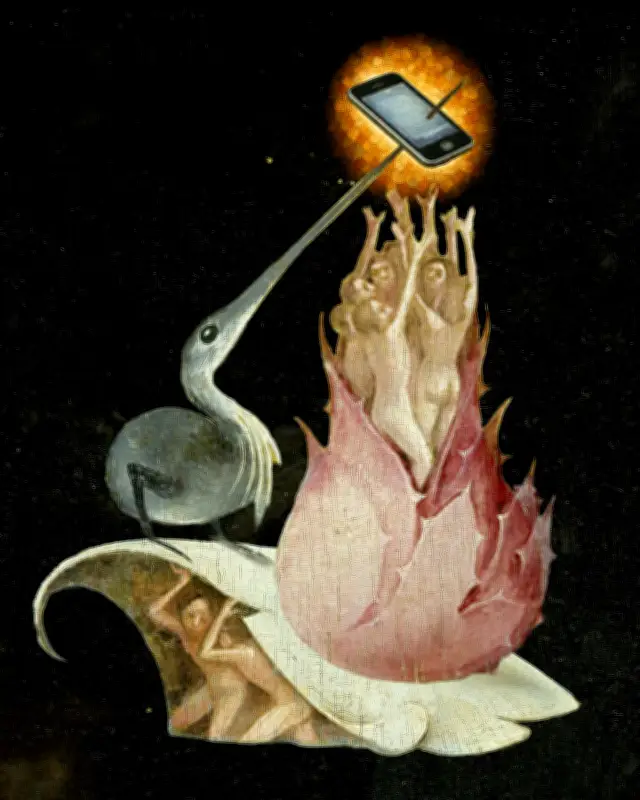
Why does everything feel so joyless? Welcome to the age of decadence without pleasure. Contemporary culture offers a superabundance of seductive distractions—shopping, streaming, chatbots—yet a pervasive mood of emptiness prevails. This is decadence stripped of its core commitment to pleasure.
Historical Decadence vs Modern Asceticism
The ancient Romans exemplified decadence with excess—Emperor Elagabalus served flamingo brains and seasoned food with pearls. Later, the fin-de-siècle decadents like Oscar Wilde championed pleasure as an end in itself, valuing artifice and sensuousness. Today's elite, however, pursue optimization over enjoyment.
Tech billionaire Bryan Johnson spends $2m a year on anti-ageing regimens, swallowing 111 pills daily and tracking his erections. This mirrors Duke Jean des Esseintes in Huysmans' Against the Grain, but while des Esseintes immersed in sensation, Johnson treats pleasure as suspect. Johnson's "Don't Die" movement reflects a broader trend: biohacking for the rich, algorithmic stimulation for the rest.
The Rise of Pleasureless Consumption
GLP-1 drugs like Ozempic reshape appetite and desire. One in eight US adults report using them, with some experiencing diminished pleasure across life areas—lethargy, low libido, emotional flatness. Meanwhile, looksmaxxing subcultures treat the face as a set of metrics requiring correction, rejecting subjective taste for mathematical norms.
AI amplifies this trend. Its outputs—hollow LinkedIn posts, cartoon dramas—lack felt experience. The philosopher Carissa Véliz notes that AI "cannot care, and therefore cannot value." Algorithmic culture promises numbing stimulation, not genuine joy.
Reclaiming Pleasure
The fin-de-siècle decadents offer lessons. Walter Pater advised asking: "What effect does it produce on me? Does it give me pleasure?" He counted pulses to expand life's interval, not to optimize it. A renewed decadence could resist optimization, celebrating everyday aesthetic perception—like Pater stroking a cat for the sensation.
Signs of neodecadence appear in art: Peter Strickland's cinema, Anish Kapoor's blood-coloured sculptures, Shola von Reinhold's novel Lote, John Corigliano's opera The Lord of Cries. These works foreground the senses, offering materials for a movement that gives pleasure back to people. As Pater wrote, "A counted number of pulses only is given to us of a variegated, dramatic life." Against optimization, decadence commands: feel it.




