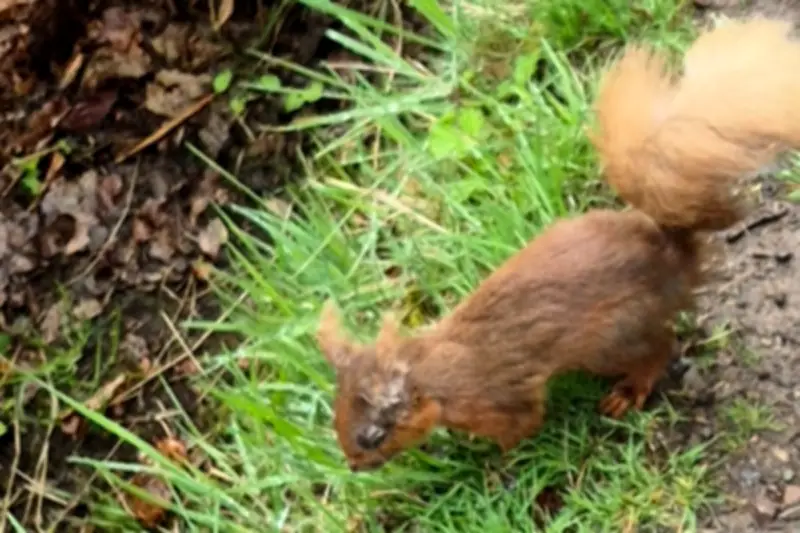
A case of deadly squirrelpox has been confirmed in red squirrels in Clackmannanshire, conservation organisations announced after a post-mortem examination of an adult male red squirrel in Dollar tested positive for the virus.
This is only the second time the virus has been detected north of the central belt. The squirrelpox virus is carried by grey squirrels and while it does not affect them, it can rapidly be lethal when passed to red squirrels.
Second Detection North of Central Belt
Conservation groups are also investigating a sick red squirrel with possible signs of squirrelpox seen in Devilla Forest, Fife. The Scottish Wildlife Trust partnership project Saving Scotland’s Red Squirrels (SSRS) is now asking people in the local area to take down any wildlife feeders in their gardens for at least two weeks to limit the spread of the virus.

The Eastern Lowlands Red Squirrel Group (ELRSG) is also asking people to look out for and report sick and dead red squirrels.
Public Urged to Remove Feeders
“It is very upsetting to see red squirrels suffering and dying from squirrelpox in this area,” said Hollie Sutherland, project co-ordinator for the ELRSG. “We have a significant population of red squirrels in Clackmannanshire, which people are supportive and protective of. The virus has likely come from grey squirrels spreading into the area from the west of Dollar, where they have travelled north from the grey-only areas of the central belt.”
Red squirrels are Scotland’s only native squirrel species. According to SSRS, the population is under threat with only an estimated 220,000 remaining in Scotland.
Previous Outbreaks
The first known outbreak of the virus in Scotland was in 2007 near Lockerbie, Dumfries and Galloway. The only other positive case of squirrelpox in a red squirrel north of the central belt was detected in Dunfermline, Fife, in April 2024.
Conservation organisations were first alerted to the current outbreak after a member of the public photographed a sick-looking red squirrel in Dollar Glen in June.
Volunteers Needed for Monitoring
Ms Sutherland said the ELRSG is looking for volunteers to host live traps in their garden, so the group can continue monitoring the red and grey squirrel populations, and removing grey squirrels to reduce the prevalence of squirrelpox.
“We are extremely grateful to the National Trust for Scotland and other landowners that have already allowed access to our contractors and trained volunteers, and any further support from any other landowners in the area that wish to help would be appreciated,” she said. “Monitoring and managing disease outbreaks can be extremely challenging, so support from local councils, organisations and landowners is invaluable.”
People can report their sightings of both red and grey squirrels at scottishsquirrels.org.uk, along with emailing photos of sick reds to [email protected].
Although squirrelpox is not considered harmful to humans, anyone who sees a sick red squirrel is advised not to approach it, and instead contact the project for advice.