
Authorities in Cyprus have called on residents to reduce their water consumption by 10%, equivalent to two minutes of running water per day, as the island faces its worst drought in over a century. The appeal, accompanied by a €31m (£27m) emergency package, comes as reservoir levels hit record lows ahead of the tourist season.
Eliana Tofa Christidou, head of the water development department, described the situation as critical, noting that dam inflows are at their lowest since records began in 1901. “Everyone has to reduce their consumption,” she said. “Times are critical and every drop now counts.” The drought has left large areas of land parched, with forests drying out rapidly.
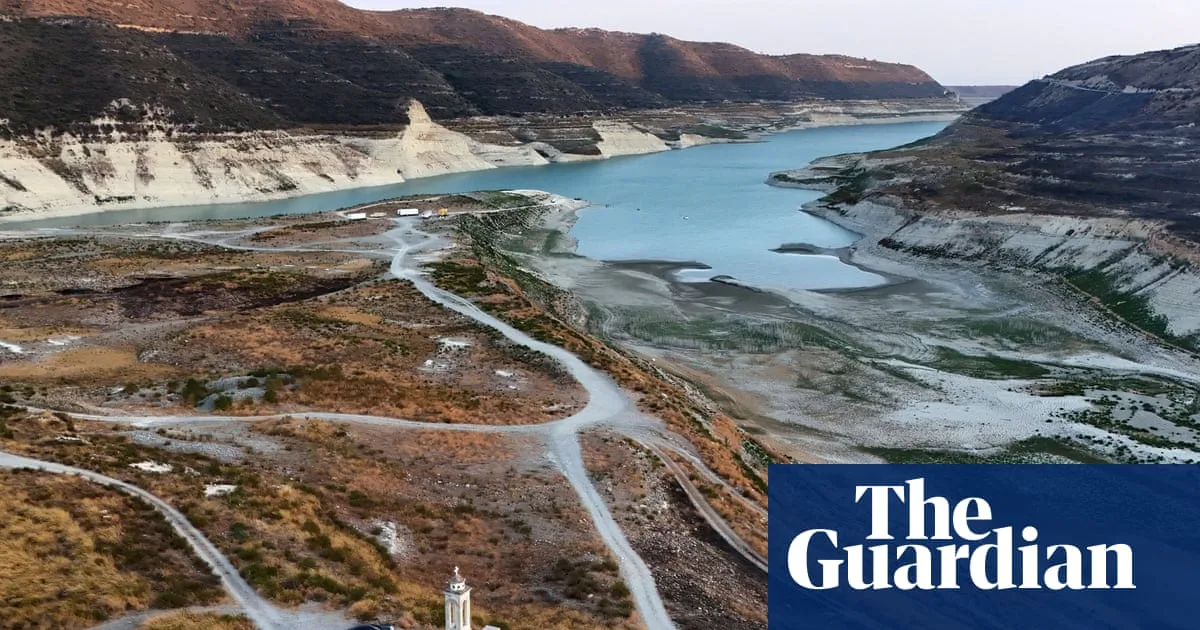
The severity of the crisis is highlighted by the emergence of the Church of St Nicholas from the Kouris reservoir, where water levels have dropped to 12.2% of capacity. Overall, water reserves in February stood at 13.7% of total storage capacity, compared to 26% a year earlier, which officials had already deemed dire. The Mediterranean island, an EU member state with the highest water stress levels, is experiencing temperatures rising 20% faster than the global average due to climate change.
Annual rainfall has fallen by an estimated 15% since 1901, while water demand has surged by 300% due to population growth and tourism. Cyprus welcomes three million tourists annually, nearly three times its resident population. Per capita water consumption in some areas reaches 500 litres per day, far above the European average of 120 litres. A public awareness campaign will aim to reduce household consumption to around 140 litres per person per day.
Additional measures include wastewater reuse, fixing leakages that affect up to 40% of local networks, and financial support for water-saving appliances. The government has allocated €200m to improve infrastructure and is installing desalination plants, with plans to have 14 units operational by the end of 2026. However, critics argue that more should have been done earlier. Charalampos Theopemptou, an MP and environment committee chair, said desalination plants are costly and pose risks to marine life, and called for earlier efforts to reduce water demand, criticising the prevalence of grass in public spaces, swimming pools, and golf courses.




