
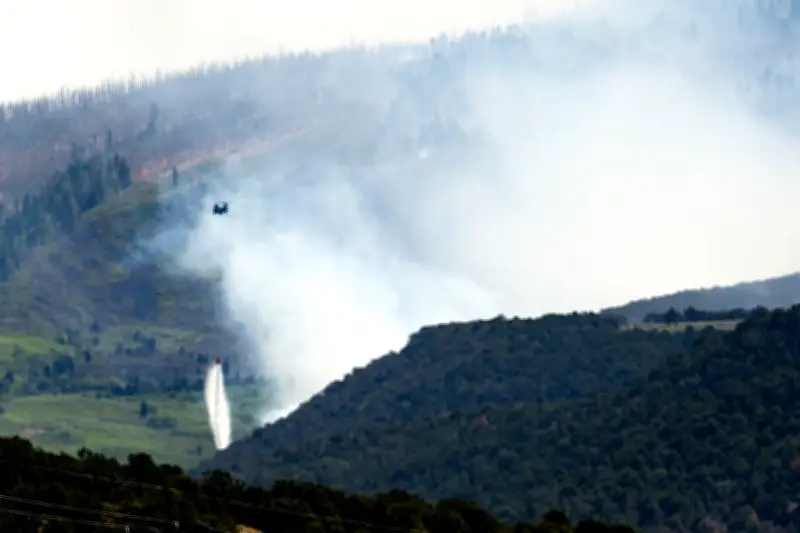
The Cottonwood fire in Utah's Fishlake National Forest has expanded to more than 92,000 acres (37,000 hectares) as of Saturday morning, with firefighters facing zero containment, according to the US Forest Service. The blaze, which started on Monday, grew overnight from approximately 70,000 acres (28,000 hectares), fueled by low humidity and strong winds.
Firefighting Efforts Intensify
Hundreds of firefighters are battling the wildfire, which is now the largest active blaze in the United States, as confirmed by the National Interagency Fire Center. No injuries or casualties have been reported, but the fire has caused property damage at a ski resort in Beaver County and led to the closure of the national forest. The cause of the fire remains under investigation.
Weather Conditions and Warnings
Authorities expect slightly improved weather conditions on Saturday but warned that the afternoon may bring "extreme fire behavior" due to rising temperatures and wind speeds. The National Weather Service in Salt Lake City issued a rare red flag warning on Thursday, indicating a high risk of rapid fire spread and life-threatening conditions. Residents north-east of the fire, including those in the small town of Marysvale, have been advised of "unhealthy" air quality from the smoke.
Statewide Wildfire Crisis
Utah is experiencing an unprecedented wildfire season. Two fires near Eureka, about 80 miles (130 km) south of Salt Lake City, have consumed approximately 70,000 acres combined, prompting evacuations. State officials report that Utah has had 380 fires this year, with humans responsible for 273 of them, according to a state government dashboard.
Preventive Measures
Utah Governor Spencer Cox implemented temporary restrictions on firework use statewide ahead of the Fourth of July, which will mark the 250th anniversary of American independence. "This is unlike anything we've seen in recent memory," said Jamie Barnes, director of the Utah Division of Forestry, Fire and State Lands, in a Thursday news release. "We're seeing fires spread farther and faster under conditions that defy historical expectations. Some of the fires we've responded to this year are behaving in ways veteran firefighters simply haven't seen before. Our firefighters have been working around the clock, our resources are stretched, and we cannot afford preventable ignitions during the days ahead."




