
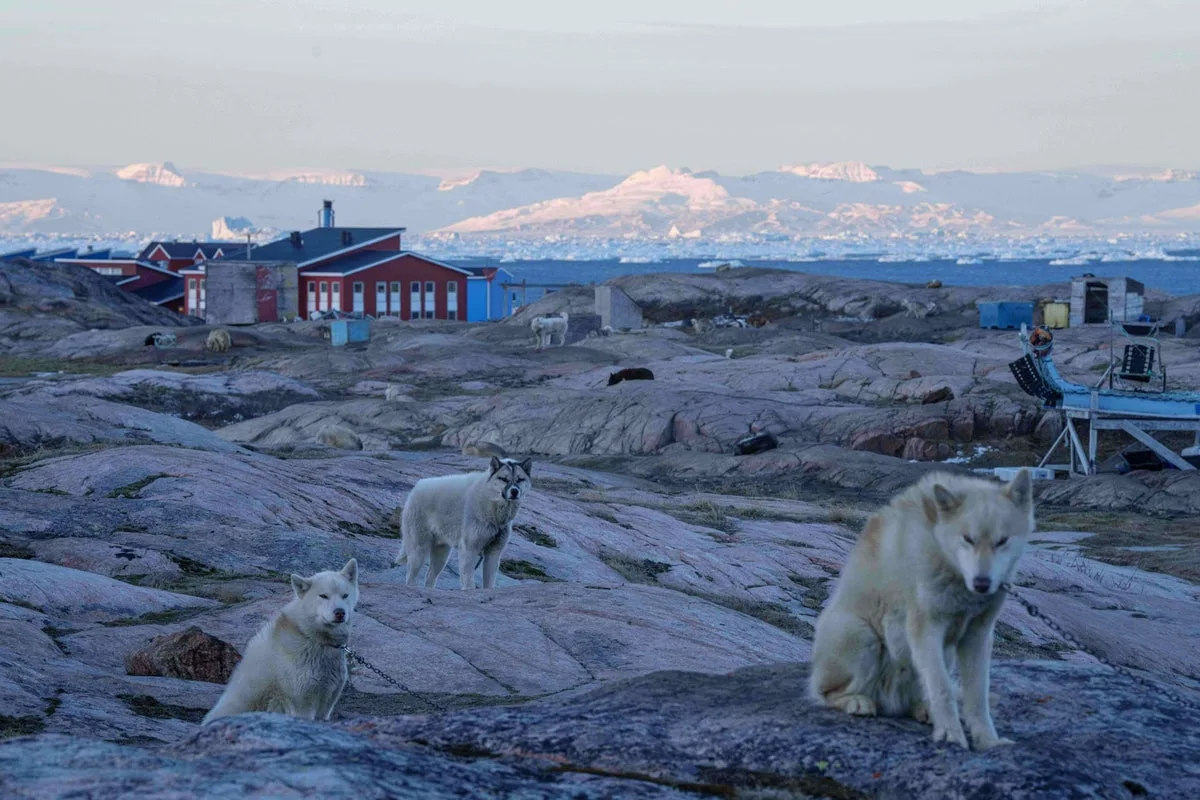
For more than a thousand years, dogs have pulled sleds across the Arctic for Inuit hunters and fishermen. But in Ilulissat, a town north of the Arctic Circle, warming temperatures have left the ground bare of snow in January, endangering a way of life.
Jørgen Kristensen, a five-time Greenlandic dog sled champion, said he now has to collect snow for his dogs to drink during journeys because there is none along the route. In the 1980s, winter temperatures regularly hovered around -25C; now, days above freezing are common. The rising heat is melting permafrost, causing buildings to sink and glaciers to retreat at unprecedented rates.
The melting ice could reveal untapped mineral deposits, which Kristensen said might explain US President Donald Trump’s interest in acquiring Greenland. But for the champion, the greater loss is cultural. “If we lose the dog sledding, we have large parts of our culture that we’re losing. That scares me,” he said.
Sea ice traditionally acts as a bridge connecting communities and hunting grounds. When it fails to freeze, families in the far north require government support. Fishermen who have switched to boats face new dangers from rain-formed ice, which is nearly invisible and can capsize vessels. Climate change in the Arctic is amplified, warming three to four times faster than the global average, according to Inuit leaders.
Kristensen now runs a tourism company, showing visitors his homeland. He worries that the loss of the ice will sever a vital link to Inuit identity. “When the sea ice used to come, we felt completely open along the entire coast,” he said. “Not having that is a very great loss.”




