Why This Winter's Deep Freeze Feels Unprecedented: Climate Change & Psychology
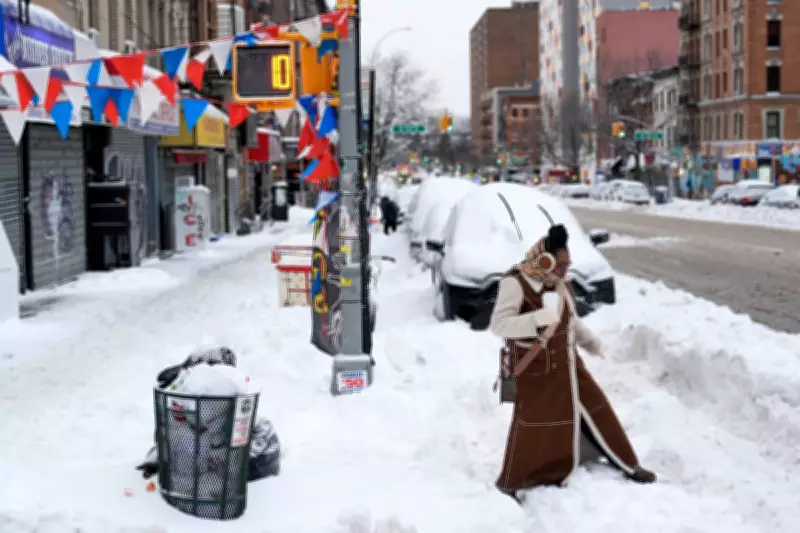
The brutally frigid weather that has gripped most of America for nearly two weeks might not be historically unprecedented, but it certainly feels that way to millions of residents. This striking disconnect between meteorological data and human perception lies at the intersection of climate science and behavioural psychology, revealing how our changing climate has reshaped what we consider normal winter conditions.
The Warming Baseline Effect
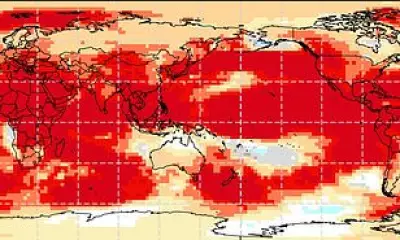
The first quarter of the 21st century has been unusually warm by historical standards, primarily due to human-induced climate change. This sustained warming means that prolonged cold spells have become increasingly unfamiliar, particularly to younger Americans who have grown up during this warmer period. According to data from Climate Central, there have been four fewer days of subfreezing temperatures per year on average between 2001 and 2025 compared to the previous 25-year period.
"We're out of practice," said Charlie Steele, a 78-year-old retired federal worker from Saugerties, New York. "You're kind of lulled into complacency by recent mild winters." His observation is supported by data showing that in Albany, just 40 miles from his home, there have been 11 fewer subfreezing days in the last 25 years compared to the previous quarter century.

Psychological Adaptation to Changing Norms
Human psychology plays a crucial role in how we experience weather extremes. According to Hannah Perfecto, who studies consumer behaviour at Washington University in St. Louis, our systems adapt to both pleasant and unpleasant experiences over time. "Day 1 of a cold snap is much more a shock to the system than Day 20 is," she explained, drawing parallels to how the first bite of dessert brings more satisfaction than the twentieth.
This psychological adaptation means that as the current icy blast continues—with sub-freezing temperatures forecast to persist in many areas—the initial shock should gradually diminish. However, the rarity of such events in recent decades means the initial impact feels more intense than it might have to previous generations.
A Generation Unaccustomed to Extreme Cold
Climate scientists note that shifting weather patterns have fundamentally changed what different age groups consider normal winter conditions. Daniel Swain of the University of California's Water Resources Institute observed that "for anybody under the age of 30, in some spots this may well be the coldest week of their life."
Jennifer Francis, a climate scientist at the Woodwell Climate Research Center in Massachusetts, expanded on this point: "Humans get used to all kinds of things—city noise, stifling heat, and winter cold. So when a 'normal' cold spell does come along, we feel it more acutely."
The Data Behind the Perception Gap
Statistical evidence reveals just how much winter conditions have changed. Meteorologist Ryan Maue, former chief scientist for the National Oceanic and Atmospheric Administration, found that over the past 30 years, the average daily low in the continental U.S. has dropped below 10 degrees Fahrenheit just 40 times. In the preceding 30-year period, that threshold was reached 124 times—more than three times as often.
"People have forgotten just how cold it was in the 20th century," said Texas A&M University climate scientist Andrew Dessler. This collective memory loss is supported by a 2019 study in the Proceedings of the National Academy of Sciences, which found that people forget how extreme cold feels after just two to eight years of milder winters.
Regional Vulnerabilities and Adaptation Challenges
The current cold snap has particularly affected southern cities like Dallas and Miami, where both residents and infrastructure are ill-equipped for extreme winter conditions. Francis noted that utilities and basic systems in these regions simply weren't designed to handle such temperatures, creating additional hazards beyond the cold itself.

This infrastructure vulnerability compounds the human adaptation challenge. Thomas Rutledge, a psychiatrist at the University of San Diego, described this phenomenon as "weather rustiness," drawing parallels to his observations in Alaska where car accidents spiked after the first major snowfall each year despite residents' previous winter driving experience.
Historical Context and Future Implications
Despite feeling unusually prolonged to many Americans, data from 400 weather stations with at least a century of record-keeping reveals this cold snap isn't historically exceptional. Only 33 of these stations have recorded enough subzero temperatures since the start of 2026 to rank in the top 10% of coldest first 32 days of any year over the past century.
The temperature shift becomes even clearer when examining longer trends. When Charlie Steele moved to the Hudson Valley as a toddler in 1949, the average daily low temperature over the previous ten winters was 14.6 degrees Fahrenheit. In the past decade, that average has risen to 20.8 degrees—a significant warming that explains why Steele, who once hunted in winter and sat for hours on cold rocks, now feels "rusty" and "out of practice" with extreme cold.
This combination of climate-driven baseline shifts and psychological adaptation mechanisms creates the powerful sensation that current winter conditions are unprecedented, even when historical data suggests otherwise. As climate patterns continue to evolve, this disconnect between perception and reality may become increasingly common, challenging both individual adaptation and societal preparedness for weather extremes.