Mining for Clean Energy Batteries Ravages Philippines' Last Ecological Frontier
In the race to meet the demands of the energy transition, biodiversity hotspots such as Palawan in the Philippines are being increasingly mined for critical elements. Data reveals how nature is being sacrificed for mining, with local communities bearing the brunt of environmental degradation.
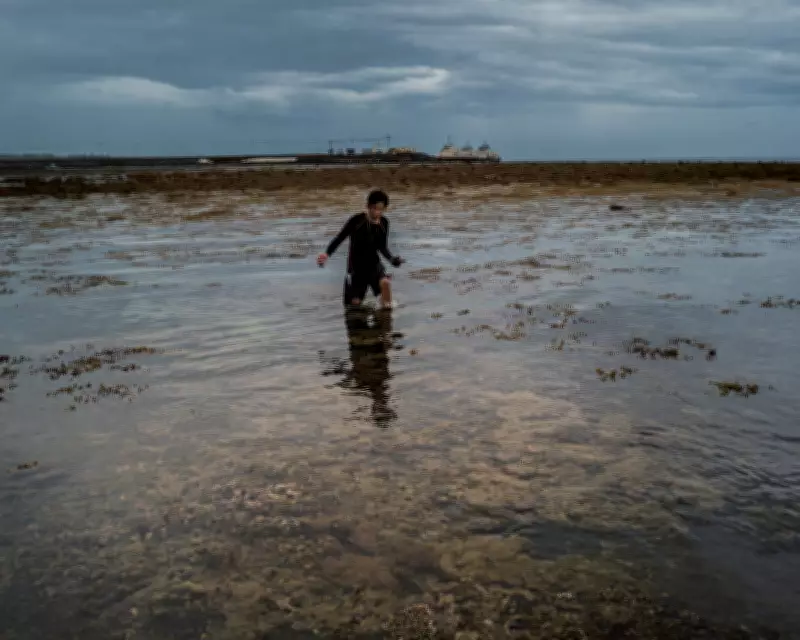
Moharen Tahil Tambiling, a farmer and Indigenous leader, lowers himself from a fishing boat into the water and gingerly picks his way over the reef circling the bay. At low tide in Brooke’s Point on Palawan, a long, rugged island in the south-west of the Philippines archipelago, the coral is just under the surface, looming suddenly under the waves.
Beneath his feet are brain-like mounds and curling fingers of coral. Leaning over the side, men point out different kinds: some once vibrant orange and others delicate pink. Now, almost everything is the same dull khaki, covered by a thick film of silt. Another man jumps overboard, stirring the sediment, and a cloud rises like thick smoke over the reef.

Plunging his hands into the water, Tambiling draws up a thick, viscous clump of goop: grey threaded with orange. "Laterite," he says, his face set in a grim line against the drizzle. Wading to the sand alongside the reef, he uses a flip-flop to gouge the surface, revealing bright, telltale orange beneath a thin crust of grey. "See? Laterite," he repeats, shaking his head.
The Nickel Rush and Its Environmental Toll
This is nickel laterite: a red ore that forms close to the Earth's crust in tropical regions due to intense humidity and weathering. Laterite deposits account for about 70% of the world’s nickel reserves, a mineral now in high demand for manufacturing batteries, especially for electric cars and clean energy infrastructure.
That demand has brought international mining companies to Palawan, an island regarded as special even in a country scattered with tropical rainforests and coral reefs. Environmental groups estimate it may hold close to half of all the Philippines’ remaining untouched, old-growth forest, 30% of its mangroves, and up to 40% of its coral reefs.
Locally known as "the last ecological frontier," Palawan has shielded extraordinary wildlife from human expansion. In 2015, Global Ferronickel Holdings bought Ipilan Nickel Corp, gaining rights to a huge deposit on Mt Mantalingahan, a protected area behind Brooke’s Point. This is one of 11 active mining projects on Palawan, exempted from a 2025 moratorium on mining expansion.
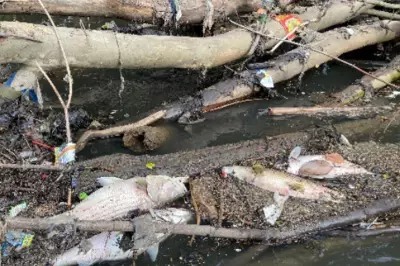
Viewed from above, the Ipilan mine has carved a large, deep red gash into the mountain. Rather than being contained, local communities say contamination has spread into delicate ecosystems. Red globules of laterite silt can be scooped from rice fields, riverbeds, and the reef, once thronged with fish and crustaceans.
Impact on Local Livelihoods and Health
Roddy Masap, a 58-year-old fisherman, has noticed fish disappearing from the bay about four years ago—shortly after the mine expanded and shipped its first 50,000 tonnes of nickel ore to China. Once, a good day would bring in 40kg of fish; now, catches are often as little as 7kg. "There used to be fish near the shore, but now we have to go out deep into the sea," he says.
Crayfish traps now come up dripping with silt, holes clogged with laterite mud. At the edge of Tambiling's rice fields, an enormous mountain of red dirt rears up—a stockpile of mined nickel. A road, stained bright orange by spilled ore, cuts through paddies, carrying trucks to ships in the bay.
When rains are heavy, local people say orange liquid runs off into paddies. Tambiling dips his hand into the water, stained orange by laterite. "Rice doesn’t grow properly here any more. The plants die," he says, noting dropping yields since the mine started. He and his family get painful, itchy rashes after contact with the silt, and his nieces and nephews have developed long-term coughs since the stockpile was built.

Health Risks and Corporate Denials
The mining company states that laterite is not toxic and does not cause losses for farmers or fishermen, nor negative health effects. However, when processed or washed into waterways, nickel laterite can release nickel and chromium. International research on people near nickel mines has found elevated levels of nickel in blood, urine, hair, and breast milk.
Studies link long-term nickel exposure to skin conditions, respiratory and cardiovascular disease, asthma, lung fibrosis, cancer, and neurodegenerative conditions like Parkinson’s and Alzheimer’s. Tambiling recalls company assurances: "They said mining will have no effect on the rice fields, health, or environment." Now, familiar wildlife is rarer, and some native species are gone entirely.
Biodiversity and Indigenous Resistance
Following the river up toward the mountain, the forest thickens. Tambiling walks with Nelson Sombra, an Indigenous leader documenting the mine's effects. Sombra points out plants used for medicine or food, slicing a stalk to drip sap into Tambiling's eyes as an "eyedropper." "The forest is our supermarket and pharmacy," he says.
"The mining company can give us all the money in the world," Sombra adds, "but once the mountain is gone, they cannot buy it back." The company denies links between stockpiles and adverse impacts, citing natural soil erosion and climate-related events. They claim strict drainage systems protect water quality and government sampling has not detected laterite.
Mining's footprint may be less than 1% of Earth's surface, but effects extend far beyond borders. Open-pit mining clears forest and topsoil, contaminating rivers and seabeds with sediment. In 2024, a Philippines coastal department report found dead coral predominant at the mine's dock, with all soft coral gone.
Legal Battles and Global Implications
Since Ipilan's early operations, communities have protested environmental impact. In 2018, the mayor revoked its licence for felling old-growth forests. The supreme court issued a writ noting possible "serious and irreversible harm," and in 2023, the National Commission on Indigenous Peoples issued a cease-and-desist order. The company has overturned all shutdown measures.
After demonstrators blocked hauling roads, Tambiling, Sombra, and 22 other activists were sued for over 10 million pesos (£125,000) for alleged trespassing and stone-throwing. This sum is unimaginable for families living in bamboo houses without running water or electricity. "We have nothing," Tambiling says.
Not all locals oppose mining; some support the 1% royalty to Indigenous communities. Julhakim Usop Godo, a council member, says mining helps with education and medical assistance. However, many see it as a dire threat to biodiversity and forest-dependent communities, with repeated protests since 2018.
Scientists question whether such ecologically significant places should be off-limits to maintain planetary health. Olivia Lazard, a Carnegie fellow, asks: "Can we afford to make up for those losses?" As clean energy demands grow, the clash between extraction and conservation intensifies, with Palawan symbolizing a global dilemma.