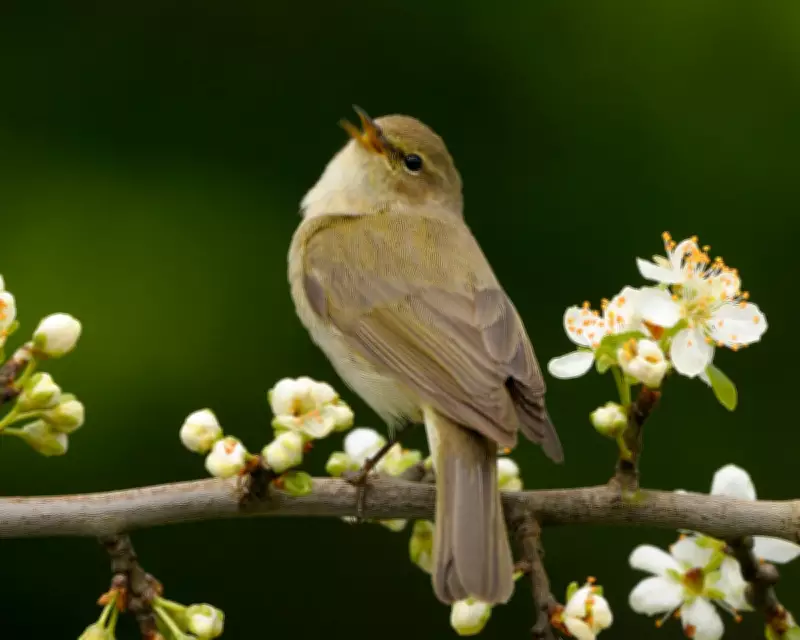
Chiffchaffs Arrive Early in Britain as Climate Crisis Alters Migration
This spring, chiffchaffs have begun to appear a few days earlier than usual across Britain, with reporting systems showing clear signs of a mass arrival. For many birdwatchers, the cheerful two-note song of the chiffchaff marks the first proper sign of spring. This small migratory warbler, named after its distinctive call, is typically an early herald of the season.
Changing Migration Patterns Due to Mild Winters
Traditionally, chiffchaffs spend the winter in warmer regions such as Spain, Portugal, or north-west Africa, unlike their close relative, the willow warbler, which migrates all the way to southern Africa and arrives back in Britain from early April, two to three weeks later. However, thanks to a long run of very mild winters in southern Britain—a clear consequence of the global climate crisis—some chiffchaffs are now staying put. They are increasingly spending the winter close to their breeding areas, often near water sources where small insects remain more abundant.
Early Arrival and Reporting Data
This shift, combined with an unseasonably warm spell in mid-March, explains why chiffchaffs have appeared earlier this spring. The British Trust for Ornithology's reporting system, Birdtrack, has documented clear signs of a mass arrival, with more reports of chiffchaffs than other traditionally early birds, such as the sand martin and wheatear. By late March, chiffchaffs were by far the most common singing bird on many daily routes, with sightings averaging roughly one per mile in some areas.

Implications for Species Adaptation
This early arrival and altered wintering behavior suggest that chiffchaffs may be coping better with rapid climate change than some other species. While the climate crisis poses significant threats to wildlife, these observations highlight how certain birds are adapting to shifting environmental conditions. Continued monitoring through systems like Birdtrack will be crucial to understanding the long-term impacts on migration patterns and bird populations in Britain.