
Archaeologists in Siberia have unearthed a geoglyph of a bull dating back more than 4,000 years, making it twice as old as Peru's Nazca lines and a millennium older than the Uffington White Horse in England. The discovery was made near the village of Khondergey in southwest Tuva, close to Russia's border with Mongolia.
The bull measures 10 feet tall and 13 feet long, formed from carefully arranged pebbles and sandstone. It was part of a larger Early Bronze Age burial site. Only the rear half of the animal remains, as its front was destroyed during road construction in the 1940s.
This is the first animal geoglyph found in this region of Central Asia, according to researchers from the Russian Academy of Sciences' Institute of the History of Material Culture. 'The bull motif is very typical for the Central Asia cultures of the Early Bronze Era,' said Marina Kilunovskaya, head of the Tuva Archaeological Expedition. 'Later in the Scythian era, bulls were replaced by deers.'
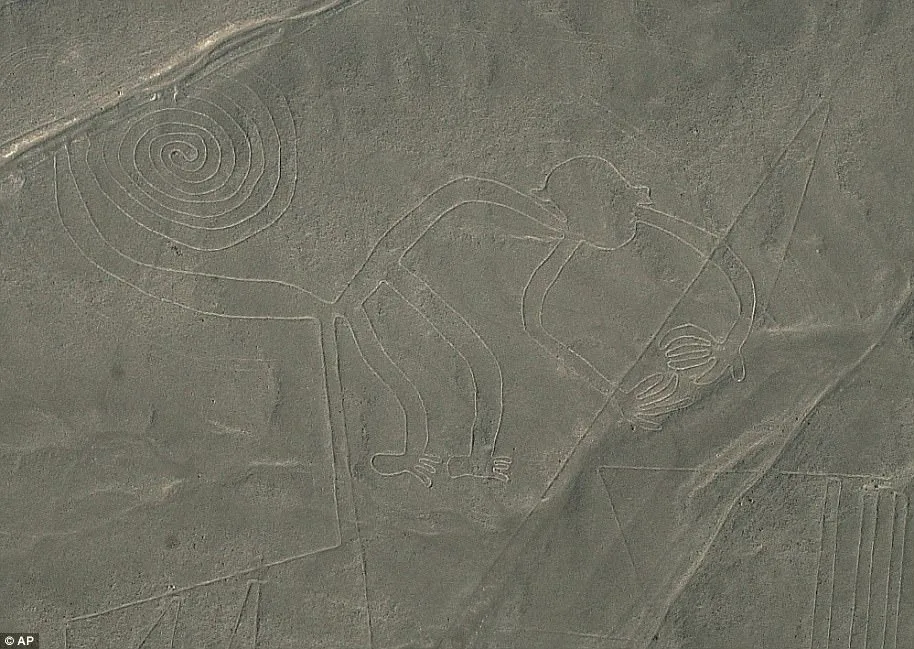
Geoglyphs are large designs made in the ground, often with spiritual or religious significance, and are typically only visible from the air. The most famous examples include the Nazca lines in Peru and the Cerne Abbas Giant in Dorset, England, which dates to between 700 and 1110 AD.
The oldest known geoglyph is also in Russia: a 902-foot-long moose in the Zyuratkul Mountains, dating to about 6,000 years ago. That figure was discovered in 2011 using satellite imagery.




