
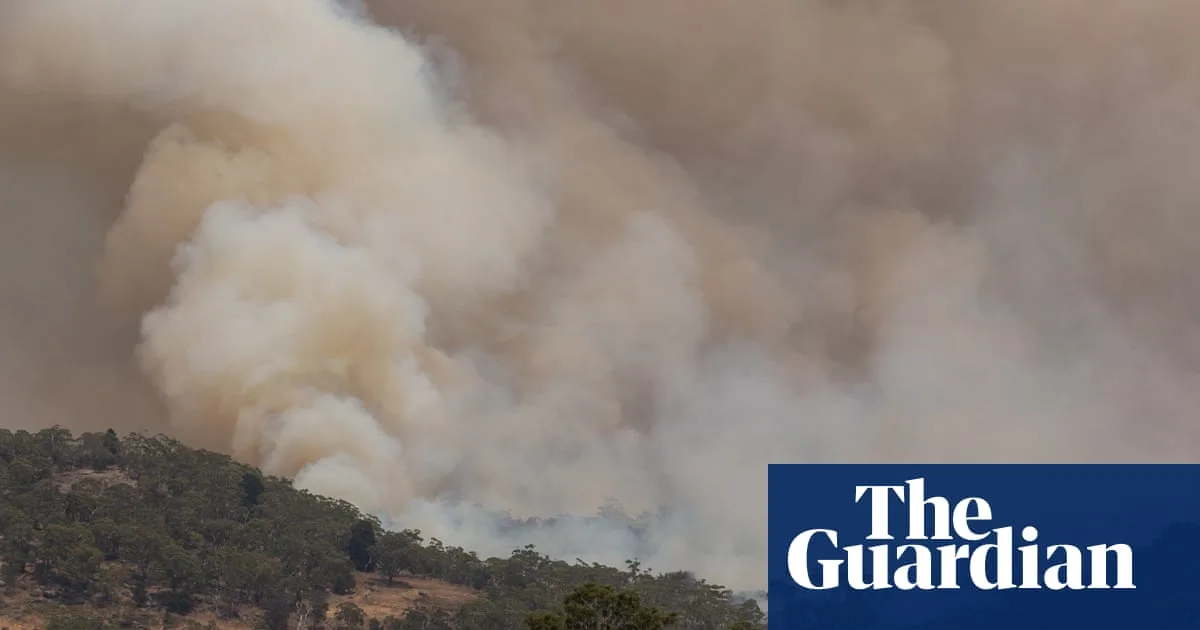
A catastrophic fire emergency has been declared in Victoria as a dome of intense heat pushes into south-east Australia, threatening to smash all-time temperature records. The Bureau of Meteorology has warned of extreme fire danger across several states, with some inland areas facing more than five days above 40°C.
Victoria’s Country Fire Authority chief officer, Jason Heffernan, said new fires could start and spread quickly in the hot and dry conditions. A statewide total fire ban has been imposed, with residents in several communities, including Crawford Crossing and Nariel Valley, advised to “leave now”. Already, fires continue to burn after an earlier heatwave, which analysts say was made five times more likely due to global heating.
In South Australia, catastrophic fire danger is forecast for the Yorke and eastern Eyre Peninsula on Saturday. Total fire bans are in place for all districts except Adelaide. Brett Loughlin, chief officer of the SA Country Fire Service, described Saturday as “some of the most significant fire weather forecasts we have seen in South Australia in recent years”.
Temperatures could soar into the high 40s, challenging state records. In Victoria, the Mallee region may see 49°C on Tuesday, approaching the state’s hottest ever temperature of 48.8°C set in 2009. Mildura is expected to climb from 43°C on Saturday to 47°C on Tuesday. Melbourne, hosting the Australian Open, will reach 40°C on Saturday and 41°C on Tuesday.
In New South Wales, Bourke could hit 48°C on Wednesday, near the state record of 50.1°C from 1939. Queensland’s Thargomindah may reach 48°C on Wednesday. Meanwhile, a tropical low off Western Australia is expected to intensify into a category two cyclone named Luana, crossing the Kimberley coast on Saturday.
Australia experienced its fourth-warmest year on record in 2025, with average temperatures up 1.23°C nationally. The climate crisis has increased the frequency and severity of extreme weather events. Hotter than average days and nights are forecast to continue until April for much of the country.




