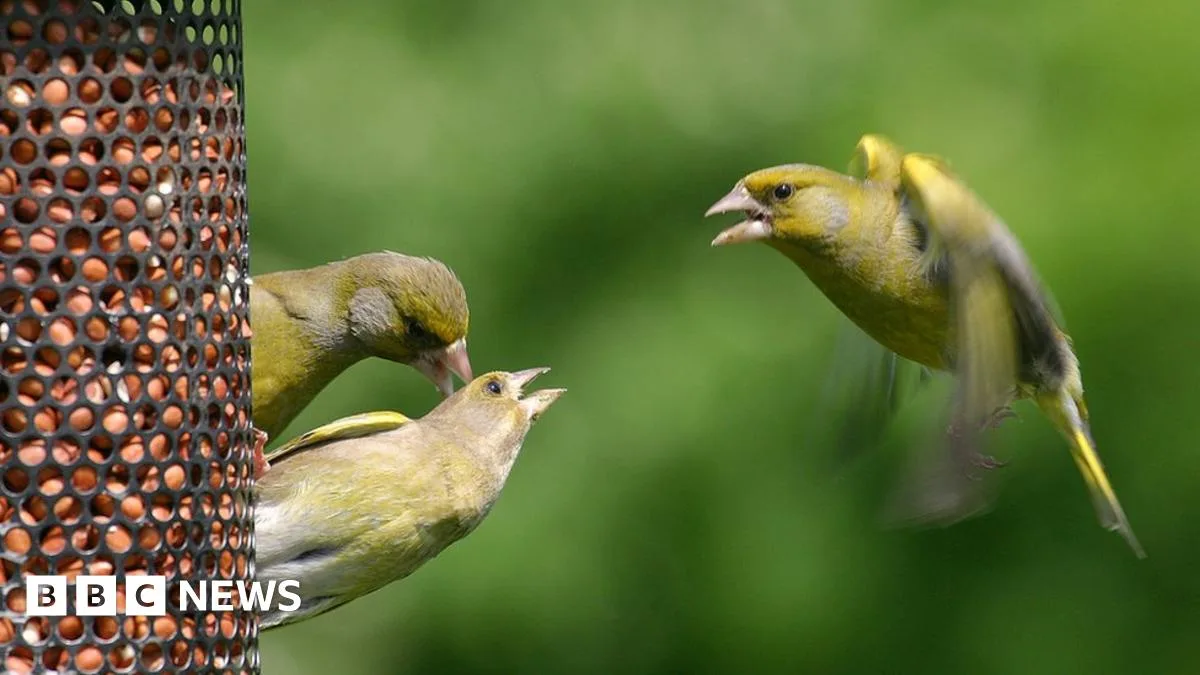
Scientists are warning of the risks of wild birds spreading diseases when they gather at feeders in gardens. Experts led by the Zoological Society of London (ZSL) say people should continue to feed birds, especially in winter, but should be aware of the potential dangers.
If birds look sick, food should be withdrawn temporarily, they advise. The review of 25 years' worth of data identified emerging threats to garden birds. Finches, doves and pigeons are vulnerable to a parasite infection, while a form of bird pox is becoming more common, causing warty-like lumps on great tits and other birds. Other disease threats, such as salmonella, appear to be declining.
Common signs that a wild bird is ill include unusually fluffed-up plumage and lethargy. Diseases can be spread through droppings or regurgitated food around bird feeders. Dr Becki Lawson from ZSL's Institute of Zoology said: 'Our study shows how three of the most common diseases that affect British garden birds have changed both dramatically and unpredictably over the past decade.'
Researchers recommend practical steps to minimise risks: report observations to the Garden Wildlife Health Project, withdraw food temporarily to let birds disperse, feed in moderation, clean feeders regularly, and rotate feeding sites. Co-researcher Kate Risely from the British Trust for Ornithology (BTO) said: 'Be very vigilant - enjoy feeding the birds but educate yourself about what the risks are and what to do if you see signs of disease.'