
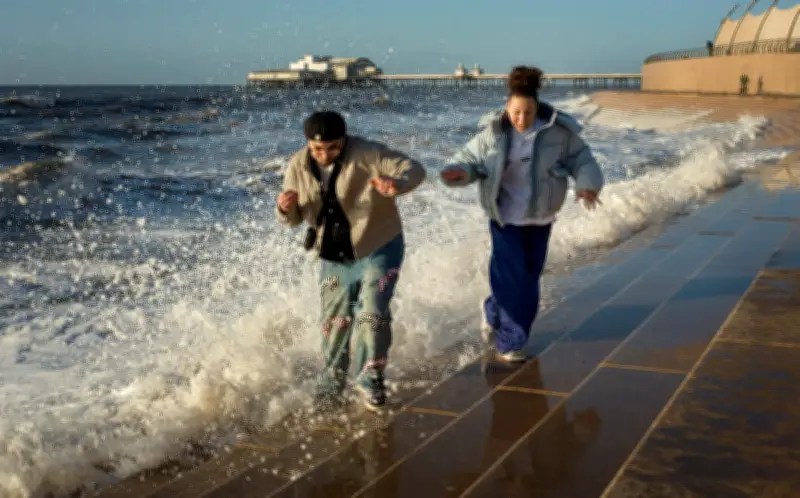
A Guardian investigation into coastal towns in England and Wales has revealed a generation of young people left isolated by decades of underinvestment, yet they remain resilient and full of hope. With a 73% decline in funding for youth services in England over the past 12 years and nearly 1 million 16- to 24-year-olds not in work, education or training (Neet), the situation is desperate.
Reporting from some of the poorest seaside towns, journalists Lisa Bachelor and Polly Braden found that young people feel excluded from decision-making. Eleanor, 23, from Morecambe, said: “I think if people just chatted to the young people here and welcomed them to more decision-making events, it would make this a much better place.”
Coastal deprivation
Nine out of 10 of the most deprived neighbourhoods in England are coastal, with seven in Blackpool, one in Hastings and one in Tendring. The most deprived small area in Wales is in Rhyl. Ben Cooper, who wrote a report for the Fabian Society, warned that MPs need to “show that they want them [coastal communities] and everyone in those places to succeed.”
Sixteen young people from eight coastal places gave evidence to the all-party parliamentary group (APPG) for coastal communities. Polly Billington, Labour MP for East Thanet, said: “I think that one of the most radical things we can do at the moment, because of the levels of isolation that people are experiencing, is to bring them together.”
Unique challenges
Employment opportunities are often halved on the coast. Annalise, 18, from Whitehaven, sent out a form asking: “Do you think you have the same opportunities as other young people elsewhere? The answers were all ‘no’.” Archie, 23, from Weston-super-Mare, called for means-tested bus passes beyond age 18.
The government has committed to a national youth strategy and young futures hubs, but initially only Brighton and Hove is included. Avril Keating, professor of youth studies at University College London, said: “There are so many people and different government departments responsible for delivering objectives for the coast. The question now is: who is joining that up to make sure there is a strategy in place?”
Poor health outcomes
Young people in coastal areas have worse mental health than peers in equivalent inland areas. Tom, 16, from Ramsgate, said: “I do think things like a lack of transport and not having enough social spaces for people to interact with other young people does take a toll on your mental health.”
In Fleetwood, the Coastal Navigators Network redesigned children's mental health support around early intervention, resulting in a 54% reduction in referrals to CAMHS and fewer A&E visits. Lord Kamlesh Patel said: “We don’t need more research or more evidence on this. We just need practical projects led by local people.”
Lack of things to do
Youth groups struggle with short-term funding. Orson, 18, from Blackpool, attends House of Wingz dance company. He said: “It can be quite hard here because the town is more of a tourist attraction so there’s not a lot. But I feel like when I am inspired through dance it lights a spark in me.”
House of Wingz recently received a lottery grant securing its future until 2031. Creative director Aishley Bell-Docherty described the “massive relief”. Emily Murray, director of Essex University’s centre for coastal communities, said: “What they need is long-term guaranteed funding. Just imagine what they could get done if they didn’t have to spend all this time and energy applying for money over and over again.”




