African Mycologists Spearhead Global Fungi Conservation Movement
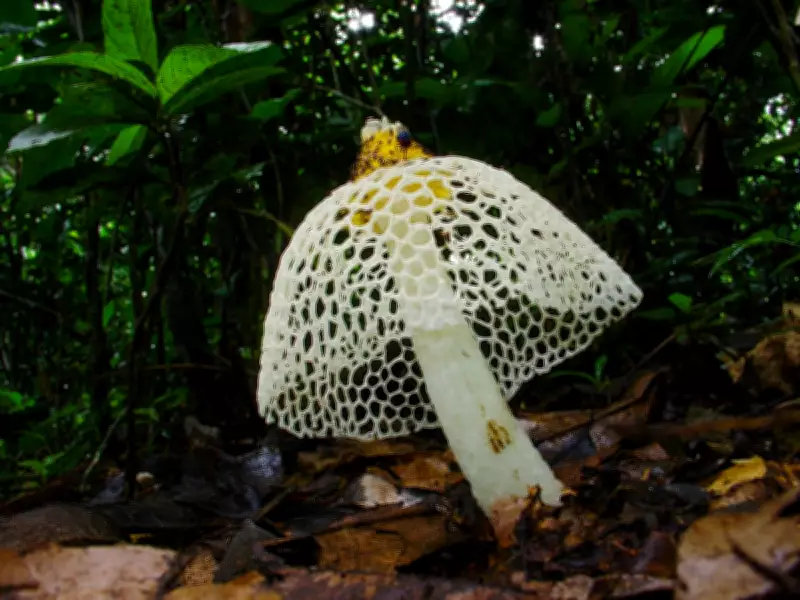
In the heart of Africa, scientists are championing a crucial yet often overlooked component of biodiversity: fungi. Amid mounting evidence of their pivotal role in ecosystems and carbon sequestration, mycologists across the continent are advocating for greater recognition and preservation of fungi, termed 'funga', to stand alongside flora and fauna in conservation efforts.
The Overlooked Kingdom of Life
Madagascar, renowned for its unique wildlife like ring-tailed lemurs and baobab trees, has long neglected its fungal diversity. Anna Ralaiveloarisoa, Madagascar's first homegrown mycologist, emphasises that fungi are fundamental to terrestrial life. "They feed 90% of terrestrial plants. Without them, there is no life on Earth," she states. Despite an estimated 100,000 species in Madagascar, less than 1% have been scientifically described, underscoring a vast knowledge gap.
Ralaiveloarisoa has identified 200 new species but faces significant challenges, including:

- Inadequate infrastructure for preserving specimens.
- Journeys to remote jungle areas without reliable roads or electricity.
- A lack of local experts for collaboration, as she is the sole mycologist in the country.
A Growing Continental Cohort
These obstacles are shared by mycologists across Africa, who are pioneering fungal study and conservation in their nations. In November, many convened at the International Congress on Fungal Conservation in Cotonou, Benin, drawing participants from 27 countries worldwide. Nourou Yorou, a mycologist and general director of the Benin Agency for Science and Innovation, hailed this as an exciting era, noting that fungal conservation has evolved from obscurity into a dynamic global movement.
"The challenge is now to plan a future where fungi are firmly placed in the conservation mainstream," Yorou declared at the conference's opening ceremony.
Historical Lag and Recent Momentum
Globally, fungal conservation has historically lagged behind that of plants and animals. While bird protection organisations date back to the 19th century, the International Society for Fungal Conservation (ISFC) was only established in 2010, followed by the Fungi Foundation in 2012. David Minter, president of the ISFC, recalls that before the 2000s, fungal conservation consisted of disjointed voices expressing concern.
Since then, a global movement has emerged, with milestones including:
- Chile passing the first conservation legislation to include fungi in 2013.
- The coining of the phrase "fauna, flora, funga" to promote inclusion in frameworks.
- Formation of groups like Fundis in North America (2017) and SPUN (2021), focusing on underground networks.
This year, the "fungal conservation pledge" from the UN biodiversity meeting will be revisited at the forthcoming Cop in Armenia, highlighting increasing international attention.
Ecosystem Roles and Climate Impact
The surge in interest is driven by evidence of fungi's critical ecosystem functions. Beyond nourishing 90% of plants, fungi play a key role in climate stability. A recent study found that up to 36% of annual CO2 emissions from fossil fuels are stored in the mycelium of mycorrhizal fungi. Minter compares fungi to waste collectors—essential yet overlooked until absent—emphasising their vulnerability to climate change, habitat loss, and pollution.
A 2025 study in Nature revealed that less than 10% of predicted hotspots for mycorrhizal fungal richness are protected, indicating that conservation efforts for plants and animals do not automatically benefit fungi.
African Expertise and Initiatives
At the Benin congress, African mycologists showcased their commitment through practical initiatives. Sydney Ndolo Ebika, the Republic of the Congo's first mycologist, shared insights on Termitomyces fungi, which are farmed by termites and prized as food. His journey involved emailing foreign mycologists for training and photocopying books due to limited resources back home. He has since established Congo's first fungarium for preserving specimens.

In Zimbabwe, Cathy Sharp researches traditional knowledge by surveying schoolchildren's drawings of mushrooms, finding detailed depictions that aid identification. She advocates for educational programmes, lamenting the removal of fungi from the junior curriculum during Covid-19 and vowing to restore it.
Joyce Jefwa, a Kenyan mycologist, stresses the need for African mycologists to unite. "We have to talk with one voice so policymakers in forestry, conservation, and environment sectors understand fungi's importance," she says, expressing hope for cross-continental collaboration.
The Cotonou Declaration and Future Prospects
Following the congress, participants released the Cotonou declaration, addressing the under-representation of fungi in conservation globally. Co-authored by experts from four continents, it sets priorities for mycology conservation and affirms Africa's key role in the movement. Yorou views this as a milestone, pointing toward a future where fungi are recognised as a pillar of biodiversity conservation.
As Minter notes, "In 2010, it was normal not to mention fungi in conservation. Now, we are at a tipping point where their omission will seem strange." With African scientists at the forefront, the mushrooming interest in fungi promises to reshape conservation paradigms worldwide.