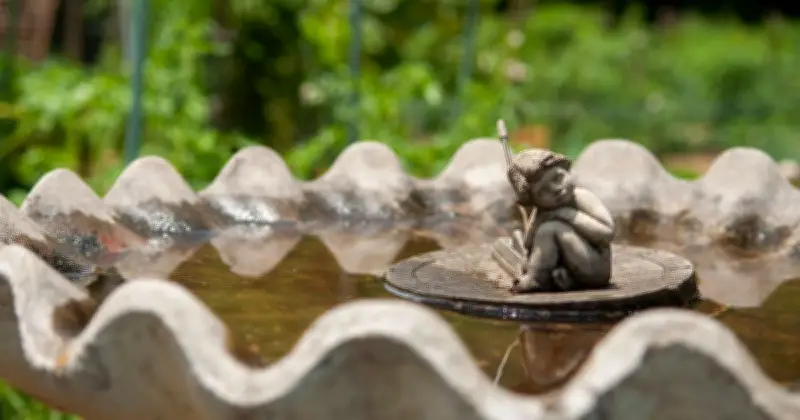
With the heat returning soon, Brits should look out for their surrounding wildlife. The RSPB said the perfect bird bath will have a maximum depth of 10cm. While the UK's recent heatwave left many Brits sweltering, it's not just humans affected by the heat. Birds and other garden wildlife can struggle to find enough fresh water during prolonged warm weather, making bird baths an important source of hydration and cooling for the little creatures. Because of this, Brits with bird baths in the garden have been urged to act before the heat hits again in early July, and even late June. As birds cannot sweat and have a naturally high body temperature, they are at risk of dehydration, overheating and heat stroke and therefore really benefit from bird baths during the summer. Ground-feeders such as robins struggle especially with the challenge of heatwaves baking the ground they search for food on.
Expert Advice on Bird Bath Maintenance
The RSPB said: "Many of us like to cool down by taking a dip, and birds do too. Whether a bird bath, a puddle or the edges of a pond, look out for birds such as wood pigeons, blackbirds, starlings and robins paddling or splashing about. Shaking the water through their feathers helps to keep them cool and clean, too." The RSPB said the perfect bird bath will have shallow sloping sides and a maximum depth of 10cm. It should also be as wide as possible, ideally more than 30cm across. By replacing the water in bird baths daily and cleaning them once a week, Brits can help birds during the hotter months, said the Royal Society for the Protection of Birds (RSPB). Doing so will prevent the spread of infectious diseases.
Hygiene and Placement Tips
A wildlife expert and founder of bird and wildlife feed supplier Ark Wildlife, Sean McMenemy, said: "With many pathogens, such as E. coli and Salmonella, active in warm weather, it's important to maintain good hygiene for bird health. Warm, stagnant bird baths can become breeding grounds for disease if not regularly cleaned." The expert added that if bird baths are placed in shady spots at different heights, Brits could help other wildlife, too, such as hedgehogs. To further help robins, Brits can also offer them small amounts of mealworms or suet. However, the RSPB advises routine feeding again between the months of May and October as this may invite lots of birds in one place, increasing the chances of diseases spreading. Small amounts can be provided from time to time.