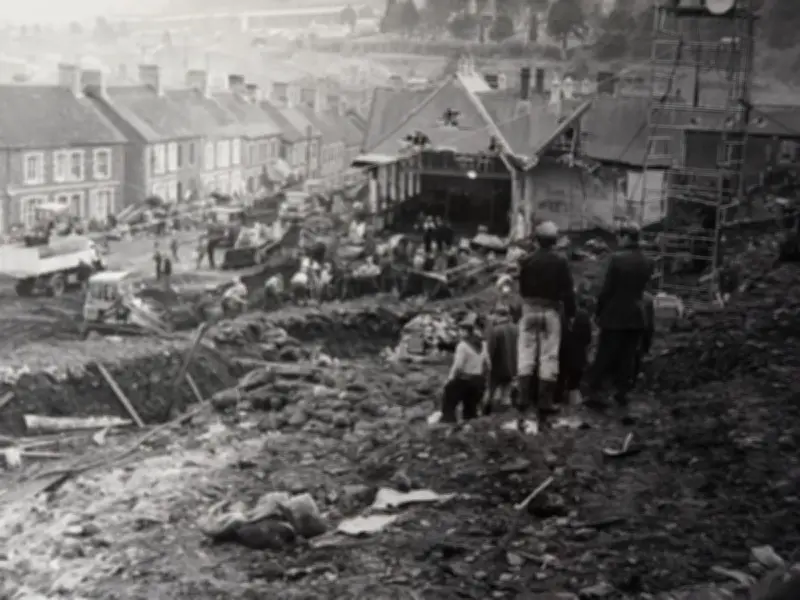
A report has found that one in ten families in Wales still live near 'high risk' coal tips that are becoming unsafe because of climate change, 60 years after the Aberfan tragedy killed 144 people. The figures have emerged ahead of the 60th anniversary on October 21st, with over 130,000 Welsh households close to coal tips which pose a risk to public safety.
Experts fear that extreme weather including heavy rain has made many tips, which have been there for decades, unstable. Sofie Jenkinson, co-director of Round Our Way, an organisation that supports people impacted by climate change, said: "Wales powered the industrial revolution but people are still living with the consequences.
Key Findings of the Report
"Half of the UK's coal tips are in Wales and 350 of them are high risk. In recent years, as the weather has started to change, there has been growing concerns about their safety.
"Not only are these coal tips putting people at risk but they are increases costs in these communities. Our analysis has found that people living in these areas pay 40% above the Welsh median to ensure their homes.
"The Welsh Government are working hard to manage the worst of the risks to people's safety. However, what we are seeing here is a 'canary in the coal tip', indicating how increasing extreme weather is putting people's lives at risk and impacting everyday costs.
"We need to see more political action to put the legacy of the last industrial revolution right, make sure a disaster like Aberfan never happens again and ensures that the next energy revolution improves the lives of people and communities in Wales."
Households at Risk
The key findings of the new report are:
- An estimated 135,653 Welsh households (1 in 10 of all households in the country) live within 1km of a coal tip rated a potential risk to public safety.
- The number of highest-risk - category C and D coal tips - rose from 360 to 368 in the past year as inspections continued.
- Households near the highest-risk coal tips pay up to 40% more for house insurnace (a median of £213 against a Welsh median of £152).
Ralph Connor and Tina Honeyfield, who live in Cwmtillery, a former coal-mining town in the South Wales valleys experienced an old coal tip on the hillside above their home giving way in 2024 after weeks of heavy rain.
Ralph said: "Luckily it was just the edge of the tip that came down. If [the main tip] had come down, we wouldn't be speaking with you today.
Growing Fears Over Safety
"We are just one community and there are thousands of these tips around Wales.
"After Aberfan happened, you would have expected for them all to be dealt with so that could never happen again, but it hasn't.
"If nothing is done about climate change, communities like this - the poorest communities - are always going to be the ones that suffer the most. We are going to have more devastating floods and more landslides if people and governments don't start thinking in a long-term way."
With tens of thousands of Welsh households still living in the shadow of potentially dangerous coal tips and the increase in extreme weather and heavy rain due to climate change there are increasing fears about the safety of the coal tips that still exist, with slips happening during Storm Bert in 2024 and Storm Dennis in 2020.
The decade 2015–2024 was 2% wetter than 1991–2020 and 10% wetter than 1961 to 1990, meanwhile every one degree of global warming is projected to cause a 7% increase in extreme daily rainfall, according to the World Meteorological Organisation. The winter in 2025/2026 in the UK, was the wettest on record for some parts of the UK, according to the Met Office.
Gemma Plumb, a meteorologist from Weather Change, said: "We are seeing more intense rainfall now because of climate change, and this brings an increased risk of flooding.
"A warmer atmosphere can hold more moisture and this means that when it rains, it now rains more. The UK's climate has become steadily wetter since the 1980s, and this is due to an increase in the winter 'half-year' rainfall, the rainfall that falls between October to March."
The most dangerous coal tip sites are concentrated in South Wales. Rhondda Cynon Taf alone has 85 Category C or D sites. Merthyr Tydfil has 60. Caerphilly, Bridgend and Neath Port Talbot each have more than 40 high-risk tips, all in communities that have already faced decades of post-industrial hardship and a lack of investment.