Wildfires caused more financial damage in 2025 than in any other year on record, according to a new study. Catastrophic fires in the US, South Korea, and Europe killed approximately 90 people and forced around 300,000 to evacuate.
Wildfires Dominate Insured Losses
Wildfires accounted for 38 per cent of all insured natural hazard losses globally in 2025, surpassing hurricanes, earthquakes, and floods combined. This occurred even though the total area burned was the second lowest since records began in 2002 and 16 per cent below the long-term average. Researchers attribute this pattern to a shift in how wildfires cause harm: fewer fires overall, but those that occur are hitting populated areas with greater intensity and speed.
“2025 shows that a 'quiet' fire year globally can still be devastating,” said Dr Matthew Jones of the Tyndall Centre for Climate Change Research at the University of East Anglia, who led the study. “We are seeing a growing disconnect between total area burned and real-world impacts, with risk increasingly determined by fire location, intensity and exposure.”

Emissions and Global Disparities
The study, published in Nature Reviews Earth and Environment, also found that total fire-related carbon emissions fell in 2025 to 11 billion tonnes of CO2, the third-lowest year since 2002. However, while wildfires in Europe, Asia, and North America receive significant coverage, Africa suffers far more landscape damage. Satellite data from the Global Wildfire Information System, backed by NASA and the EU’s Copernicus observatory, shows that in 2024, 7.3 per cent of Africa’s landmass was burnt, compared to just 0.6 per cent in Europe and the US.
Western countries are increasing mutual support for climate-driven blazes, but foreign aid programmes that support firefighting in African countries were slashed in 2025 and are set to continue cuts this year, according to The Independent. Experts warn this could have devastating impacts on wildfire-prone nations.
Costliest Event: Los Angeles Fires
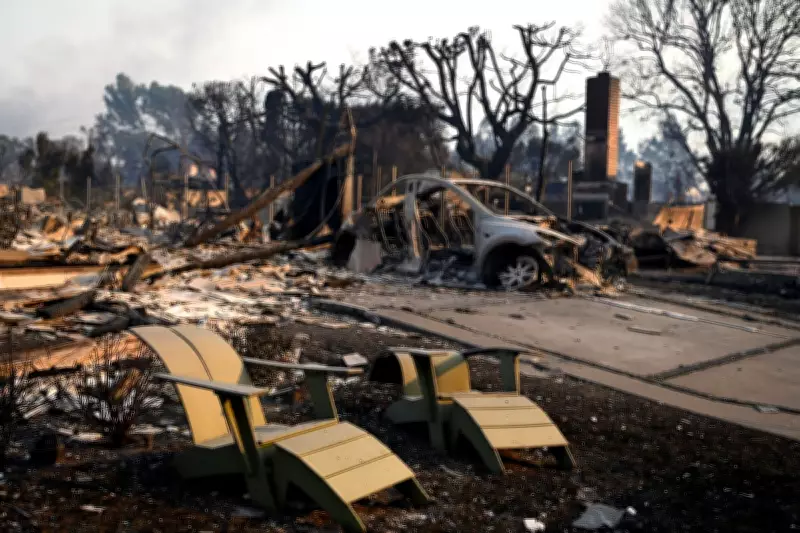
The single costliest event in 2025 was the Palisades and Eaton fires, which tore through the Los Angeles area in January. Driven by extreme Santa Ana winds and critically dry vegetation, these fires burned over 20,000 hectares, killed 31 people directly, destroyed nearly 12,000 homes, and forced some 150,000 evacuations. Smoke exposure affected more than 10 million people, with pollution levels reaching nearly 20 times the World Health Organization’s daily guideline for fine particulate matter. Total losses were estimated at $140 billion (£110 billion), with insured losses approaching $40 billion (£32 billion), making it the fifth costliest natural disaster in recorded history.
South Korea and Europe Devastated
Two months later, South Korea recorded its deadliest and largest wildfire outbreak on record. Extreme heat, dryness, and winds drove fires that burned over 100,000 hectares, killed 32 people, and displaced tens of thousands. A study found that climate change made the conditions enabling these fires twice as likely.
In Europe, severe drought and repeated heatwaves drove major outbreaks in Spain, Portugal, Greece, Turkey, Cyprus, and France during summer 2025, killing at least 28 people and forcing 120,000 evacuations. Six countries simultaneously requested firefighting resources through the EU’s Civil Protection Mechanism. Spain recorded its largest burned area since 2002, with more than 350,000 hectares affected and eight deaths. Portugal’s largest wildfire on record was ignited by lightning. In Turkey, rapid fire spread around Izmir forced 50,000 evacuations, and a separate fire in July killed 10 firefighters. France saw its largest fire since 1949, burning 17,000 hectares in 72 hours.

UK and Canada Experience Record Fires
The UK suffered its largest burned area on record and its first megafire (exceeding 10,000 hectares) on Dava Moor in Scotland during a severe heatwave. In Canada, 2025 was the third consecutive year of extreme wildfire emissions, mainly from its vast carbon-rich boreal forests. Since 2023, fires in North American boreal forests have released roughly four billion tonnes of CO2, exceeding the combined emissions of the preceding 15 years. Forests that burn repeatedly may lose their ability to recover, turning from carbon stores into net sources of emissions that accelerate further warming.
Broader Trends and Future Risks
The study identifies a broader trend: as savannah burning in Africa declines, extreme and destructive fires are growing in temperate and high-latitude regions where forests are denser, communities are more exposed, and climate-driven drought and heatwaves are intensifying. Population growth at the boundary between developed land and wild vegetation is also increasing the number of people in the path of fast-moving fires.
“Deadly human-caused wildfires in California, Europe and South Korea in the same year as extensive consumption of carbon stocks in Canada highlights how rapidly climate change is producing conditions for extreme wildfires to thrive across a range of biomes and seasons,” said Prof Crystal Kolden of the University of California, Merced, a co-author of the study. “The co-occurrence of multiple devastating fires is particularly problematic, hampering resource sharing between countries and putting more civilians at risk. Unfortunately, future fire projections show these types of outbreaks will only increase.”
Dr Jones said the wildfires of 2025 demonstrated that without decisive action, “societies will continue to face escalating human, economic and environmental risks in an era of more extreme fires.” Researchers call for rapid cuts in fossil fuel emissions to limit further warming, along with stronger adaptation, including proactive management of vegetation, resilient infrastructure, and evacuation planning suited to increasingly fire-prone landscapes.