
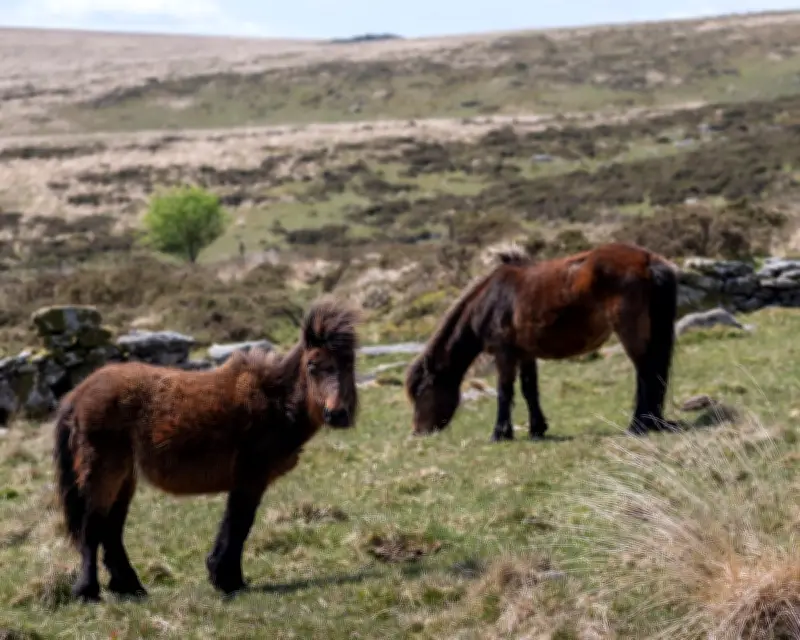
Natural England and MPs are urging the government to amend its livestock regulations to prevent the culling of ponies on Dartmoor. Semi-wild ponies have roamed the moor for over 4,000 years, uniquely adapted to the boggy terrain and providing a charming attraction for national park visitors.
Outrage Over Proposed Cull
Reports that Natural England, a government quango, was planning to authorize a cull of up to 90% of the ponies sparked widespread outrage. The Conservative party called for a review of the body, potentially stripping it of its powers. However, sources within Natural England attribute the issue to the Department for Environment, Food and Rural Affairs’ (Defra) policy, which fails to distinguish between sheep and ponies.
Overgrazing Concerns
The barren moors are severely overgrazed, endangering species such as rare birds and butterflies due to a lack of food and nesting sites. Natural England recommended a 76% destocking of the moors. While the quango cannot order a cull, commoners who graze animals on the moor receive payments for stewardship. New government plans require graziers to reduce livestock numbers to access these funds, leading to potential culls.
Sources at Natural England stated that Defra’s rules treat all livestock equally, ignoring the ecological differences. Sheep consume nutritious plants, while ponies effectively remove tough, unpalatable vegetation like molinia grass and gorse, which are overtaking peat bogs and heather. Farmers are more inclined to eliminate ponies rather than sheep, as sheep can be sold for meat.
Call for Differentiation
One source lamented, “Defra policy in agri-environment schemes does not allow us to differentiate between livestock animals in making agreements.” This has caused deep frustration, especially after online abuse directed at Natural England, including false claims that its chair, Tony Juniper, wanted to personally kill ponies.
According to the Dartmoor Hill Pony Association, fewer than 1,000 Dartmoor hill ponies remain, down from approximately 7,000 in 1999. A government-commissioned review two years ago advised that Natural England “should not take actions likely to result in a reduction in pony numbers,” noting their value for conservation grazing.
Joss Hibbs, secretary of the DHPA, said: “Natural England is putting ponies in direct competition with commercial livestock who pay the farmers’ bills. Their plans disregard scientific evidence and could decimate an endangered species that has been a feature of the landscape for over 4,500 years.”
Political Pressure
Natural England and MPs are calling for a carve-out for ponies. Local Labour MP Steve Race stated: “The ponies are not livestock – they’ve existed as an integral part of Dartmoor’s ecosystem for thousands of years, and are the only thing that eats the highly destructive molinia grass that is reducing Dartmoor’s biodiversity.” Race and other Devon MPs will meet with Defra ministers next week to discuss the issue.
Caroline Voaden, Liberal Democrat MP for South Devon, expressed alarm: “Dartmoor ponies have roamed the moors since the bronze age, yet under plans drawn up by a government quango, their population could drop by as much as 90% in the next few years. The potential consequences of Natural England’s proposed grazing contracts are staggering. We must protect these last semi-wild ponies in the UK.”
Defence minister and Plymouth MP Luke Pollard has written to Defra requesting a carve-out. He said: “I am deeply concerned that the proposed contracts include ponies within overall livestock unit limits, which risks creating a financial incentive to prioritise more commercially viable livestock, such as cattle and sheep, over ponies.”
A spokesperson for the prime minister stated: “This government will not allow a cull of Dartmoor ponies and we don’t manage our pony populations by culling in this country.”




