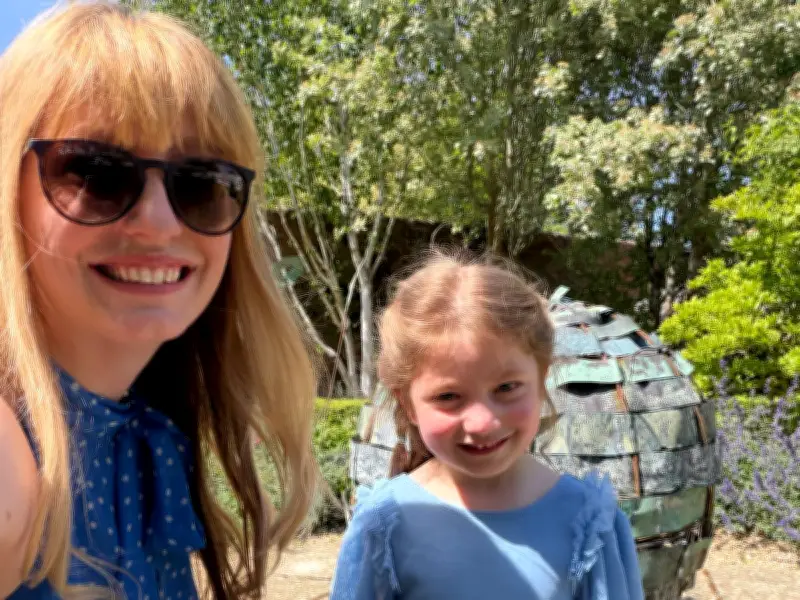
Louise van der Valk, 36, a claims director from Essex, says her daughter Scarlett showed no signs of health or developmental issues before suffering a 30-minute seizure on the day of her first birthday party in February 2022. The seizure led to a diagnosis of beta-propeller protein-associated neurodegeneration (BPAN), a rare genetic condition caused by a mutation in the WDR45 gene.
First Seizure and Initial Misdiagnosis
On the day of Scarlett's first birthday celebration, just an hour before guests were due to arrive, her eyes glazed over, she began to dribble, and she went still. Louise called 999, and the seizure lasted 30 minutes. Doctors initially reassured her that febrile seizures—convulsions brought on by high fever—are common in young children and that Scarlett would likely outgrow them. An electroencephalogram (EEG) ruled out epilepsy.
In April 2022, Scarlett suffered another prolonged complex febrile seizure at nursery and was taken to hospital. She was given emergency medication to keep at home. In October 2022, while in the care of Louise's parents, she experienced a seizure lasting about an hour. Despite rescue medication, the seizure continued, and Scarlett was rushed to hospital, where she received an additional dose. At 20 months old, she had not yet begun to speak.

Genetic Testing Reveals BPAN
Scarlett was referred for an MRI and comprehensive genetic testing in October 2022. In January 2023, Louise received the results over the phone while her husband was at work. She said: 'We were told she had a genetic mutation, but we didn't know what any of it meant, it was horrendous. I just broke down, I had to tell my husband the news and I didn't have the answers to any of his questions.'
In April 2023, she met with a genetic counsellor, followed by a consultation at Great Ormond Street Hospital in June. Scarlett's medical report confirmed that her seizures resulted from a WDR45 gene mutation, linked to BPAN—a rare iron-storage disorder that causes seizures, developmental delays, and intellectual disability in early childhood. The condition is progressive, often leading to movement disorders, cognitive decline, and loss of abilities in late adolescence or adulthood. According to Action Medical Research, children with BPAN may ultimately develop symptoms similar to dementia and Parkinson's disease, including loss of ability to swallow, walk, talk, and increased susceptibility to infection.
Progress and Fundraising Efforts
Despite initial warnings that Scarlett might never speak, she now runs, communicates, and attends a mainstream school with special educational needs support. Louise said: 'My first feeling was complete shock and disbelief. It honestly felt like a nightmare I couldn't wake from. Experts initially told us it was unlikely she'd become verbal.' Within a year of diagnosis, Scarlett's speech improved with specialist support. Doctors believe she may be at the milder end of the BPAN spectrum, as some children are non-verbal and immobile.
There is no cure for BPAN, but symptom management includes physiotherapy, medication, and surgery for movement difficulties. Louise said: 'It's heart breaking to know she's going to regress but if they find a cure, she could potentially live a happy, long and normal life.' She has raised over £30,000 for Great Ormond Street Hospital Charity for BPAN research. In 2024, the funding supported a research grant at Great Ormond Street and University College London aimed at finding a cure, as well as a family day for affected families.
Louise, a parent ambassador for Action for BPAN, is now aiming to raise £2.3 million to advance gene therapy research to clinical trials and secure government support. She climbed Snowdon in June 2026 with colleagues and is planning further fundraising events. She said: 'We're doing it for our children. They could find a cure within their lifetime. In global terms, £2.3 million really isn't a lot of money, and what a legacy for people to get behind. We could save Scarlett's life and the lives of other children, and people can be part of that journey.'