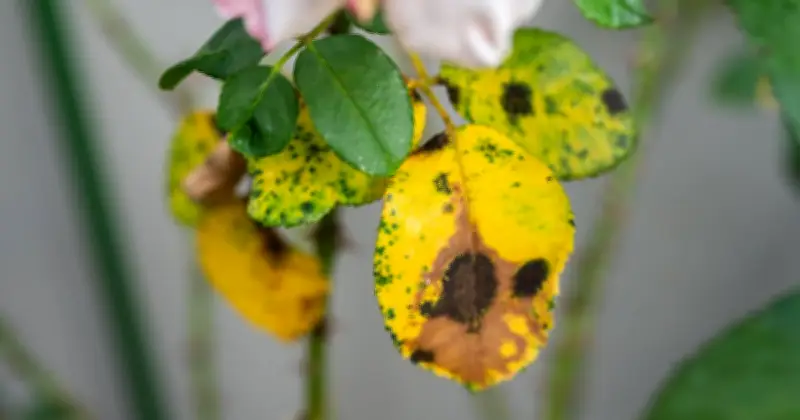
Adding mulch to the soil around rose bushes this autumn is an effective natural way to prevent black spot, a common fungal disease that can cause leaves to yellow and fall off, potentially stopping the plants from flowering again.
Louis Hooft, a plant specialist and founder of Moowy, has cautioned that rose bushes require immediate examination for black spots on their leaves, as this indicates the "most common and troublesome" infection afflicting these garden plants.
What is black spot and how does it spread?
Hooft said: "Black spot is a fungal disease affecting rose bushes, manifesting as circular black spots on the plant's leaves. If left untreated, affected leaves will turn yellow and fall off. However, these unsightly black spots can eventually merge and spread, causing the entire plant to lose its leaves."
He added: "Black spot can also infect young canes and flowers, leading to further damage and a decline in flower production."
While black spot disease will not kill roses outright, it will significantly weaken the plant's health, rendering it perilously vulnerable to further diseases, pests and the impending winter cold that could prove fatal. If left untreated, the rose plant will not have the strength to produce blooms and may lose all its leaves, potentially resulting in a bare and bloomless garden next year.
Why autumn increases the risk
Black spot disease primarily spreads through moisture, which is why it becomes considerably more widespread during autumn with the damp, cooler weather.
Hooft explained: "Black spot develops between autumn and winter when the fungal spores grow in piles of fallen leaves and infected canes. Then, the wind and rain spread the mature spores onto your roses' foliage, and this is when you'll notice irregular black spots on the plant's leaves and young stems, eventually leading to defoliation."
The most reliable way to guard against black spot is to take care when watering, ensuring moisture is applied solely to the base of the soil. Overhead watering should be avoided to prevent dampness from settling on the leaves, and sprinklers ought not to be used on roses during the autumn months. Pruning and tidying roses in autumn is also essential to promote adequate air circulation, enabling them to dry far more swiftly.
Mulching as a natural safeguard
One particularly effective natural safeguard is applying mulch, which can help retain moisture and prevent black spot from taking hold in the garden.
Hooft added: "Mulch acts as a barrier, preventing soil from splashing onto the plant. Because if spores are present in the earth, the mulch will help stop black spot from spreading to the roses. However, avoid adding rotting wood to your compost, which can create a moist environment conducive to other fungal diseases. Always apply well-rotted compost."
Compost should always be applied to roses, though other suitable mulching options worth considering include shredded bark, wood chips, pine needles, straw and even hay.
Gardeners should steer clear of fallen rose leaves or other plant debris when mulching roses, as these can harbour black spot disease and should always be disposed of in the bin rather than added to the compost heap.