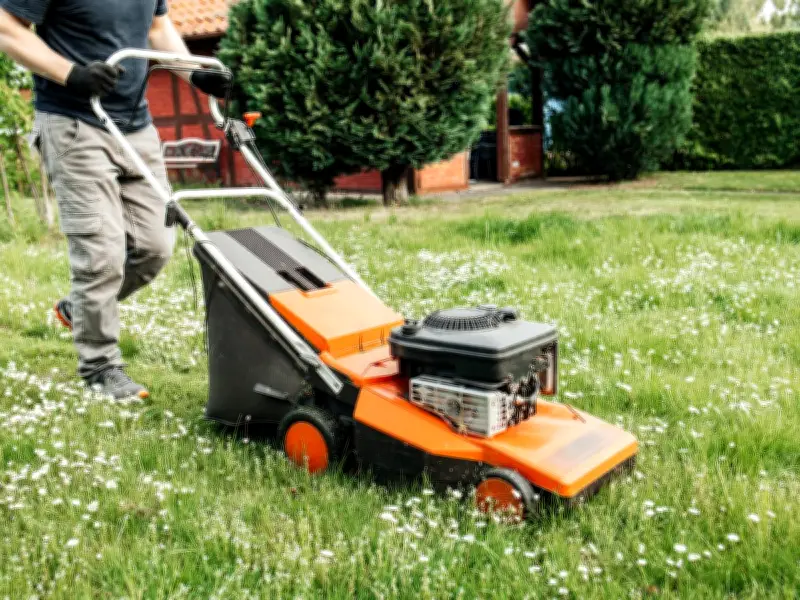
Temperatures could reach as high as 29C in Liverpool this week, prompting a gardening expert to advise homeowners on a common lawn-mowing mistake. Peter Dowdall, known as The Irish Gardener, has urged people to raise the height of their lawnmower blades during hot weather to avoid putting grass under unnecessary stress.
According to weather maps, the mercury is set to climb across the region, and many households will be seizing the dry spells as an opportunity to tend to their gardens. However, Dowdall cautioned that cutting grass too short in intense heat can cause damage.
Raise the Mower Height
“Raise the mower height during hot weather. Cutting grass too tightly puts it under more stress,” Dowdall said. He explained that established lawns often turn brown in hot, dry weather, but that does not always mean they are dead. “In many cases, grass is simply going dormant and will green up again when rain returns,” he added.
New lawns require more care, but Dowdall stressed that established lawns are usually not the first thing to water. He advised gardeners not to panic when their grass changes colour, as it is a natural survival mechanism.
Prioritise During Heatwaves
The horticulturist and broadcaster, who has spent 30 years working on gardens, noted that most gardeners tend to “panic” when hot weather arrives. He warned that plants will wilt, pots will dry out, and lawns will turn brown, making a garden appear to be struggling. However, he emphasised: “A heatwave is not the time to try to do everything. It is time to prioritise. Some plants will cope well. Others may wilt during the day and recover in the evening. The key is knowing what really needs help and what can be left alone.”
Dowdall also pointed out that heatwaves can be beneficial in highlighting where a garden is most at risk. For example, if a plant requires constant attention every time temperatures soar, it may simply not be suited to that particular spot.
Choose the Right Plants
Selecting the right plants is one of the most sustainable approaches to reducing water usage, according to Dowdall. “The right plant in the right location will invariably fare much better,” he said. He recommended using mulch, watering in the morning or evening, and avoiding feeding stressed plants during a heatwave.
“The best heatwave advice is calm and practical: prioritise new planting and containers, water morning or evening, mulch watered soil, protect vulnerable plants, avoid feeding stressed plants and do not panic over established lawns,” Dowdall said.
Build a Resilient Garden
Dowdall concluded that a resilient garden is not built by watering more and more. “It is built through healthy soil, good planting, sensible mulching, appropriate soil improvers such as biochar and choosing plants that suit the conditions,” he explained.