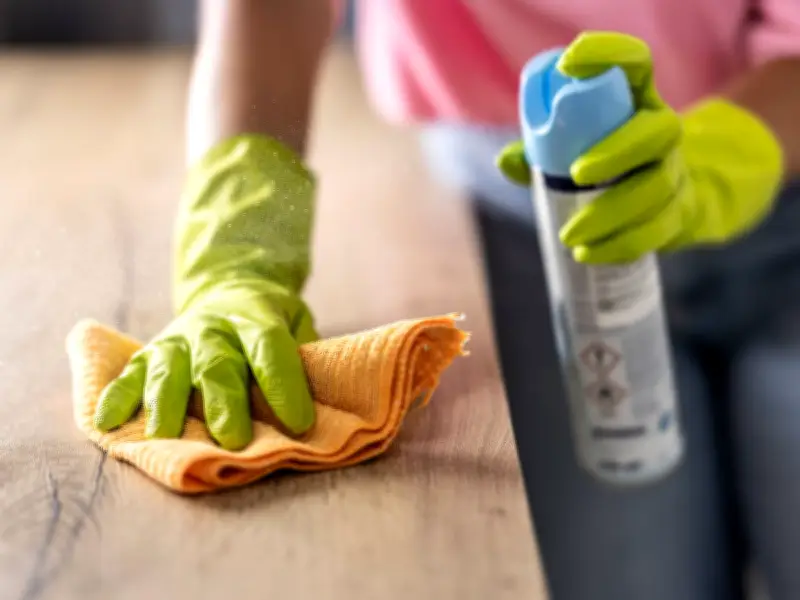
A professional cleaner with nearly two decades of experience has revealed her top cleaning advice and techniques, including the single item she 'absolutely can't live without'. Iryna Balaban is the founder of Sunlight Cleaning Inc, a cleaning firm that provides services for residential, office, and commercial premises.
The Indispensable Microfibre Cloth
Speaking to the Daily Express, Iryna stated: 'One tool I absolutely cannot live without is professional-grade microfibre cloths.' A microfibre cloth is an exceptionally effective and reusable cleaning implement made from extremely fine synthetic fibres, typically a blend of polyester and polyamide. It is renowned for its ability to trap dust, absorb grease, and soak up liquids without requiring chemical cleaners. Microfibre cloths can retain multiple times their weight in dirt, dust, and moisture.
Iryna continued: 'Because of this ability, I use separate microfiber cloths for different parts of my clients' homes, typically colour coding them so that bathroom cloths are never used in kitchens. Colour coding helps me maintain higher levels of sanitation as well as reduce the possibility of transferring germs from one area of the home to another.'

White Vinegar for Bathroom Buildup
Another key recommendation of hers involves using a particular budget-friendly household item. She stated: 'I find that using undiluted white vinegar (a highly acidic product) on bathroom shower heads, faucets, and tile (where there has been an accumulation of soap scum or hard-water stain buildup), works exceptionally well.'
Describing her technique with white vinegar, she explained: 'I simply spray the entire area generously, allowing the acid to penetrate and loosen the mineral build-up for 15-20 minutes; then, using a micro-fibre cloth, I wipe all of the loosened debris off of the area. Heavily scaled shower heads will require soaking in a plastic bag filled with white vinegar for several hours, or overnight. The acid will dissolve the mineral deposits, improve water pressure, and make the fixture look much brighter.'
Hydrogen Peroxide for Mould and Mildew
Hydrogen peroxide is another product the professional cleaner has found to be 'very good' at eliminating mould and mildew from grout lines, silicone seals, and damp areas. She stated: 'To eliminate mould and mildew from these types of areas, I spray a 3% hydrogen peroxide solution directly onto the affected area and let it dwell for 10 to 15 minutes. Then, using a stiff bristle grout brush, I scrub the area until the black spots disappear. If you have heavy mould or mildew infestation, I would recommend repeating this process two to three times.'
Grease Removal in the Kitchen
Beyond the greasy splatters and drips that accumulate on kitchen walls, grease also builds up on kitchen cupboards and extractor hood units. Iryna says: 'A microfiber cloth and a mixture of warm water with a few drops of dish soap are enough to remove the oil-based residue from these surfaces. However, if you're dealing with tough grease around your stove tops, you should let the solution sit on the surface for a couple of minutes prior to wiping. This usually cuts down on how long it takes to scrub the area clean.'
Caring for Stone Surfaces
When tackling stone surfaces such as granite or marble, Iryna avoids acidic products as they can harm the finish over prolonged periods. Instead, she opts for pH neutral cleaners specially formulated for natural stone surfaces. 'These cleaners effectively remove dirt and grime from the surface while preserving the stone's appearance,' she explained.
Microfibre Mops for Tile Floors
Cleaning grimy tile floors is another instance where straightforward cleaning methods frequently surpass complicated ones, Iryna suggests. 'Since microfiber flat mops pick up dirt better than string mops and push less dirt back into the floor, I prefer to use microfiber mops when cleaning my clients' floors,' she revealed. 'When using a microfiber mop to clean ceramic or porcelain tile floors, I mix warm water with a little bit of pH neutral floor cleaner. Too many people use too much floor cleaner. Floor cleaners with high concentrations of detergents tend to leave behind a sticky film that dirt and dust cling to causing floors to appear dull sooner.'

Grout Cleaning with Baking Soda
Grout cleaning is arguably the most frequently requested service Iryna receives. 'For moderately stained grout, I make a paste from baking soda and water, apply the paste directly to the grout line and gently scrub the line with a grout brush once I've allowed it to set for several minutes. The baking soda helps dislodge embedded dirt and grime without scratching the grout. For older grout that has had years of built up grime, I may need to treat the grout multiple times, but regular maintenance thereafter will keep the grout looking much cleaner for longer periods of time.'
Top-to-Bottom, Dry-to-Wet Technique
She continued: 'A technique I always recommend to my clients is cleaning top-to-bottom and dry-to-wet. For example, in a bathroom, I first clean the mirrors, shelves, etc., followed by the sinks, countertops, and fixtures; finally, I clean the shower(s). In kitchens, I start by cleaning upper cabinets and appliances; next, I clean worktops and then floors.'