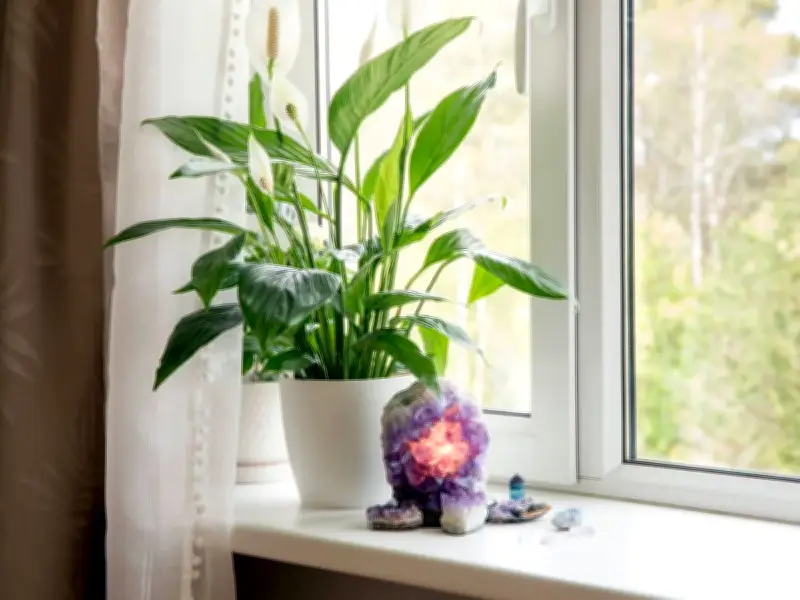
Gardening experts have shared a simple tip on switching from tap water to help your peace lily produce shinier leaves and perkier blooms.
Peace lilies have a reputation for being relatively undemanding. These houseplants require minimal attention, yet many people inadvertently kill them through incorrect watering.
It is fairly common for peace lilies to develop brown tips on their leaves or wilt slightly when under stress, though this is also the earliest indication that the plant is not receiving sufficient water. That said, do not head straight to your tap, as one of the most significant errors you can make is watering a peace lily with tap water.
Why tap water can harm peace lilies
It may seem odd, but gardening specialists at Prickle Plants have cautioned that tap water can prove harmful to peace lilies and may actually clog their soil rather than hydrate it. Tap water contains minerals that peace lilies cannot absorb properly, so it will sit in their soil.
One expert said: "The fluoride in tap water can be harmful to peace lilies, and it would much prefer rainwater. The best thing to do is to leave a little watering can outside to collect rain, and use that when you water."
Tap water across certain parts of the UK may contain elevated levels of salts, minerals, or compounds such as fluoride, which is introduced into drinking water to safeguard teeth against decay, reports the Express.
Peace lilies naturally thrive in tropical regions where rainfall contains relatively few dissolved minerals, meaning they have not built up any tolerance in comparison to other plant varieties.
Effects of mineral buildup
Should you water a peace lily using tap water, fluoride and other minerals can accumulate within the soil, leaving the plant unable to expel them from its root system. Over time, it can over-salt the soil and make it increasingly difficult for a peace lily's roots to take up water, ultimately causing dehydration.
The first sign will be browning leaf tips, followed by yellowing leaves, wilting and, eventually, the plant's death.
Rainwater is more beneficial for peace lilies as it contains reduced levels of fluoride, preventing a mineral build-up in the potting soil and keeping the plant's roots in good condition.
How to water peace lilies properly
Simply monitor the weather forecast and place a clean container outside whenever your peace lily requires watering. Ideally, position the container in a garden, though a balcony or windowsill will suffice provided it can be secured safely. Never leave the container anywhere it risks falling from a height.
Place the peace lily in a sink, shower, bath or another area with adequate drainage, then pour the collected rainwater into the soil. Allow the water to drain fully from the pot and avoid letting it pool in the soil, as this can cause the roots to rot. Once you are certain all the water has drained away, return the peace lily to its usual spot.
Your peace lily should now appear considerably healthier, boasting more vibrant flowers and glossier leaves, all thanks to using rainwater rather than allowing tap water to clog the soil.