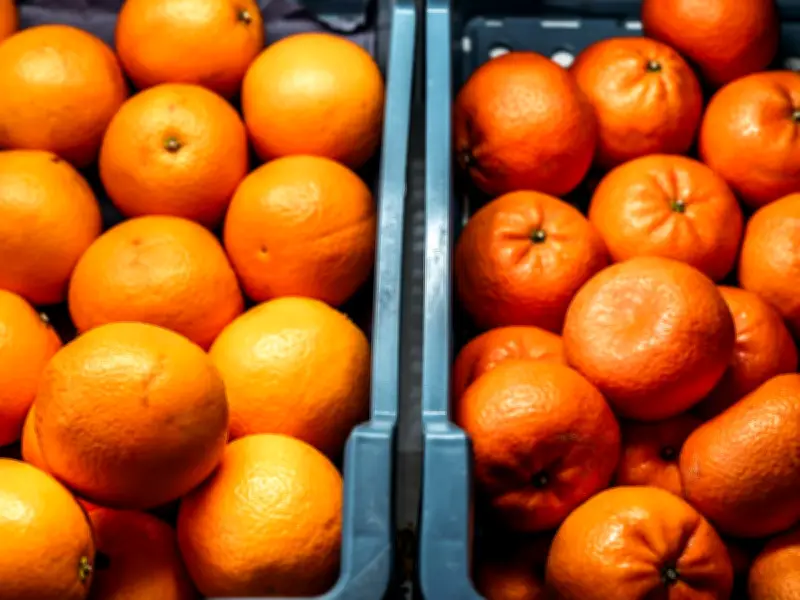
When you are looking for a nutritious snack, few options beat a piece of fruit. Among the most popular choices are tangerines and oranges, thanks to their sturdy peels, portability, and refreshing taste. However, many people wonder about the differences between these citrus fruits and others like clementines, satsumas, and mandarins. While they appear similar, there are several distinct variations.
Origins and Classification
According to Healthline experts, tangerines, oranges, and other citrus fruits belong to the same family, which explains their similarities. However, they are different species with unique origins. Tangerines are named after Tangier in Morocco, where they were historically transported. They are often labeled as mandarins, which is the overarching category that includes clementines and satsumas. Oranges, on the other hand, are believed to have originated in southern China and Indonesia. They are a hybrid of a mandarin and a pomelo, with varieties such as blood oranges, sweet oranges, and navel oranges.
Appearance and Peel
The most noticeable difference is appearance. Oranges are larger and rounder, while tangerines are smaller, softer, and slightly flattened. Oranges can have a yellowish tint, whereas tangerines are typically a deeper orange. Mandarins, a type of orange, are smaller, sweeter, and flatter with thinner, looser skin that is easier to peel. Clementines are the smallest mandarin variety, very sweet, seedless, with smooth, shiny red-orange skin. Satsumas, originating in Japan, are lighter in color, juicy, seedless, and the easiest to peel.
Nutritional Differences
Nutritionally, these fruits are similar, but oranges lead in vitamin C, containing about double the amount found in tangerines. Clementines are also rich in vitamin C. Vitamin C is a powerful antioxidant that supports the immune system and aids iron absorption. Oranges also have slightly more fiber than tangerines. However, tangerines and satsumas are higher in vitamin A, and both fruits provide potassium and folate. Clementines are lowest in calories and sugar, but all are excellent healthy snacks.
How to Enjoy and Store
These citrus fruits are delicious eaten alone, sliced as a snack. They can be juiced for a refreshing drink or blended with other fruits and vegetables. For storage, they can be kept in the refrigerator or on the kitchen counter, but they may not last as long in a fruit bowl.