
Tough grease and grime can make kitchens unsightly and impact the efficiency of appliances. While you may want to reach for chemical cleaning products, there is a food scrap that may be a good alternative.
Natural Degreaser from Orange Peels
Cleaning fan and TikTok creator Lily, better known as Clean with Lily, recently shared how she uses a common food scrap to make a homemade cleaning product. All you need to do is keep your orange peels rather than throw them away.
So next time you go to throw away your orange peels, just wait. Instead, Lily recommended saving them and using them to make a homemade degreaser.
How to Make the Cleaner
In the video, Lily said: “Most people don’t realise you can do this. If you add the orange peel into a glass jar, cover it with white vinegar and leave it for around two weeks, you’ll have yourself a natural cleaner.”
Steep the orange peel in the white vinegar for two weeks, and then once the time is up, remove the peel from the jar. Boil a kettle of water and pour it into the solution before placing it into a spray bottle.
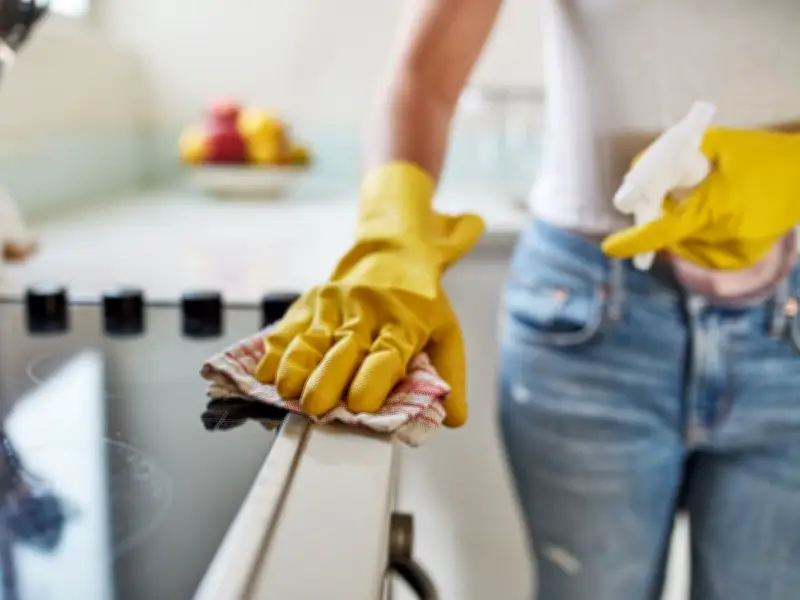
Spray the solution onto counters and surfaces with grease, then wipe with a microfibre cloth.
Why It Works
Citric acid breaks down grease and disperses it into smaller particles. Owing to its mildly acidic properties, citric acid effectively dissolves mineral deposits and grime, grease included.
As citric acid is also antibacterial and antiseptic, this means lemon oil can kill bacteria and remove mould and mildew, noted Blanc Living.
Consumer publication CNET explained that it also contains the naturally occurring compound, d-limonene. D-limonene is a natural oil used in many cleaning products.
CNET explained: “D-limonene helps by washing away dirt and filth, keeping your surfaces nice and clean and smelling great. It isn't just about smell, however: orange peels also have antibacterial properties, great for killing household germs.”
Where to Use It
The cleaning solution can also be used on the likes of stovetops, fridge doors, microwaves and stone, marble and laminate countertops. However, the experts at CNET warned that an orange-peel-based solution should not be used on wooden surfaces or furniture as it could discolour the wood.
Vinegar's Role
White vinegar is a good natural remedy for combating grime due to its acidity, specifically its acetic acid content. Acetic acid is a strong acid that can stop fungi and other organic matter from growing, making vinegar a good option if you are looking for a natural item that has antifungal and antibacterial properties.
As mould is a fungal growth, vinegar will kill the bacteria. The acidity in the vinegar can also deodorise and disinfect affected areas.
Alternative Methods
If you do not want to make a spray solution, Purdy and Figg recommend applying lemon essential oil on a cloth or an orange directly to the area you are cleaning.
Using leftover orange peel can also give the cleaning spray a nicer scent, so your kitchen will not smell too clinical.




