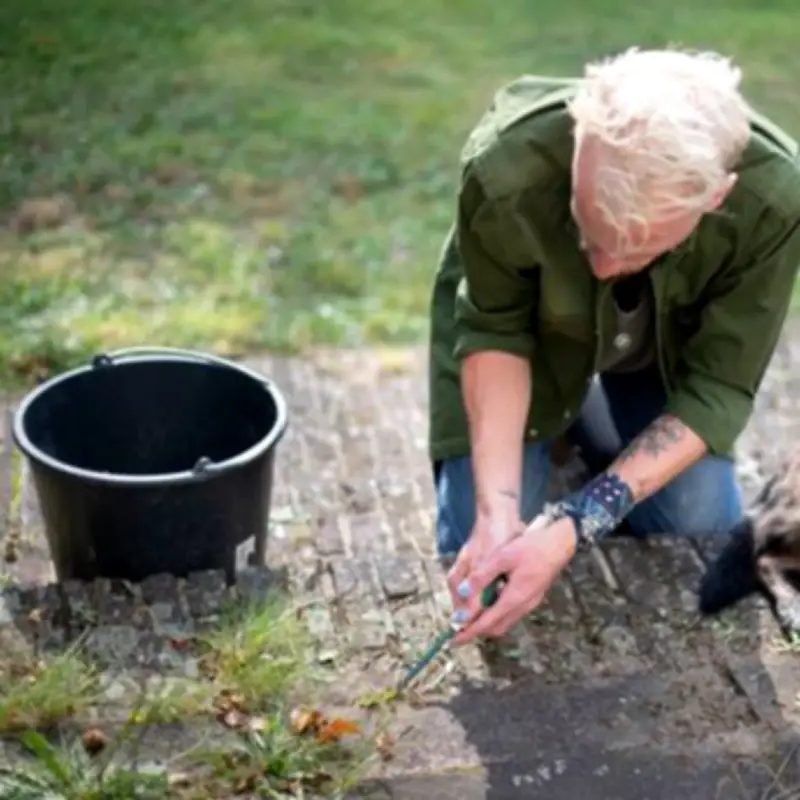
Weeds are the bane of many gardeners' lives. Most gardeners are familiar with the frustration of clearing their garden and patio of weeds only to see them reappear within days, often as troublesome, if not more so, than before. According to Gardener's World, unless you consistently "hoe annual weeds, hand-weed problem areas and prepare soil thoroughly, you're going to be overwhelmed the minute your back is turned."
Natural Alternatives to Chemical Weedkillers
The irritating growth can quickly take over your plants as well as any fruit or vegetables you're cultivating. But with many commercially available weedkillers containing glyphosate, which requires careful handling, numerous gardeners are seeking natural alternatives. The Gardener's World team has recommended one item that typically gets discarded, describing it as "particularly useful." Not only do they suggest using boiling water, they say the liquid remaining from cooking vegetables can be ideal.
Boiling Water from Cooked Vegetables
They said: "Boiling water can kill weeds. This is a particularly useful technique on paths and paving, where you don't have to worry about nearby plants being affected. You can also use it on a group of weeds in a border, taking care not to pour it onto nearby plants that you want to keep. Save energy by using the water that you've just used for boiling vegetables."

The guidance stated the method was ideal for paths, patios, paving, cracks in driveways, borders and isolated patches of weeds. Delivering its assessment on its effectiveness, it continued: "Very easy, convenient and cheap."
Other Natural Weed Killing Methods
This wasn't the sole suggestion the team offered for tackling weeds, with several additional affordable and practical alternatives put forward.
Lemon Juice
Lemon juice contains citric acid, which can cause weeds to shrivel. This is suitable for paths, paving, pavements and driveways. They advise juicing five lemons or more if required. For convenience, use ready-squeezed from a bottle.
Salt
Salt, sodium chloride, isn't good for the garden as it will destroy other plants, however it proves useful for eliminating weeds on paths and paving provided the solution doesn't seep into the surrounding soil. The specialists noted: "Salt can be very harmful to plants if applied in high enough doses, as it dehydrates them. Salt is not good for the garden, however, as it will also kill other plants and will ultimately affect the pH of the soil. For this reason, use on paving and paths only and make sure that the solution does not leach into nearby soil."
They explained that for the "cheap and easy" approach to function as a weedkiller, the salt needs to be dissolved in water. Use one part household table salt to two or three parts water — avoid rock salt, sea salt or Epsom salts. You can strengthen the solution if necessary.
Baking Soda and Vinegar
Some councils are currently trialling vinegar (acetic acid) as a long-term remedy for eliminating weeds in towns and cities, the team said. However, they noted that it proves ineffective when used alone, and must therefore be combined with baking soda, salt or lemon juice. To tackle young or annual weeds in paved areas, mix one part baking soda with two parts white vinegar and an optional squeeze of lemon juice. The verdict? "A cheap option, but it doesn't smell pleasant."