Fungal Inoculation Transforms Southern US Pine Forestry
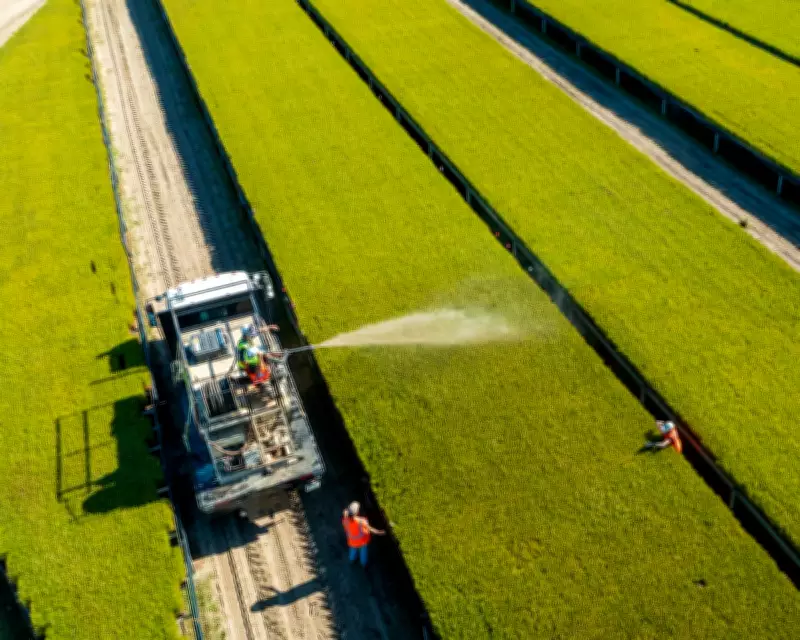
At a commercial tree nursery near Evans, western Louisiana, millions of pine seedlings are densely packed onto vast irrigation tables, each spanning the width of a football field. In September, many of these young trees received a spray resembling muddy water, but this substance was actually a liquid extract teeming with hundreds of species of wild soil fungi. Brad Ouseman, the nursery manager, anticipates visible differences in growth between treated and untreated seedlings by January, highlighting the potential for improved yields and reduced dependence on artificial fertilisers.
Microbiome Transplants for Trees
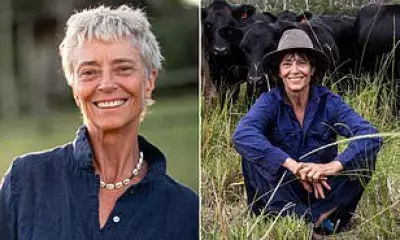
Colin Averill, founder of the startup Funga, compares this treatment to a faecal microbiome transplant for pine trees. Similar to medical procedures that transfer gut microbes from healthy donors to patients, Funga applies wild microbes from thriving pine forest soils to young trees. Averill emphasises that the approach involves using the entire soil community, capturing all its complexity and interactions, rather than isolating individual components. The goal is to foster faster tree growth, enhance carbon dioxide drawdown, and minimise reliance on chemical inputs.
Essential Fungal Partnerships
The Evans nursery supplies the extensive network of intensively managed pine plantations across 13 southern US states, covering over 12 million hectares, known as the "woodbasket of the world." Loblolly pines, native to the southeast, depend entirely on underground fungal partners called ectomycorrhizal (ECM) fungi. These fungi weave into pine roots, forming a hybrid organ that functions as a trading floor for critical nutrients like nitrogen and phosphorus, exchanged for energy-rich sugars. Kabir Peay, a Stanford fungal ecologist, notes that pines and ECM fungi are interdependent, rarely found without each other.

Peay's research underscores the importance of soil fungal biodiversity for healthy forests. Individual trees may associate with hundreds of fungal species, each accessing different nutrients under varying conditions. A 2018 study revealed that even a two-month delay in seedlings acquiring the right fungi can significantly hinder growth. Across the southern pine belt, clearcut timber harvesting severely depletes these essential fungal communities, leading to sub-optimal growth and increased fertiliser use.
Addressing Fungal Depletion
Funga's genomic surveys indicate that about 75% of ECM fungal diversity disappears after felling, consistent with studies from Scandinavian and Canadian pine forests. Recovery is estimated to take around 30 years, but trees are harvested on 15- to 25-year cycles, meaning some pines may never experience fully mature ECM networks. Rachel Cook, a forestry professor at North Carolina State University, cautions that recovery timescales are unresolved, suggesting warmer southern soils might accelerate the process compared to Funga's estimates.
Nevertheless, Funga argues that early exposure to productive ECM fungi benefits trees. The team surveys forest soils in the southeast, using thriving fungal communities as inoculants in small trials. Promising communities are cultured on natural organic substrates, essentially creating in-forest compost heaps, before extracts are applied at industrial nurseries. Founded in 2022, Funga treated about 500 acres in its first year, scaling to 25,000 acres by 2025, with Averill estimating that one in 40 loblolly pines planted in the southeastern pine belt last year received treatment.
Promising Growth Results
Early outcomes are encouraging, with growth responses exceeding 100% in some locations. Averill targets an average 30% growth boost, a goal he believes is within reach. Cook, who co-directs the Forest Productivity Cooperative, notes that a 30% increase from fertilisation is typical, suggesting Funga's biological treatment could rival expensive chemical inputs. She expresses cautious optimism, emphasising the need for more data but acknowledging the potential for a significant advancement in southeastern forest management.

Soil Challenges and Sustainable Alternatives
Soils beneath southern pine plantations often lack key nutrients, a legacy of intensive tobacco and cotton agriculture before commercial forestry began in the 1930s. Although soils are slowly recovering under continuous forest cover, nutrient shortfalls persist. Cook clarifies that pine stands are fertilised at most three times over 25 years, with minimal soil disturbance, making their "intensive" management far less than agriculture.
Averill envisions fungal inoculation eventually replacing chemical fertilisation entirely, offering a low-cost, self-sustaining alternative to fossil-fuel-dependent inputs, whose prices have surged recently. His academic research showed that soil fungal community composition predicts forest growth and carbon sequestration as strongly as rainfall, a finding with profound implications. He founded Funga in 2022, betting on environmental markets like carbon trading as a financial engine to address climate and biodiversity crises. In 2025, Funga secured an 11-year, multimillion-dollar carbon removal deal with Netflix.
Navigating Carbon Market Challenges
Carbon markets face scrutiny, with a 2025 review highlighting issues like non-additionality and impermanence, though high-quality projects exist. Averill acknowledges greenwashing but argues Funga's model mitigates these weaknesses by basing credits on additional growth relative to control plots and requiring landowners to grow trees to saw-log size, promoting durable carbon storage in lumber rather than short-lived products. Funded by carbon revenue, landowners incur no costs, but fungal inoculation must prove cost-effective against fertilisers for budget-conscious managers.
Expanding Beyond Southern Pine
Funga's ambitions extend to Douglas fir in the Pacific Northwest and trials with broadleaf trees and Sitka spruce in Wales. Peay believes the real breakthrough lies in deciphering the ecology of poorly catalogued organisms. If Funga can identify and transfer optimal fungal communities to young trees efficiently, it could revolutionise forestry practices, offering a sustainable path forward for biodiversity and climate resilience.