
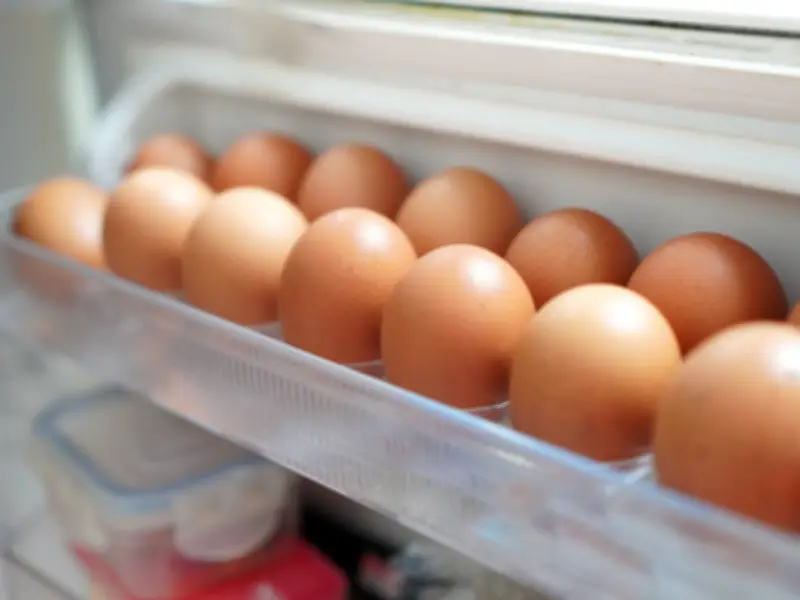
Selecting eggs can prove bewildering, with labels such as free-range, barn, caged and organic options lining the shelves. Add blue eggs, rich yolk eggs and duck eggs into the equation, and it becomes difficult to decide. There's also a distinction between brown and white eggs. However, the most prevalent eggs on UK shelves are free-range and organic, each offering different assurances. It's crucial to understand the distinction between them so consumers can select eggs that align with their requirements.
What Makes Eggs Organic?
The Department for Environment, Food & Rural Affairs supervises organic egg production in the UK, establishing rigorous standards for labelling, feeding and bird welfare. Producers must be certified by an approved control body to legally market and label their eggs as organic. The Soil Association is among several approved certification bodies that inspect and certify organic egg producers against organic standards. They have outlined the distinctions between organic and free-range eggs.
Organic eggs originate from hens reared to the highest welfare and environmental standards in the UK, according to the Soil Association. These standards influence every aspect of a hen's life, including the size of the flock, the space they have outdoors, what they are fed, and how they are maintained.
1. Smaller Flocks
The maximum flock size for organic chickens stands at 3,000 hens. By comparison, RSPCA Assured's free-range standards establish a maximum flock size of 16,000 hens. In intensive caged systems, there's no limit, with some flocks reaching 100,000 chickens.
2. Truly Free-Range with Access to the Outdoors
Having fewer birds encourages more of them to use outdoor space and makes it easier to care for animals individually. This ensures the birds are kept to the highest welfare standards. Organic chickens must have continuous and easy daytime access to an outdoor range covered with suitable vegetation. Organic farms certified by the Soil Association have to provide more pop holes (exits from the hen house) than free-range farms do to encourage chickens to get out as much as possible.
3. Range Size
Under Soil Association standards, each hen is allowed a minimum of 10 square metres of space outside, compared to four square metres for hens raised to EU organic and free-range standards.
4. Chickens Get Outside at a Younger Age
Another key distinction between Soil Association organic standards and other laying hen systems is that certified farmers must grant hens access to the outdoors from 12 weeks old. This is considerably younger than in free-range systems. According to the Soil Association, hens are initially wary of unfamiliar environments, such as the outdoor range. By introducing them to it at a younger age, farmers help foster a more free-range lifestyle for the birds. Kate Still, animal welfare specialist at the Soil Association, said: "The outdoor range provides many behavioural opportunities for hens. It's a stimulating environment where they can explore, forage for insects, scratch around in the ground, and bathe in the sun and dust."
5. Higher Standards of Animal Welfare
While beak trimming is prohibited under Soil Association standards, it remains a common practice for laying hens across the UK, including in EU organic and free-range systems. It is carried out to minimise the injury birds can inflict on one another through feather pecking. However, the procedure can be painful and distressing, and it can restrict hens' ability to express their natural instincts.
6. No Routine Use of Antibiotics
Furthermore, organic standards strictly prohibit the routine use of antibiotics. Under these regulations, antibiotics may only be administered to animals when they fall ill. Thanks to lower stocking densities and superior animal welfare standards, organic animals require antibiotics far less often than their non-organic or free-range counterparts.
7. Genetically Modified Free Diet
Regarding feed, the Soil Association reveals that over one million tonnes of genetically modified (GM) crops are used to feed animals in the UK alone. This practice is outlawed under organic standards, meaning organic birds are never fed GM grains or feed, unlike free-range and non-organic hens. Outdoor foraging allows organic chickens to consume a diverse range of plants, grubs, and insects, providing variety to their diet and maintaining their health.




