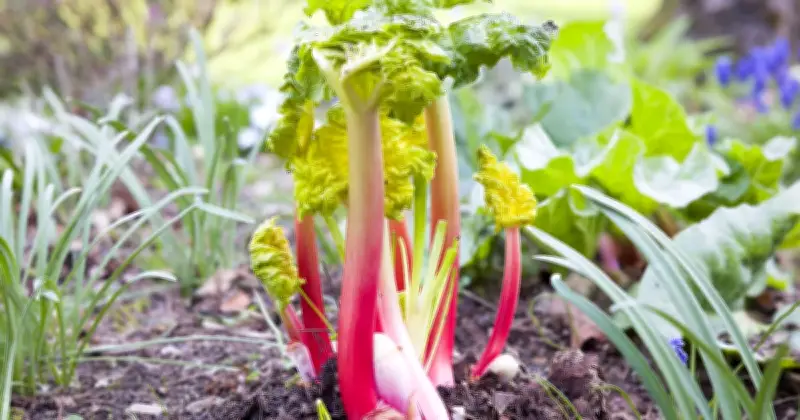
Gardeners growing rhubarb can trick the plant into producing sweeter, brighter and far more tender stems early next year by performing a traditional technique called forcing, which involves depriving emerging shoots of sunlight. Although rhubarb is treated like a fruit in crumbles, pies and jams, it is actually a hardy perennial vegetable that thrives in cool, damp weather and dislikes intense summer heat, making the British climate ideal for growing it.
Left to its own devices, rhubarb will not be ready to pick until mid-spring, and outdoor stems can often turn out stringy and sharply acidic. Without light, the plant cannot photosynthesise, which halts the production of bitter oxalic acid and encourages rapid, succulent growth. While many gardeners wait until January to cover outdoor plants with a terracotta pot, a head start is possible now.
When to force rhubarb
Ally North of Roots Plants said: "You can start forcing your rhubarb between December and March, when the crown is dormant - most people start in December or January."
To force rhubarb, choose a mature crown that is at least two years old and is visibly healthy. A healthy rhubarb crown should be swollen and firm, with reddish-pink or tight winter buds, and no signs of rot. Clear away any dead leaves or stones from the soil around the crown, then mulch around the crown with compost, manure or bark chips.
Best materials for forcing rhubarb
Cover the crown with a chosen forcing pot. The Royal Horticultural Society suggests a purpose-made terracotta forcing pot, or a tall bucket or bin. A large deep pot will also do the job, as long as it will obscure the light and be tall enough to allow the stems inside to grow to at least 30cm.
Ally warned: "If you're using a lightweight pot such as a bucket, weight it down with bricks." Blocking all light from the pot is essential, including any drainage holes. Bricks or large stones are ideal for this, as they won't blow away in windy or very wet weather. Alternatively, black duct tape can be used.
Once the pot is secured, pile some manure or compost around the sides to keep the rhubarb warm and "help it grow quicker," says Ally. The next thing to do is leave the forced rhubarb alone.
Harvesting forced rhubarb
After seven to eight weeks, the forced rhubarb should be ready to pick. This is the case when the stalks touch the top of the pot or are about 45-50 cm long. Ally said: "To harvest them, gently twist and pull."