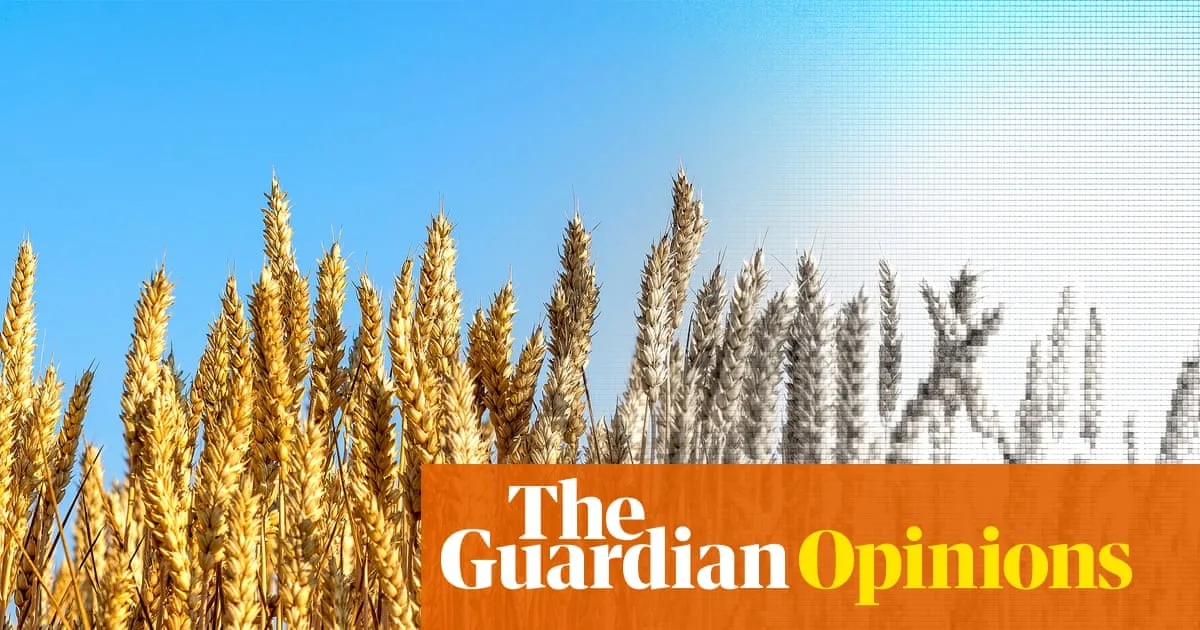
Global Food System on Brink: Corporate Gamble Threatens Mass Starvation
Food System Collapse Looms as Corporations Gamble with Lives

Global Food System on the Brink of Catastrophic Collapse

The fragility of the global food system is a source of profound dread, and recent events, such as the war with Iran, have starkly exposed just how perilously close it is to total breakdown. Environmentalists often fear being proven right, and for me, the looming threat of food system collapse haunts more than any other. While the immediate trigger remains unpredictable, conflicts like the one with Iran exemplify the kind of crisis that could push the system over the edge.

Systemic Fragility and Governmental Neglect

Drawing on extensive scientific data, I have long argued that this risk is real and that governments worldwide are utterly unprepared. In 2023, I submitted evidence to a parliamentary inquiry on environmental change and food security, highlighting that the issue extends far beyond the inquiry's narrow scope. Although some MPs grasped the severity, governments as a whole fail to comprehend the magnitude of the threat. The global food system mirrors the systemic fragility seen in the financial system before the 2008 crash, with vulnerabilities that could lead to a sudden, irreversible collapse.

Potential triggers, such as fertiliser shortages from the closure of the Strait of Hormuz or harvest failures due to climate breakdown, are not the core problem. Instead, they are disruptions that might initiate a broader systemic failure. The real danger lies in the entire system sliding off a cliff, akin to the financial crisis that required trillions in bailouts to avert disaster.

Wide Pickt banner — collaborative shopping lists app for Telegram, phone mockup with grocery list

Corporate Consolidation and Financialisation Risks

Recent data reveals alarming concentration in the food system, with a few corporations consolidating both vertically and horizontally. One study found that the US food system has consolidated nearly twice as much as the overall economy. Some of these entities, diversifying into financial products, resemble unregulated banks more than traditional commodity traders. While they claim financialisation hedges against risk, it is nearly impossible to distinguish between hedging and speculating, leaving their exposure to risk unclear and potentially catastrophic.

This corporate influence has driven the world toward a global standard diet supplied by uniform farming practices, exacerbating vulnerabilities. Just-in-time supply chains and reliance on critical trade chokepoints, such as the Strait of Hormuz, Suez Canal, and Panama Canal, further heighten the risk. Military attacks on these routes, exacerbated by geopolitical tensions, pose a severe interruption threat, with Houthi rebel actions in the Red Sea adding to the instability.

Loss of Resilience and Imminent Threats

The food system has lost key elements of resilience: diversity, redundancy, modularity, backup options, asynchronicity, and effective regulation. Each loss should serve as a warning, but now the entire dashboard is lit up with red alerts. Predicting the exact trigger for collapse is challenging—it could be the failure of a major corporation, simultaneous closure of multiple chokepoints, a major IT outage, or a climate event coinciding with a geopolitical crisis.

The consequences could include contagious bankruptcy and cascading failures across sectors, leading to a breakdown in the supply chain between seller and buyer. Panic-buying could empty shelves, while crops rot in fields or ports. Rebooting a financially imploded system might be impossible within the timeframe needed to prevent mass starvation, representing a potential termination event for complex societies.

Necessary Solutions and Political Failures

Solutions are clear: break up large corporations, impose proper regulatory control, diversify diets and production methods, reduce dependence on a few exporting countries, and build strategic food reserves accessible globally. However, governments are largely beholden to corporate and financial power, making them unwilling to implement these measures. The likelihood of a global agreement on this issue is virtually zero.

Pickt after-article banner — collaborative shopping lists app with family illustration

In the absence of international action, braver politicians in individual countries must work to insulate their populations from the worst impacts. A crucial step is promoting a shift to plant-based diets, which require far fewer resources—just a quarter of the land and much less fertiliser compared to standard Western diets. This transition enhances food security, similar to how switching to renewables boosts energy security. This message is echoed in national security assessments, though governments often withhold such information to avoid upsetting powerful interests.

UK Policy Shortcomings and Global Inaction

UK policy, in particular, is alarmingly inadequate. In response to food vulnerability warnings, Environment Secretary Emma Reynolds, a former financial lobbyist, proposed boosting domestic poultry production. This plan would increase vulnerability due to reliance on imported feed from countries like Brazil and the US. There is a notable lack of strategic reserves, alternative supply chains, or other defensive measures.

Across the world, policy often defaults to letting the market—dominated by a few global corporations—dictate outcomes. In essence, governments are allowing ruthless speculators to gamble with human lives. The urgency for action cannot be overstated, as the stakes involve nothing less than global food security and the prevention of widespread famine.



