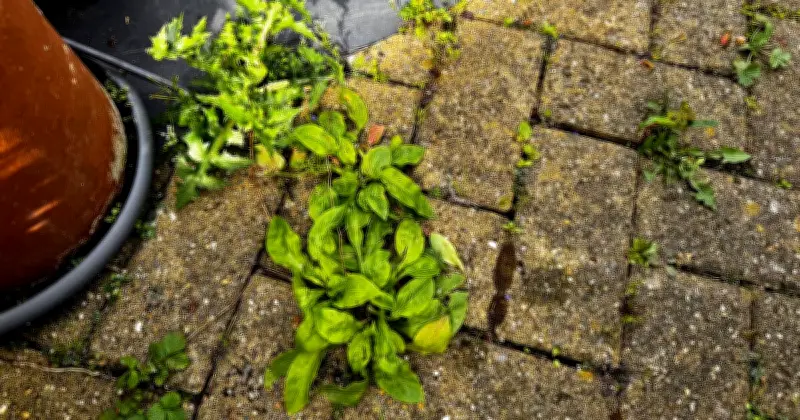
Boiling water is a simpler and safer solution for removing patio weeds than vinegar or salt, according to Great British Bake Off winner and bestselling author Nancy Birtwhistle. The method kills weeds within two days without harming the environment.
Why Vinegar and Salt Can Be Harmful
While many gardeners turn to white vinegar or salt as natural weed killers, these substances can cause unintended damage. Vinegar instantly dries out and damages plant tissue if it touches desirable plants, while salt dehydrates plants by drawing water from their roots, potentially contaminating soil. Chemical weed killers also pose risks, including contaminating water supplies, disrupting ecosystems, and harming human health.
Nancy Birtwhistle's Boiling Water Tip
In an Instagram post, Nancy Birtwhistle shared her method for tackling stubborn patio weeds. She explained, "What do you do about those really tough weeds you can't reach by hand? I have a simple tip—let me show you!" She avoids weedkillers containing "very toxic chemicals" and instead relies on natural methods.
Birtwhistle boils water in a kettle, pours it directly onto the weed, and lets it work. She added, "After a day, you'll see the weed has shrivelled, and after two days, it's almost completely gone. For my vegetable plot, though, I still hand-weed."
How Boiling Water Kills Weeds
Boiling water kills weeds by shocking them with heat. It cooks the cells, ruptures cell walls, and destroys the plant's proteins. Once the cells are destroyed, the weed cannot retain water, so it quickly dehydrates, withers, and dies. Boiling water typically damages the weed's root system and prevents regrowth. However, it may not be effective against well-established perennial weeds with deep root systems.
How to Use Boiling Water Safely
To use this method, first boil clean water in a kettle. Wear closed-toe shoes and protective gloves to avoid burns. Pour the boiling water directly over the weeds, aiming for the roots if possible. If you cannot see the root, pour the water where the stem meets the soil. Be careful not to pour boiling water on nearby plants, as it will harm anything it touches. Let the water work for a day or two, then check on the weed's progress. If it is withered and dead, pull it up or sweep it away. If the weed reappears after seven to 10 days, simply repeat the process.
Alternative Methods for Beds and Borders
For beds and borders, hand removal is generally the quickest and easiest method. Hoeing is effective for removing seedlings and helps maintain soil health. For deeper-rooted perennial weeds, use a hand fork to remove the rootball. If weeds are particularly deep and well-established, a spade or garden fork may be necessary. Mulch, such as bark or compost, and cardboard blocks sunlight and prevents weed germination. For large areas, covering with a plastic sheet or tarp can smother weeds.