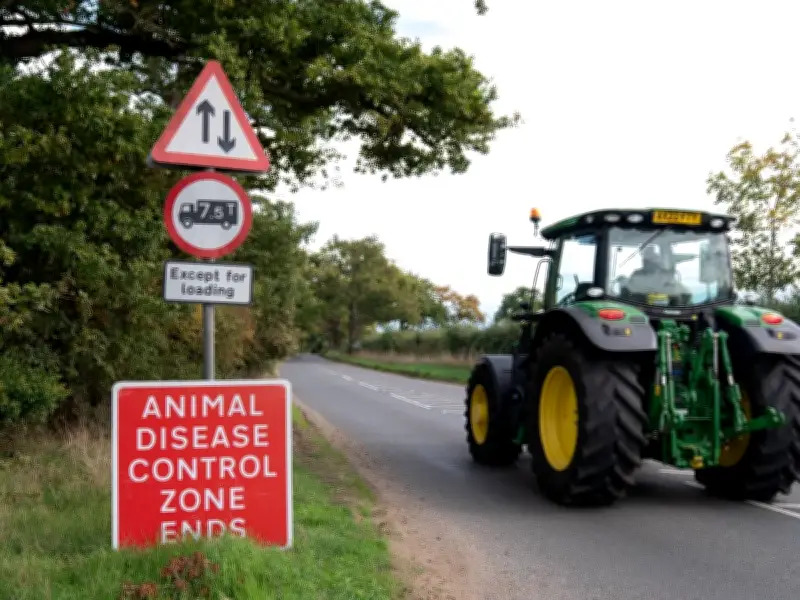
A 10km surveillance zone has been established in Northumberland following a confirmed outbreak of avian influenza at a commercial premises near Belford. Northumberland County Council has issued an appeal for residents to follow strict rules to help contain the highly contagious virus.
The risk to public health is described as "very low", but the rapid spread of the virus among wild and commercial birds is said to have potentially "devastating consequences".
Response and Zones
The response is being led by the Animal and Plant Health Agency (APHA), supported by the UK Health Security Agency (UKHSA) and the council's public protection team, as they work to contain the H5N1 virus.
Precautions include a 3km protection zone and a 10km surveillance zone around the site, with all flocks in the area carefully observed. The surveillance zone covers north to Haggerston, west to Doddington and Barmoor Lane End, east to Holy Island and Bamburgh, and south to Chatton and Warenford.
Rules for Residents and Bird Keepers
Local residents are asked to walk dogs in the area on leads only, and a public footpath and bridleway have been closed. Posters reminding people of the situation and rules are being put up in the area.
Bird keepers in the protection zone, whether for commercial use or pets, must house or net all poultry and captive birds to keep them separate from wild birds—this is a legal requirement. They are also asked to regularly clean and disinfect equipment, clothing, and vehicles, and limit access to those who do not need to be there.
Official Statements
Northumberland County Councillor Gordon Stewart, Cabinet Member for Public Safety, said: "Wild birds migrating to the UK from mainland Europe during the winter months can carry the disease and where wild birds are allowed to mix with domestic poultry this can lead to the disease spreading to captive birds.
"Bird keepers should remain alert for any signs of disease, report suspected disease immediately and ensure they are maintaining good biosecurity on their premises."
Gill ONeill, the council's Executive Director of Public Health, added: "I'd like to reassure the public that this is a disease in birds.
"The UK Health Security Agency has confirmed that the risk to human health is very low, and the Food Standards Agency has said that Avian flu poses a very low food safety risk for UK consumers and does not affect the consumption of poultry or eggs.
"We are working with the owners and have strict biosecurity measures in place around the site so we are confident we are doing all we can to try and contain the virus."
Reporting and Guidance
Members of the public who come across a dead wild bird should report it to DEFRA on 03459 335577 and select option seven, without picking up any dead or visibly sick birds. Accurate location information, such as via 'what3words', is helpful.
Suspected cases of avian influenza in kept birds should be reported to DEFRA on 0300 0200301. Further guidance is available on the government website.